What Is Tai Chi Indoor Walking? A Complete Guide
Jul 18, 2026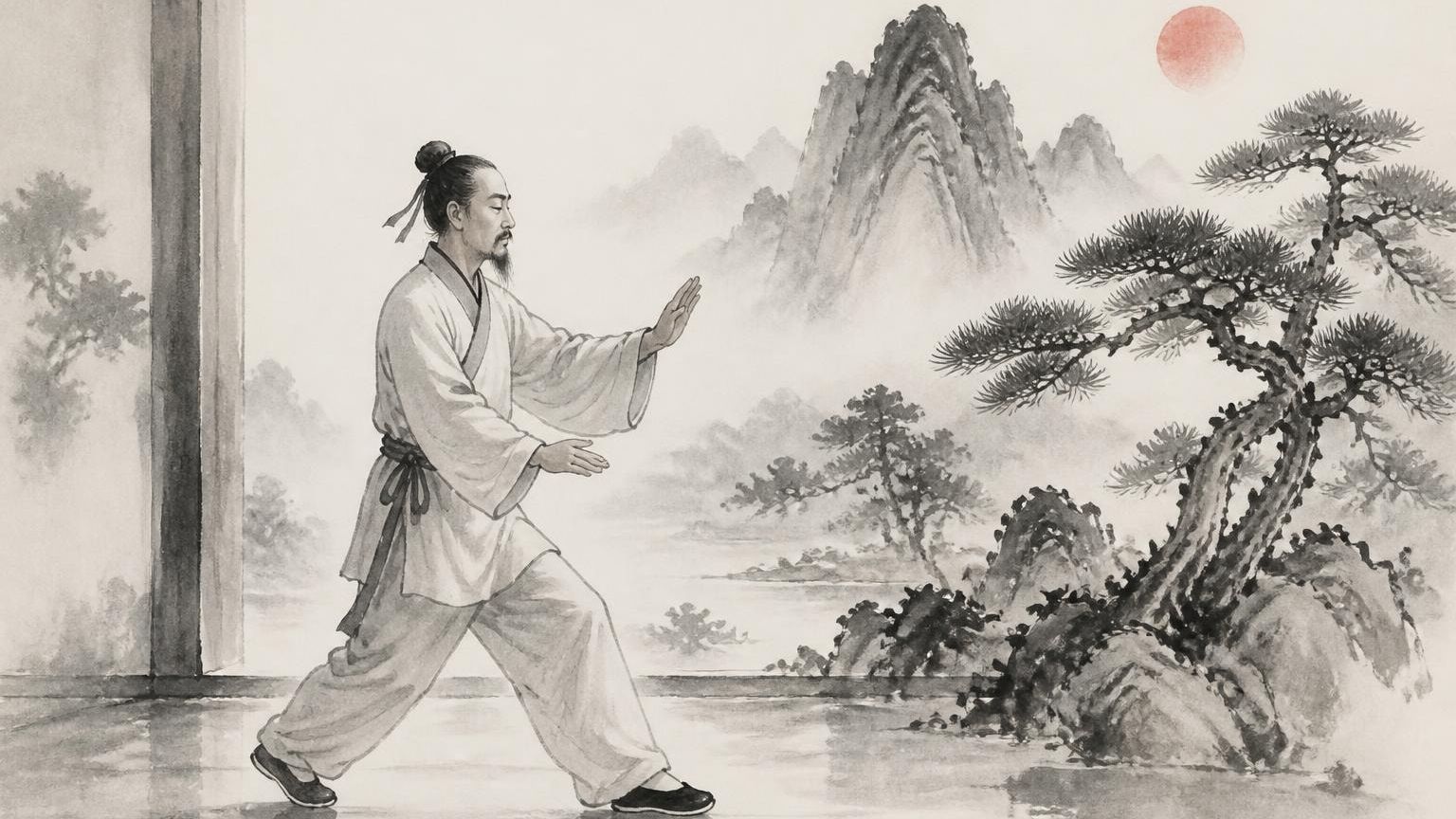
Walking is something most of us do without much thought. But what if your daily steps could become a mindful practice that strengthens your body, calms your mind, and cultivates inner energy? That's exactly what tai chi indoor walking offers - a gentle fusion of traditional tai chi principles with the simple act of walking. This practice takes the flowing movements and deliberate awareness of tai chi and applies them to walking, creating a meditative exercise that anyone can do in the comfort of their home, regardless of weather or space constraints.
Understanding Tai Chi Indoor Walking Fundamentals
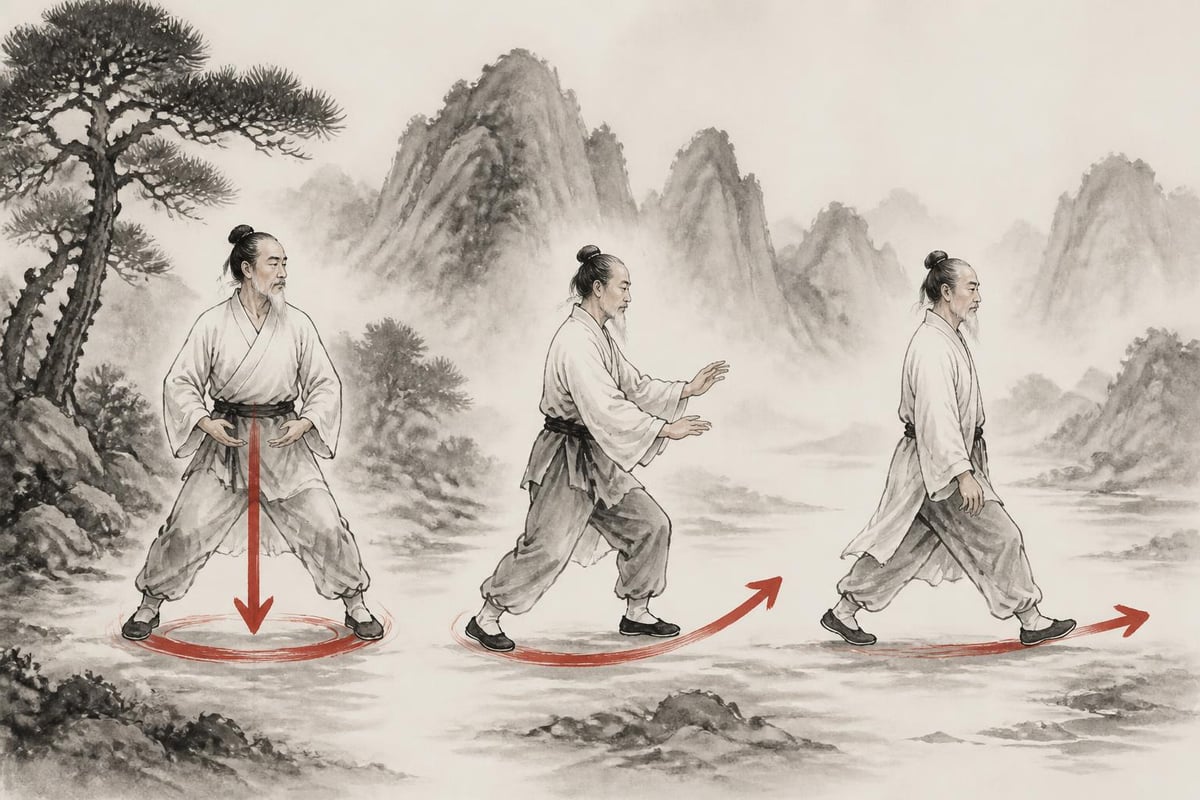
What is tai chi indoor walking? At its core, this practice combines the mindful, weight-shifting principles of tai chi with controlled walking movements performed indoors. Unlike regular walking, every step becomes an intentional act of energy cultivation and body awareness.
The practice draws from traditional tai chi's emphasis on rooting, shifting weight completely from one leg to another, and maintaining an upright, relaxed posture. Instead of rushing from point A to point B, you move with purpose and presence.
Key elements include:
- Slow, deliberate weight transfers between feet
- Conscious breathing synchronised with steps
- Soft knees and relaxed shoulders throughout
- Awareness of your body's connection to the ground
- Smooth, continuous motion without abrupt stops
This isn't just slow walking. These techniques have been refined over centuries of Taoist practice, building posture and balance through principles that go far beyond what ordinary walking can offer.
The Physical Benefits You Can Expect
When practised regularly, tai chi indoor walking transforms how your body moves through space. The gentle nature makes it accessible while still delivering meaningful physical improvements.
Balance and Stability Enhancement
The complete weight transfers inherent in this practice strengthen the stabilising muscles around your ankles, knees, and hips. Each step challenges your proprioception - your body's sense of where it is in space.
Research consistently shows that tai chi walking offers significant benefits for improving balance, particularly valuable as we age or recover from injury.
Strengthening Without Strain
Unlike high-impact exercise, tai chi indoor walking builds strength through sustained engagement rather than force. Your legs work continuously to control each movement, developing endurance in the muscles that support your joints.
| Physical Benefit | How It Works | Timeline for Results |
|---|---|---|
| Better balance | Single-leg weight bearing | 2-4 weeks |
| Leg strength | Controlled, slow movement | 4-6 weeks |
| Joint mobility | Gentle range of motion | 2-3 weeks |
| Posture improvement | Alignment awareness | 3-5 weeks |
The beauty of this practice lies in its adaptability. You can start wherever you are and progress naturally.
Cardiovascular Health
While not as intense as running, consistent tai chi indoor walking does elevate your heart rate moderately. The benefits come from sustained, gentle cardiovascular engagement paired with meaningful stress reduction - a combination that supports whole-body health over time.
Mental and Emotional Wellbeing Through Movement
The mental aspects of tai chi indoor walking set it apart from conventional exercise. This isn't just physical training - it's a moving meditation that creates space for inner quiet.
When you slow down enough to notice each step, your mind naturally settles. The repetitive, rhythmic nature acts as a focusing tool, similar to following your breath in seated meditation.
Mental benefits include:
- Reduced anxiety through present-moment awareness
- Improved concentration from sustained focus
- Better stress management via breath coordination
- Enhanced mind-body connection
- Greater emotional regulation
Many students discover that this walking practice becomes their gateway to deeper meditation work. The movement provides something concrete to focus on, making it easier than sitting still for those new to mindfulness. If you'd like to explore what a full Tai Chi practice looks like beyond the walking, why not take a look at our Tai Chi course at Taoist Wellness Online - it puts this walking practice in its wider context beautifully.
The practice also cultivates patience. In a world that rewards speed, choosing to move slowly is itself a radical act of self-care.

How to Practice Tai Chi Indoor Walking
Starting your practice doesn't require special equipment or extensive training. You need about 10-15 feet of clear floor space and comfortable clothing that allows free movement.
Basic Technique Step by Step
- Stand with feet hip-width apart, knees slightly bent, arms relaxed at your sides
- Shift all your weight to your left foot, feeling your connection to the ground
- Empty your right foot completely until you could lift it without losing balance
- Step forward slowly with the right foot, heel touching down first
- Roll through the foot from heel to toe as you shift weight forward
- Complete the weight transfer until your left foot is empty
- Repeat with the opposite leg, maintaining smooth, continuous motion
Throughout this process, breathe naturally. Some practitioners match breath to steps (inhale on weight shift, exhale on step), while others let breathing flow freely.
Your gaze should be soft, looking about 10-15 feet ahead rather than down at your feet. This helps maintain proper head and neck alignment.
Common Mistakes to Avoid
New practitioners often rush the weight transfer or keep weight on both feet simultaneously. Remember, the power comes from being willing to commit fully to each leg before moving.
- Don't lean forward from the waist
- Avoid locking your knees at any point
- Keep shoulders relaxed, not raised or tense
- Don't hold your breath or force breathing patterns
- Maintain your natural stride length initially
Communities such as ours at Taoist Wellness Online offer valuable support for refining your technique and connecting with others on similar journeys.
Integrating Tai Chi Walking with Traditional Practice
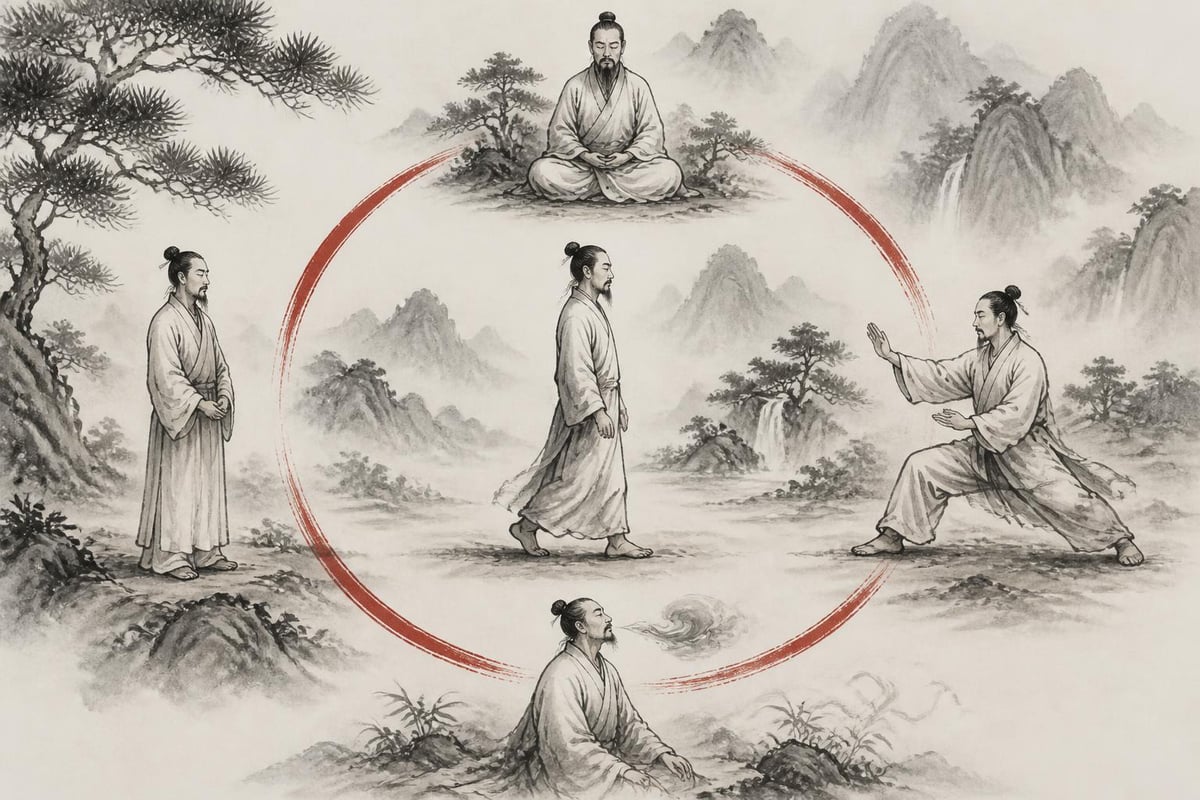
Understanding tai chi indoor walking becomes richer when you see how it complements other tai chi forms. This walking meditation shares DNA with the slow, flowing sequences of traditional tai chi sets.
The Connection to Qi Gong
Both tai chi indoor walking and qi gong work with the concept of qi - your body's vital energy. The walking practice helps you feel qi moving through your legs and into your lower dantian (energy centre). Students often find that exploring our Qi Gong course alongside walking practice accelerates their sensitivity to this energy flow considerably.
Building Your Daily Practice
| Practice Component | Time Investment | Best Time of Day |
|---|---|---|
| Tai chi indoor walking | 10-15 minutes | Morning or evening |
| Standing meditation | 5-10 minutes | Before walking |
| Breathing exercises | 5 minutes | After walking |
| Traditional tai chi forms | 15-20 minutes | Any time |
You don't need hours of practice to experience benefits. Consistency matters more than duration. Even five minutes daily creates meaningful change over weeks and months.
Adapting the Practice for Different Needs
One beautiful aspect of tai chi indoor walking involves its flexibility. Whether you're recovering from injury, managing chronic conditions, or simply seeking gentle movement, you can modify the practice.
For Beginners and Older Adults
Start with shorter sessions - even three to five minutes provides value. Use a wall or sturdy furniture nearby for initial confidence, though avoid actually holding on unless necessary for safety.
Focus first on the weight transfer rather than perfecting every detail. Benefits develop gradually as your body learns the pattern. Our post on how to become proficient in Tai Chi walking has some useful guidance on exactly this progression.
For Those with Limited Mobility
If standing practice proves challenging, you can explore the same principles in modified ways. Some elements translate to seated practice or holding onto a support while focusing on the weight shift and breathing.
Progression and Challenge
As the basic pattern becomes comfortable, you can:
- Reduce your walking speed even further
- Add arm movements from tai chi forms
- Practise on different surfaces (carpet vs. hard floor)
- Vary your step length mindfully
- Include turning and direction changes
The Philosophical Foundation
The Taoist wisdom underlying this practice runs deep. Ancient texts speak of walking meditation as a way to harmonise with natural rhythms and cultivate wu wei - effortless action.
When you practise tai chi indoor walking, you're not forcing anything. You're allowing movement to unfold naturally while maintaining awareness. This mirrors the Taoist principle of acting in accordance with nature rather than against it.
The practice also embodies yin and yang. Each step contains both emptiness (the unweighted leg) and fullness (the weighted leg). The transition between them reflects the constant interplay of opposites that creates harmony.
Students interested in these deeper dimensions often find the Taoist philosophy course a natural companion to their movement practice - it illuminates the principles that animate all of these forms.
Creating Your Indoor Walking Space
Your practice environment influences your experience. While tai chi indoor walking doesn't demand much room, thoughtful space preparation enhances the practice.
Space requirements:
- 10-15 feet of clear walking path (you can walk in circles if needed)
- Flat, even surface without trip hazards
- Good air circulation if possible
- Comfortable room temperature
- Minimal visual distractions
Some practitioners create a dedicated area with a small altar, plants, or meaningful objects. Others simply clear the living room floor. What matters is that the space feels inviting and safe.
Lighting should be adequate to see clearly without being harsh. Natural light works beautifully, though soft artificial lighting serves well for evening practice.
Combining Walking with Breath Awareness
Breath ties everything together in tai chi practice. While you don't need to force specific breathing patterns initially, developing breath awareness deepens the experience considerably.
Natural Breathing Pattern
Begin by simply noticing your breath as you walk. Is it shallow or deep? Fast or slow? Smooth or irregular? No judgment - just observation.
As you continue practising, your breathing often naturally slows and deepens in response to the slower movement. This happens organically when you stay relaxed.
Coordinated Breathing
Once comfortable with the basic walking pattern, you might explore matching breath to movement:
- Inhale as you shift weight and empty the front foot
- Exhale as you step forward and root the foot
- Inhale as you shift weight forward
- Exhale as you empty the back foot
Or reverse this pattern - there's no single "correct" way. Taoist meditation techniques often emphasise finding what feels natural to your body rather than following rigid rules.
Learning from an Authentic Teacher
While the basics of tai chi indoor walking can be self-taught, working with an experienced instructor accelerates your progress and helps you avoid developing inefficient habits.
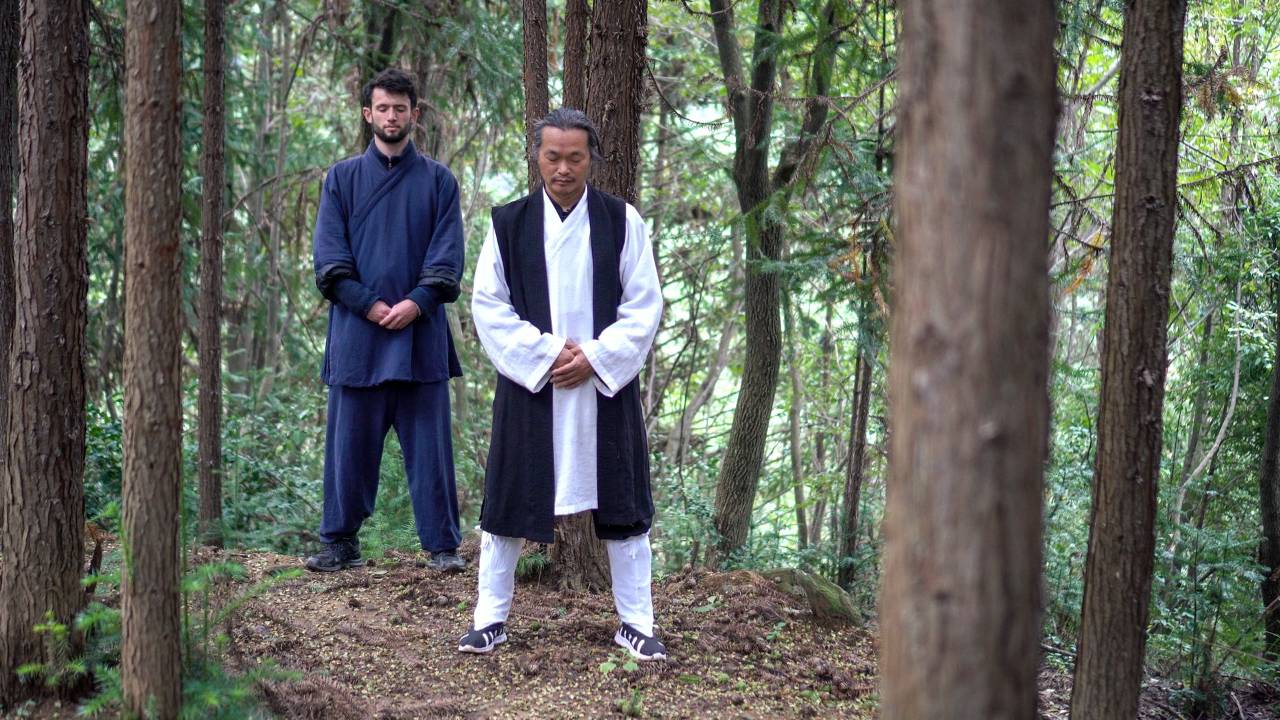
Master Gu brings over 25 years of Wudang Mountain training to his teaching. This authentic lineage ensures you're learning principles refined through centuries of practice, not modern interpretations disconnected from traditional wisdom.
The difference shows in subtle details - how to truly empty a foot, where to place your awareness during weight shifts, how to maintain sung (relaxation) without collapsing. These nuances transform tai chi indoor walking from simple slow walking into genuine energy cultivation.
Making Practice Sustainable
The real question isn't whether tai chi indoor walking works - it's whether you'll practise consistently enough to experience the benefits. Building sustainable habits requires more than good intentions.
Habit Formation Strategies
Start small. Three minutes daily beats 30 minutes once weekly for creating lasting change. Your nervous system needs regular repetition to integrate new patterns.
Tips for consistency:
- Practise at the same time each day
- Link it to an existing habit (after morning coffee, before dinner)
- Track your practice in a simple journal or calendar
- Join others for accountability
- Be gentle with yourself when you miss days
If you're new to Tai Chi altogether, our free 7-day Tai Chi Walking course is a great place to establish your foundation before expanding into longer-term practice.
Tracking Your Progress
Unlike activities measured by miles or weights, progress in tai chi indoor walking shows up subtly. You might notice better balance while reaching for something, less knee pain climbing stairs, or simply feeling more grounded during stressful moments.
Keep notes about these small shifts. They're easy to overlook but reveal the practice's transformative power over time. Our post on learning Tai Chi walking with George covers the journey from first steps to confident practice and might resonate if you're just getting started.
Beyond Indoor Practice
While this article focuses on indoor walking, the same principles apply outdoors when weather permits. Practising in nature adds another dimension - connection with trees, earth, and natural qi.
Many students eventually explore retreats in the Wudang Mountains to deepen their practice in the landscapes where these traditions originated. Walking meditation in such settings offers profound experiences.
Yet the indoor version remains valuable year-round. Weather, schedules, and life circumstances don't always cooperate with outdoor practice. Having a reliable indoor option ensures you can maintain consistency regardless of external conditions.
The adaptability matters. Your practice should serve your life, not become another source of stress or rigid obligation.
Tai chi indoor walking offers a gentle yet powerful path to better balance, mental clarity, and energy cultivation through simple, mindful movement. Whether you're exploring this practice as a standalone meditation or as part of broader tai chi study, the principles of weight shifting, breath awareness, and present-moment focus create meaningful change when practised consistently. Ready to take your first steps with authentic guidance? Our free Feel Better in 7 Days with Tai Chi Walking course is the easiest place to begin. And when you're ready for more, Taoist Wellness Online provides comprehensive instruction from Master Gu, live sessions, and a supportive global community.