Tai Chi Relaxation Exercises for Inner Peace
Sep 01, 2026
When stress becomes a constant companion and your body feels tight from the demands of modern life, tai chi relaxation exercises offer a gentle pathway back to balance. These ancient practices combine slow, flowing movements with mindful breathing and mental focus to dissolve tension, calm racing thoughts, and restore your natural energy flow. Unlike high-intensity workouts that can add more strain, tai chi meets you exactly where you are, inviting relaxation through movement that feels almost meditative. Whether you're new to these practices or deepening your understanding, these exercises provide practical tools for finding stillness within motion.
Understanding Tai Chi as a Relaxation Practice
Tai chi relaxation exercises form the foundation of this ancient art, designed to harmonise body and mind through gentle, deliberate movement. The practice emerged from Taoist philosophy, which teaches that true strength comes from softness and that relaxation is not emptiness but a state of alert, balanced energy.
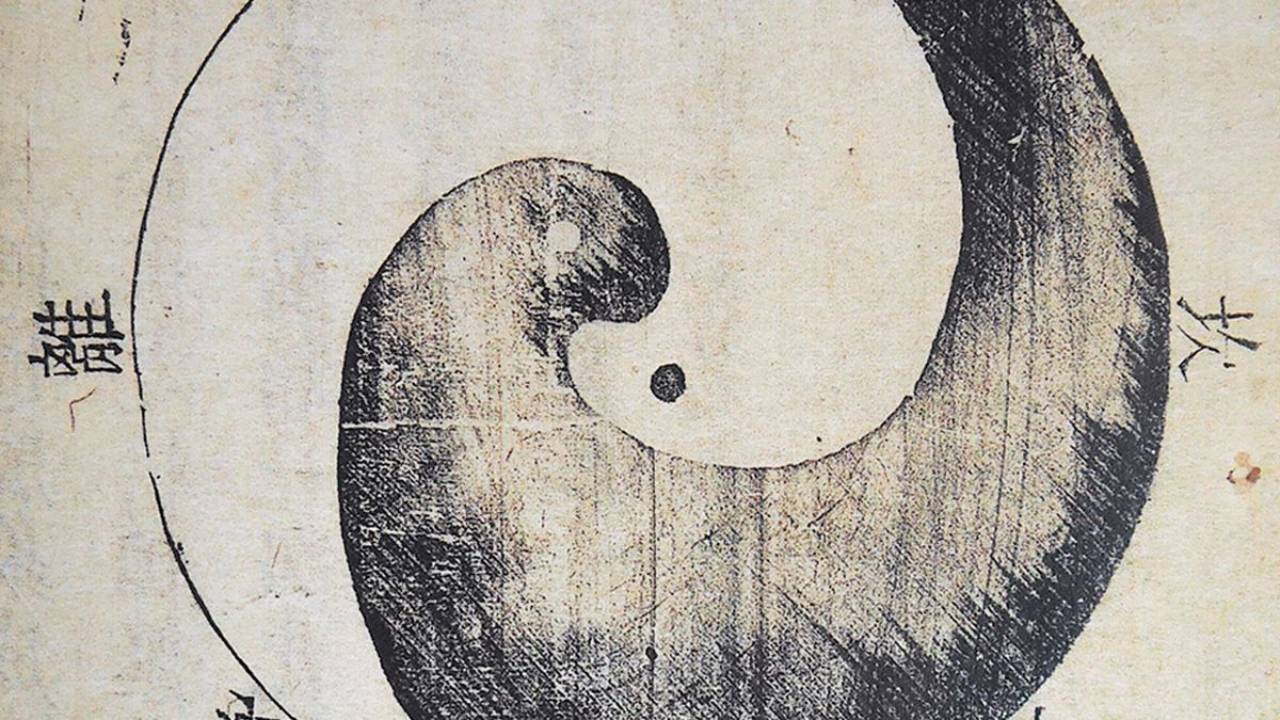
When you practise tai chi, you're not forcing your body into positions or pushing through discomfort. Instead, you're learning to release unnecessary tension while maintaining just enough engagement to support smooth, continuous movement. This delicate balance teaches your nervous system a new pattern, one where you can be active without being stressed, focused without being rigid. Our article on The Flow of Tai Chi: An Introduction to its Movements and Meanings explores this yin-yang balance in more depth.
The Science Behind Relaxation Through Movement
Research supports what practitioners have known for centuries. Studies on tai chi's psychological benefits show measurable improvements in stress reduction, mood enhancement, and overall mental wellbeing. The practice activates the parasympathetic nervous system, your body's natural relaxation response, while the flowing movements help release physical tension stored in muscles and connective tissue.
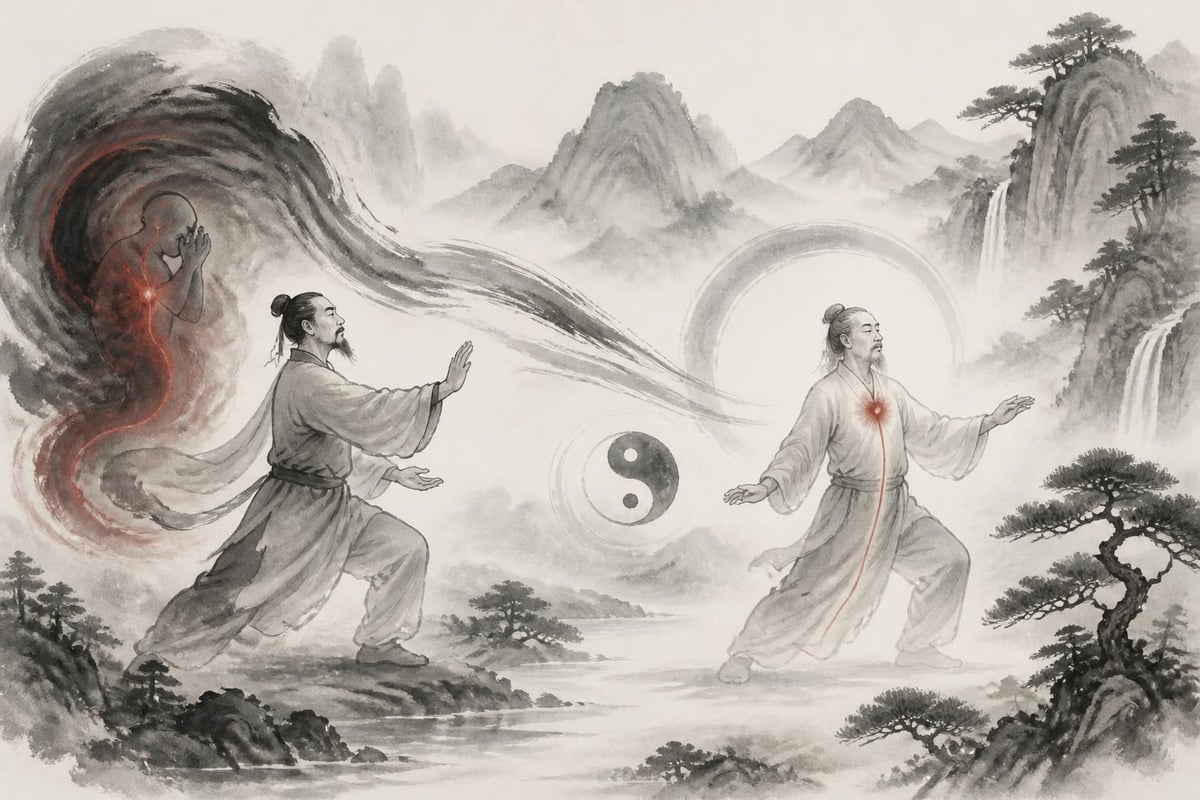
The combination of slow movement, deep breathing, and focused attention creates what researchers call a "relaxation cascade." Your heart rate slows, blood pressure decreases, and stress hormones diminish. Meanwhile, your brain produces more alpha waves, the same calming brain activity seen in meditation.
Core Elements of Tai Chi Relaxation Exercises
Every tai chi relaxation exercise builds on three fundamental principles that work together to create deep, lasting calm.
Breath as Your Anchor
Your breath guides everything in tai chi. Natural, abdominal breathing creates a rhythm that movements follow, never the other way around. When you inhale, your belly expands gently. When you exhale, it softens inward. This simple pattern:
- Massages internal organs
- Increases oxygen flow throughout your body
- Provides a focal point that quiets mental chatter
- Synchronises with movement to create flowing transitions
Begin each practice session by simply standing and breathing for two to three minutes. Notice how your body already starts to settle when you give your breath this kind of attention.
Sung: The Art of Relaxed Structure
The Chinese concept of "sung" represents relaxation with structure, sinking without collapsing. It's the feeling of standing tall while releasing tension from every joint and muscle that doesn't need to work in that moment.
| Body Area | Tension Pattern | Sung Release |
|---|---|---|
| Shoulders | Lifted, hunched forward | Drop downward, roll gently back |
| Chest | Puffed out or collapsed | Softly hollowed, neither proud nor caved |
| Lower back | Arched or rigid | Lengthened, tailbone dropping toward earth |
| Knees | Locked or hyper-flexed | Slightly bent, springy and alive |
Developing sung takes patient practice. Your body has learned tension patterns over years, sometimes decades. Tai chi helps reduce stress and anxiety by teaching new patterns of holding yourself in the world.
Mindful Presence in Each Movement
Tai chi relaxation exercises ask you to be fully present with whatever you're doing. When your hand rises, you feel the air against your palm, notice the subtle shift in weight through your feet, sense the gentle opening across your chest. This complete attention leaves no room for worry about tomorrow or replaying yesterday's conversations.
Essential Relaxation Exercises for Daily Practice
These foundational exercises can be practised individually or woven together into a flowing sequence. Start with just five to ten minutes daily and gradually extend your practice as it becomes a natural part of your routine.
Standing Meditation (Zhan Zhuang)
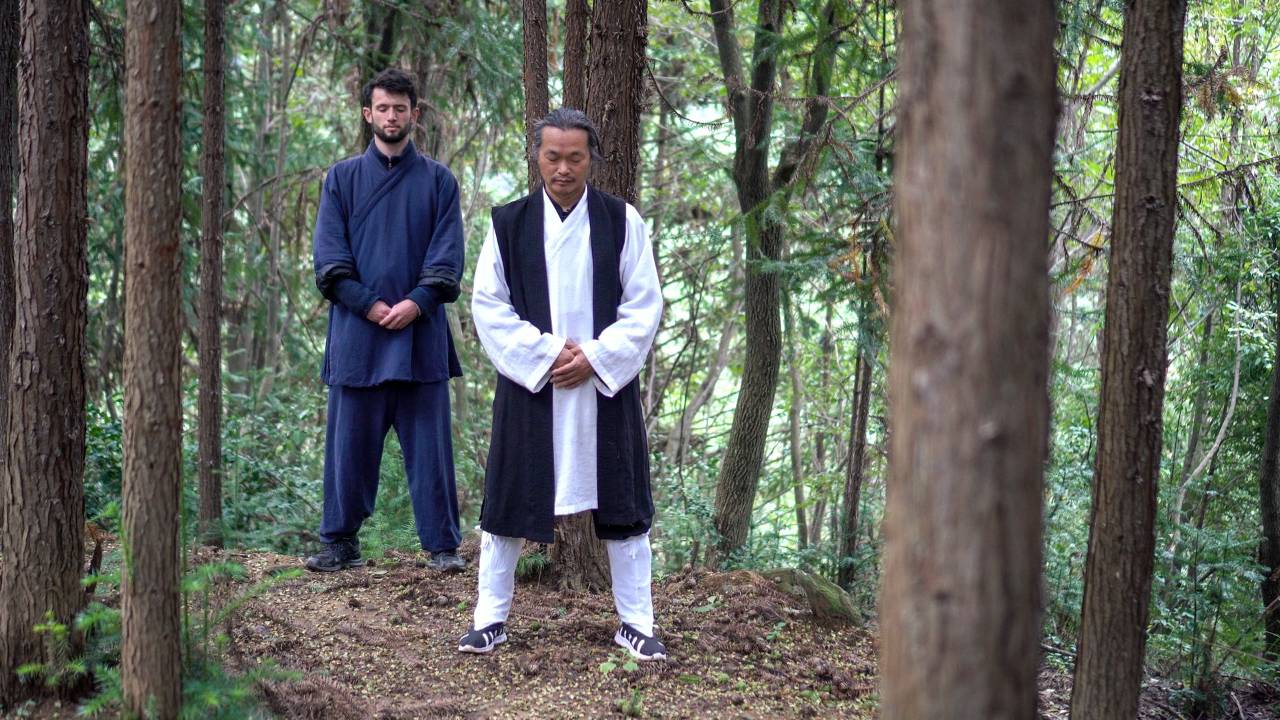
Standing meditation might seem simple, but it's one of the most powerful tai chi relaxation exercises for building internal awareness and releasing deep tension.
How to practise:
- Stand with feet shoulder-width apart, weight evenly distributed
- Soften your knees slightly, allowing a gentle spring
- Let your arms hang naturally or raise them as if holding a large ball at chest height
- Drop your shoulders, lengthen your spine, tuck your chin very slightly
- Breathe naturally and notice sensations without judgement
Hold this position for three to five minutes initially. As weeks pass, gradually extend to ten or fifteen minutes. You'll notice your legs may shake, muscles may burn, thoughts may race. These are tensions releasing, patterns shifting. Stay with it gently.
Cloud Hands (Yun Shou)
This flowing movement calms the mind while gently mobilising the spine, shoulders, and waist. The continuous, circular motion creates a meditative quality that naturally quiets mental chatter.
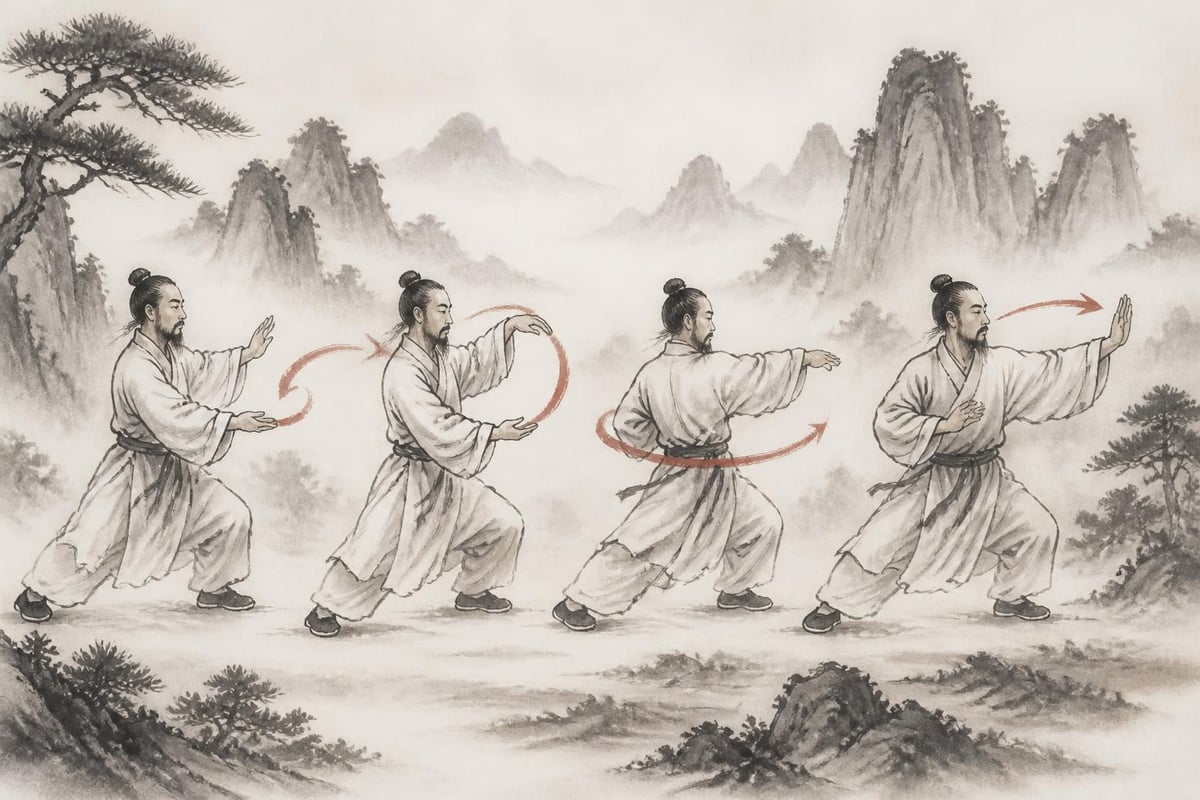
Begin with your weight on your right foot, left hand at chest height (palm facing you), right hand at waist level (palm down). Shift your weight slowly to your left foot as your hands circle, switching positions. Your waist turns gently with the movement, and your eyes follow your top hand. The motion continues smoothly, like watching clouds drift across the sky.
Practise for three to five minutes, letting the rhythm become so natural that your thinking mind can rest.
Brushing Knee and Pushing
This fundamental tai chi relaxation exercise combines forward and backward weight shifts with coordinated arm movements, teaching your body to move as one integrated unit rather than disconnected parts.
As you step forward with your left foot, your left hand sweeps downward past your knee while your right hand pushes forward at chest height. The entire movement flows with your breath, one smooth wave from back foot to front hand. Return to centre and repeat on the other side.
The exercise releases tension in hips, shoulders, and lower back while improving balance and coordination. Move slowly enough that you can feel each micro-adjustment your body makes to stay centred and relaxed.
Building Your Personal Relaxation Routine
Creating a sustainable practice means meeting yourself with compassion and realistic expectations. Tai chi relaxation exercises work best when they become a natural part of your daily rhythm rather than another task on an overwhelming to-do list.
Morning Practice for Centred Energy
Starting your day with tai chi sets a tone of calm capability. Even ten minutes of standing meditation and gentle movements can shift your entire day's trajectory, improving energy, focus, and emotional resilience throughout whatever challenges arise.
Sample morning sequence:
- 3 minutes standing meditation
- 2 minutes gentle neck and shoulder rotations
- 5 minutes cloud hands
- 2 minutes centring and intention setting
Evening Practice for Deep Sleep
Many students discover that tai chi relaxation exercises practised before bed significantly improve sleep quality, with some research suggesting these gentle movements may be as effective as other approaches for supporting rest, without side effects or dependency risks.
Your evening practice can be slightly longer and even more focused on releasing the day's accumulated tension. Dim lighting, gentle music, or complete silence all work well. You might enjoy practising alongside Master Gu's hour-long tai chi music session below, a lovely accompaniment for slower, more meditative evening practice.
Listen to what your body needs.
| Practice Element | Morning Focus | Evening Focus |
|---|---|---|
| Energy Quality | Gently awakening | Softly settling |
| Movement Speed | Moderate, energising | Very slow, dissolving |
| Mental State | Setting intention | Releasing concerns |
| Duration | 10-15 minutes | 15-20 minutes |
Deepening Your Practice with Authentic Guidance
While tai chi relaxation exercises can be explored independently, learning from an experienced teacher accelerates your progress and helps you avoid common pitfalls. Subtle adjustments in posture, breath, or intention can transform a movement from simple exercise into deep practice.
Our Tai Chi course provides structured guidance from Master Gu, whose Wudang lineage carries centuries of refined understanding. The online format allows you to practise at your own pace while accessing the depth of authentic teaching. If you'd like to sample this before committing further, our free Taoist course covers Tai Chi, Qi Gong, Meditation, and Taoist Wisdom as a gentle starting point.
Common Challenges and Gentle Solutions
Challenge: Mind keeps wandering during practice
Solution: This is completely normal. Each time you notice, gently return attention to your breath or the sensation in your feet. The practice isn't about perfect focus but kind return.
Challenge: Body feels stiff or movements seem awkward
Solution: Start with smaller, simpler movements. Even raising and lowering your arms with breath awareness is legitimate practice. Fluidity develops gradually.
Challenge: Not sure if you're doing it "right"
Solution: If you're breathing, moving gently, and paying attention, you're doing it right. Perfectionism creates tension; tai chi dissolves it.
Challenge: Hard to find motivation for daily practice
Solution: Start with just three minutes. Set a timer. The barrier is often beginning, not continuing. Also, our supportive community provides encouragement and shared experience.
Integrating Relaxation Principles Throughout Your Day
The true power of tai chi relaxation exercises emerges when principles learned during formal practice begin influencing how you move through ordinary activities.
Micro-Practices for Busy Lives
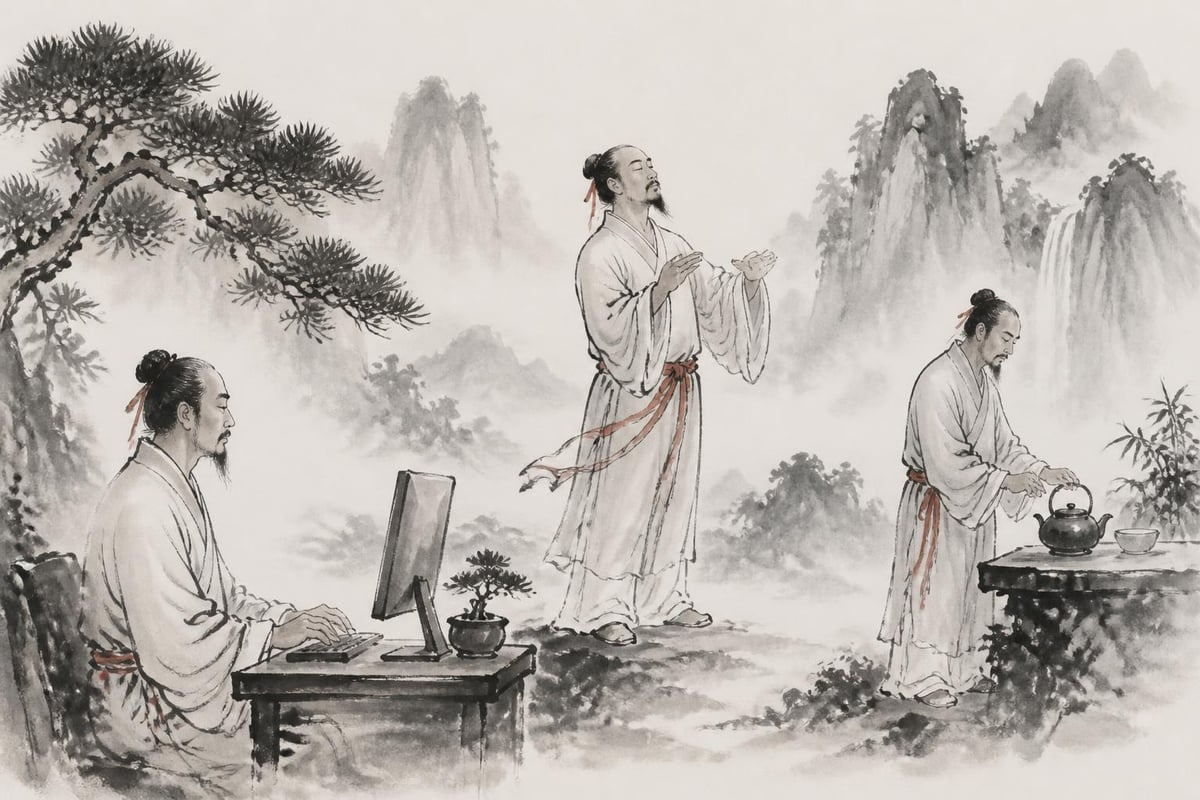
You don't need a special space or twenty free minutes to apply tai chi relaxation principles. While waiting for your computer to start, bring awareness to your breath and soften your shoulders. Standing in line at the shop, check in with sung in your knees and lower back. Washing dishes becomes moving meditation when you stay present with the sensation of warm water and smooth plates.
These micro-practices accumulate, creating islands of calm throughout your day. Your nervous system learns that relaxation is always available, not something you can only access during formal practice sessions.
Movement as Medicine
Tai chi is widely recognised as excellent exercise for balance, particularly valuable as we age. But beyond physical benefits, regular practice of tai chi relaxation exercises fundamentally changes your relationship with stress, discomfort, and challenge.
Instead of tensing against difficulty, you learn to stay soft while staying present. Instead of rushing through discomfort, you breathe through it with patience. These aren't just movement skills but life skills, developed through consistent, gentle practice.
The Broader Context of Taoist Practice
Tai chi relaxation exercises emerge from a larger framework of Taoist cultivation practices designed to harmonise body, energy, and spirit. Understanding this context enriches your practice and opens doors to deeper exploration. Our piece on Scout Tai Chi's Timeless Balance: Online Courses for Harmony in Motion traces this larger tradition in more detail.
Qi Gong and Tai Chi: Complementary Paths
While tai chi emphasises flowing martial forms, our Qi Gong course often focuses more directly on energy cultivation through simple, repeated movements and breathing patterns. Both traditions share the goal of free-flowing qi (life energy) and relaxed, balanced presence.
Many practitioners find that combining both approaches creates a complete practice. Qi gong exercises might prepare your energy body for tai chi forms, while tai chi's complexity keeps your mind engaged and your coordination sharp.
Philosophical Foundations
Our Taoist Philosophy course underlying these practices teaches wu wei (effortless action), yin-yang balance, and alignment with natural rhythms. When you practise tai chi relaxation exercises, you're not just moving your body but embodying ancient wisdom about how to live with grace and ease.
This philosophical dimension transforms practice from mere stress management into spiritual cultivation. You're not fighting against stress but learning to flow with life's natural alternations between activity and rest, challenge and ease.
Progressive Development Over Time
Your relationship with tai chi relaxation exercises will naturally evolve. What feels challenging today becomes comfortable tomorrow. What seems simple now will reveal hidden depths later.
First Month: Building Foundation
Early practice focuses on learning basic movements, establishing breathing patterns, and simply showing up consistently. Don't expect dramatic transformation yet. You're planting seeds, preparing soil, creating conditions for growth.
Notice small shifts: maybe you sleep slightly better, or your shoulders don't climb toward your ears quite as often. Celebrate these subtle changes.
Months Two Through Six: Deepening Understanding
As movements become more familiar, your attention can shift to subtler aspects like weight distribution, spinal alignment, and the quality of transitions between postures.
Your body begins to crave practice. Missing a day feels like skipping a meal. This is practice taking root.
Beyond Six Months: Embodied Wisdom
After half a year of consistent practice, tai chi relaxation exercises become less something you do and more something you are. The principles infuse your daily movement. You naturally breathe more deeply. Your response to stress shifts fundamentally.
This is when practice becomes truly transformative, not through dramatic breakthrough but through quiet, accumulated change that reshapes how you inhabit your body and move through the world.
Adapting Practice for Individual Needs
Tai chi relaxation exercises can be modified for different abilities, ages, and circumstances. The principles remain constant even as the external form adapts.
Chair-Based Practice
If standing for extended periods isn't accessible, virtually all tai chi relaxation exercises can be practised while seated. The internal work of breath, awareness, and sung remains identical. Your hands trace the same patterns through space; your spine lengthens and softens just as in standing practice.
Gentle Modifications for Limited Mobility
Every movement exists on a spectrum from large to tiny. If raising your arms overhead causes discomfort, raise them only to shoulder height, or to waist height, or simply imagine the movement while making micro-adjustments in your shoulders. The intention and attention matter more than the range of motion. If you have an existing health condition or injury, always check with a healthcare professional before starting a new movement practice.
Intensive Practice Periods
Some students choose to deepen their practice through our retreats in China, immersing themselves in the tradition's living source. These intensive periods can catalyse profound shifts, though they're absolutely not necessary for meaningful practice.
Creating Supportive Conditions
Your environment influences practice quality. While tai chi relaxation exercises can be done anywhere, certain conditions make practice more inviting.
Space considerations:
- Clear enough floor area to extend your arms in all directions
- Good ventilation but not draughty cold
- Minimal visual clutter to reduce distraction
- Natural light if practising during daytime
Timing strategies:
- Choose a time when you're least likely to be interrupted
- Practise before meals rather than on a full stomach
- Morning practice energises; evening practice calms
- Consistency matters more than duration
Clothing choices:
- Loose, comfortable layers that don't restrict movement
- Flat, thin-soled shoes or bare feet for better ground connection
- Natural fabrics that breathe well
Moving Forward with Patience and Trust
Tai chi relaxation exercises offer lifelong practice that continues revealing new dimensions regardless of how long you've studied. The beginner's curiosity you bring today remains valuable twenty years from now, even as your skill and understanding deepen immeasurably.
Trust the process. Trust your body's wisdom. Trust that consistent, gentle practice accumulates into transformation you can't force but can absolutely cultivate. Each breath, each weight shift, each moment of present awareness contributes to the larger pattern of a life lived with greater ease and deeper connection to your authentic nature.
Learning tai chi relaxation exercises provides practical tools for navigating stress while opening doors to deeper self-understanding and balanced vitality. If you're ready to explore these transformative practices with authentic guidance, Taoist Wellness Online offers comprehensive courses taught by Master Gu, along with a supportive global community of fellow practitioners. Whether you're taking your first steps or deepening an existing practice, you'll find structured teaching, live sessions, and resources designed to support your journey toward greater ease, energy, and inner peace.