Tai Chi Abs: Build Core Strength Through Ancient Practice
Jul 22, 2026
Your core is more than just the muscles you see in the mirror. It's the foundation of every movement you make, the centre of your balance, and the source of your body's power. When you think about developing tai chi abs, you're not just working toward aesthetic goals. You're cultivating a deep, functional strength that supports your entire body and connects your physical practice to your inner energy. Through the gentle, deliberate movements of Tai Chi, you can build core stability that lasts.
Understanding Tai Chi Abs Beyond Traditional Core Training
Traditional abdominal training often isolates specific muscle groups through repetitive exercises. Tai chi abs work differently. They develop through integrated, whole-body movements that engage your core in dynamic, functional ways.
When you practise Tai Chi, every shift of weight requires core engagement. Every turn of your waist activates deep stabilising muscles. The slow, controlled nature of the movements means your abdominal muscles work continuously, building endurance alongside strength.
The Core in Taoist Movement
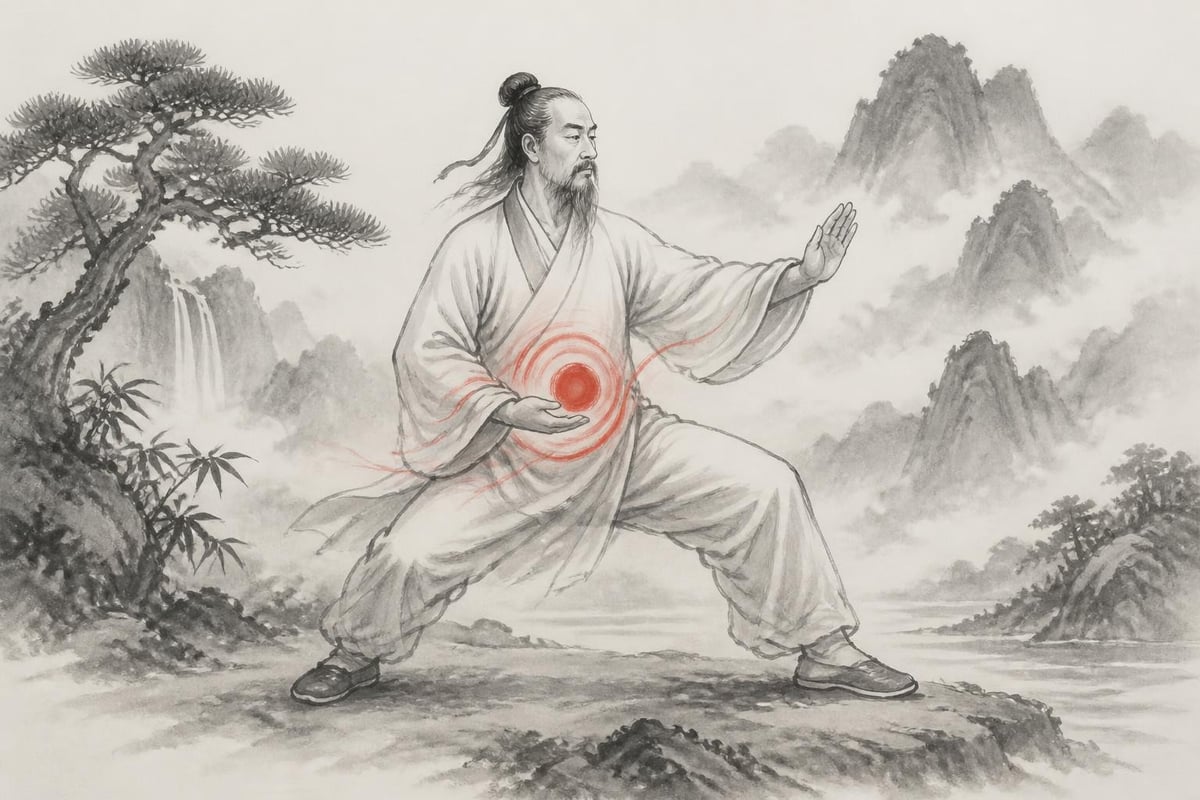
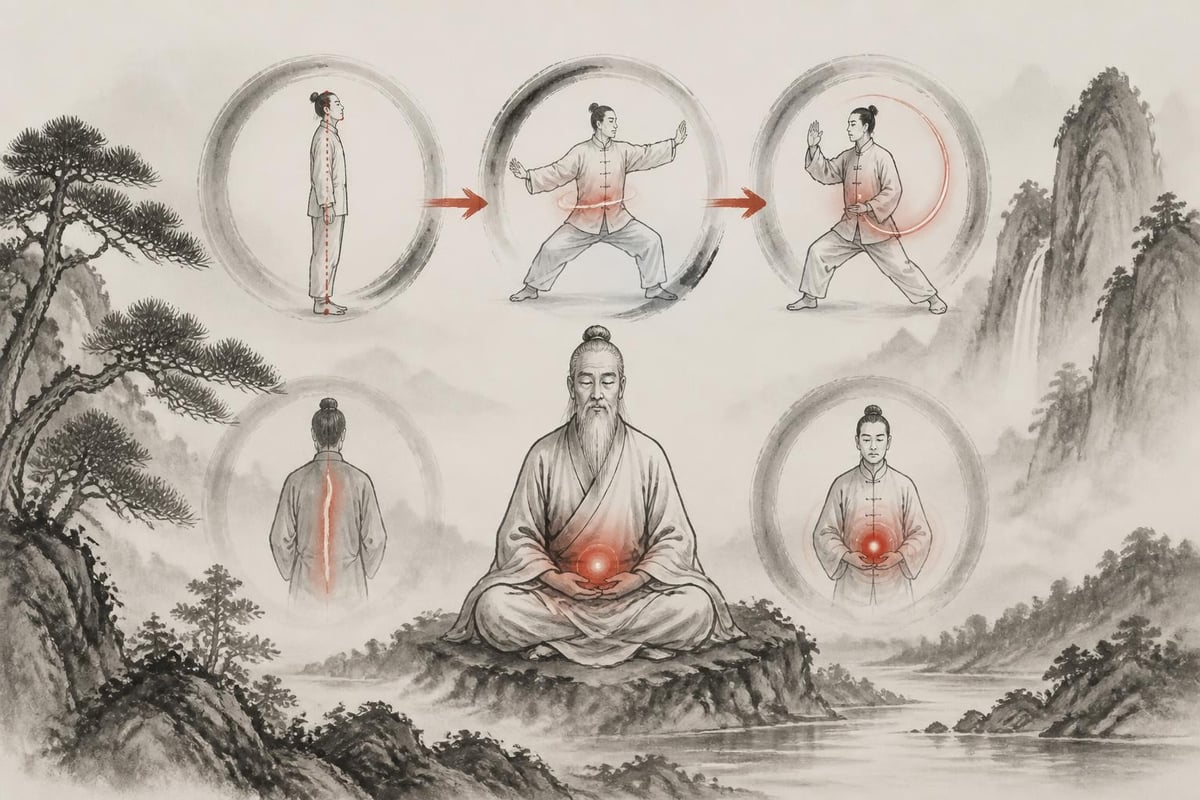
In Wudang Tai Chi, the core isn't just your abs. It's your dan tian, the energy centre located about two inches below your navel. This area serves as the command centre for all movement, the place where breath, energy, and physical power unite.
When you move from your dan tian, you naturally engage your entire core structure:
- Transverse abdominis: the deep muscle that wraps around your spine like a corset
- Rectus abdominis: the familiar "six-pack" muscles
- Obliques: the side muscles that control rotation and lateral movement
- Multifidus: small muscles along your spine that provide stability
- Pelvic floor: the foundation that supports everything above it
This comprehensive engagement happens naturally when you root your practice in authentic principles. You don't have to think about each muscle. You simply move with awareness, and your body responds.
How Tai Chi Movements Strengthen Your Abs
The beauty of developing tai chi abs lies in the variety of ways your core engages throughout practice. Different movements challenge your abdominal muscles in different ways, creating balanced, functional strength.
Stance Work and Isometric Core Engagement
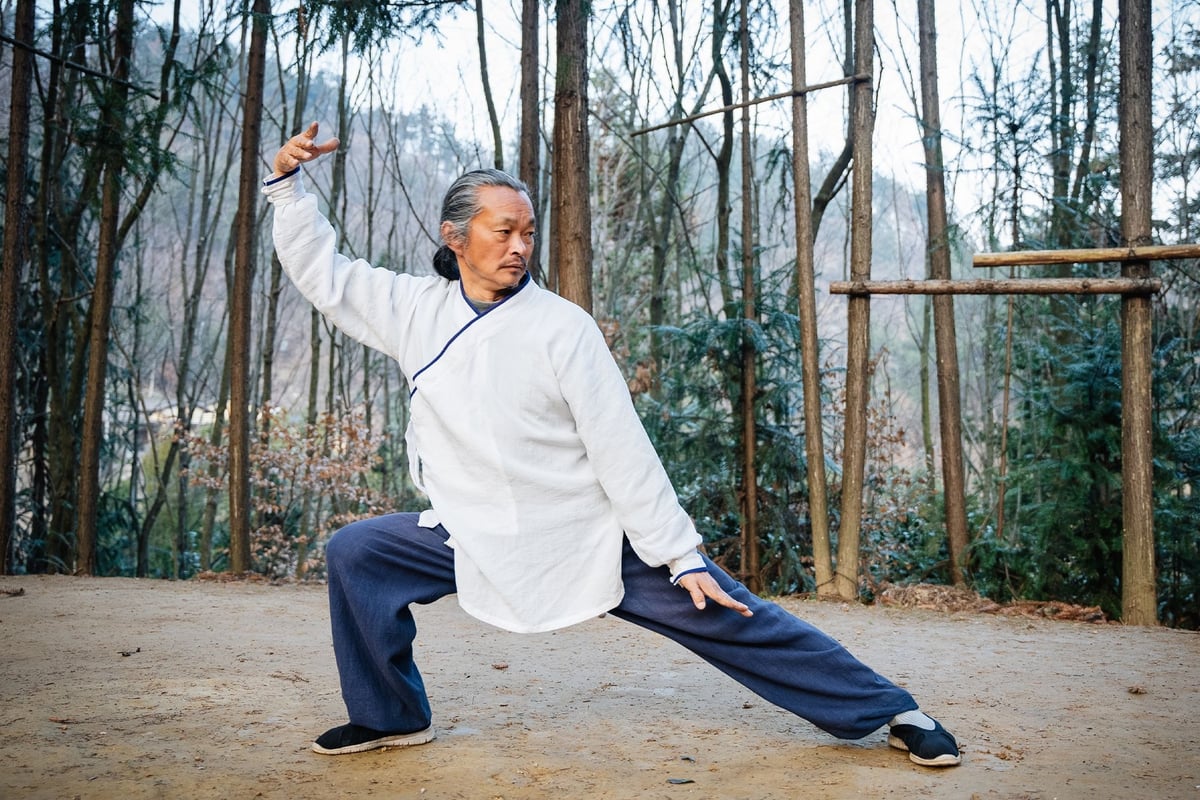
Holding Tai Chi stances requires sustained core activation. When you sink into a horse stance or maintain a bow stance, your abs work constantly to keep your torso upright and stable.
This isometric work builds endurance. Your muscles learn to maintain tension without fatigue, developing the kind of strength that serves you in daily life. Unlike exercises that work muscles to exhaustion, Tai Chi stance work develops sustainable strength that you can maintain for extended periods.
| Stance Type | Primary Core Challenge | Secondary Benefits |
|---|---|---|
| Horse Stance | Frontal stability | Lower body strength, hip opening |
| Bow Stance | Rotational control | Weight transfer skills, leg power |
| Empty Step | Dynamic balance | Proprioception, ankle stability |
| Single Leg | Full core activation | Balance, focus, coordination |
Rotational Movements and Oblique Development
Many Tai Chi forms emphasise waist rotation. Movements like Cloud Hands, Single Whip, and Brush Knee involve continuous turning from your centre. These rotations deeply engage your obliques and develop rotational power.
The twisting motions in Tai Chi differ from typical ab exercises because they coordinate with breath and maintain spinal alignment. You're not crunching or forcing the movement. You're allowing your waist to turn naturally while your core stabilises the motion.
Research on core training in Tai Chi practitioners shows significant improvements in performance and physical attributes when practitioners focus on core development. This suggests that intentional core engagement within Tai Chi forms amplifies their strengthening benefits.
Weight Shifts and Dynamic Stability
Every time you shift your weight in Tai Chi, your core adjusts to maintain balance. These constant micro-adjustments build deep stabilising strength that traditional exercises often miss.
Your abs work hardest during the transitions - the moments between postures when you're moving from one position to another. This is where tai chi abs truly develop, because your core must control the movement while maintaining alignment and balance.
Breathing Techniques That Activate Core Muscles
Breath is inseparable from core work in Tai Chi. When you breathe properly, you engage your diaphragm, which works in coordination with your abdominal muscles to create intra-abdominal pressure. This pressure supports your spine and stabilises your entire torso.
Dan Tian Breathing
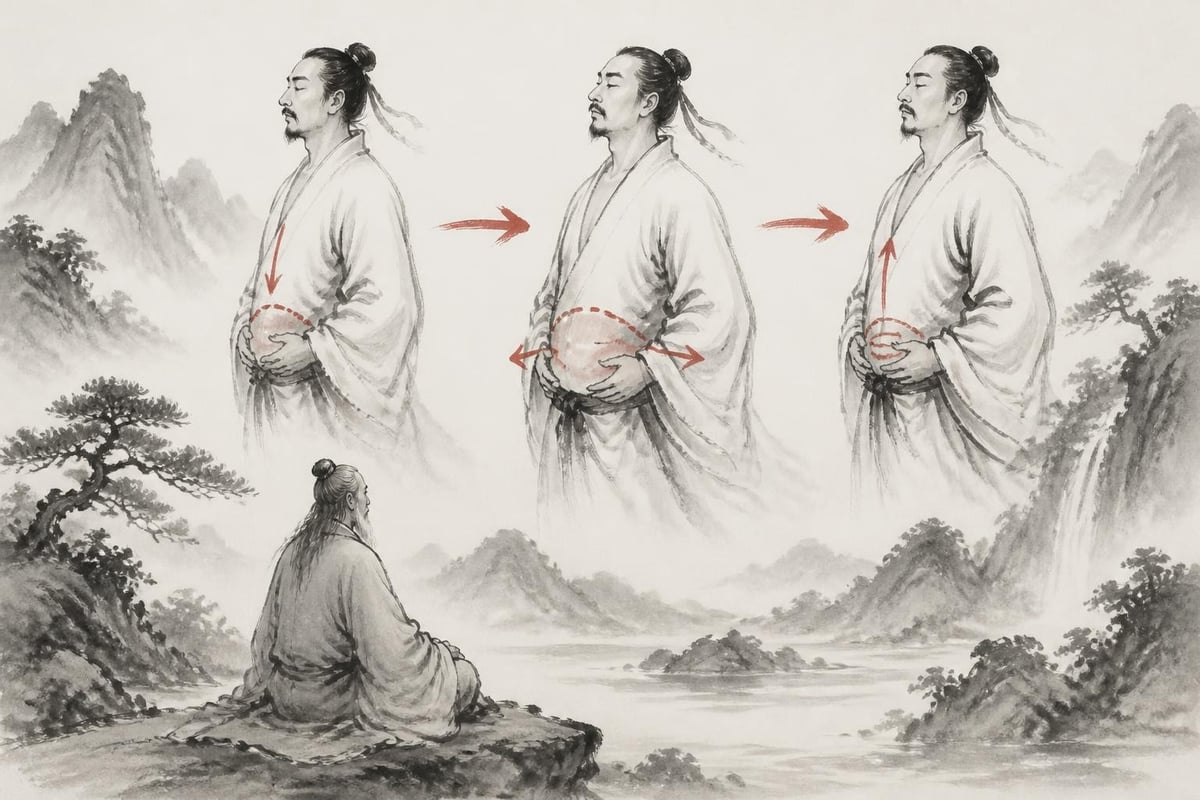
In Wudang practice, you learn to breathe into your lower abdomen, expanding the dan tian area with each inhale. This isn't just visualisation. It's a physical practice that strengthens the connection between breath and core.
When you inhale deeply into your lower belly:
- Your diaphragm descends fully
- Your lower abs expand outward
- Your pelvic floor relaxes slightly
- Pressure builds naturally in your core
When you exhale:
- Your abs draw inward and upward
- Your diaphragm rises
- Your pelvic floor lifts gently
- Stale air and tension release
This breathing pattern naturally exercises your abs with every breath. Over time, it builds awareness and strength that support all your movements.
Breath Coordination in Forms
Advanced practice involves coordinating breath with specific movements. Opening movements typically occur on an inhale, while closing or striking movements happen on an exhale. This coordination creates natural core engagement that reinforces the physical movements.
When practising our Tai Chi course, you learn these breathing patterns as part of the complete system. The breath becomes an invisible force that powers your movements and deepens your core activation.
Building Tai Chi Abs Through Consistent Practice
Developing core strength through Tai Chi requires patience and consistency. Unlike high-intensity workouts that promise quick results, Tai Chi works gradually, building strength that integrates seamlessly with your overall health and energy.
Starting Your Practice
If you're new to Tai Chi, focus first on learning the basic movements correctly. Proper alignment and weight distribution matter more than how many repetitions you complete or how long you hold a stance.
Begin with these foundational practices:
- Basic stance work: Hold horse stance for 30 seconds to start, gradually increasing duration
- Weight shifting: Practise shifting between bow stances smoothly and slowly
- Waist turns: Stand in horse stance and rotate your upper body from the waist
- Single leg balance: Practise empty step to develop stability and core control
As you become more comfortable, you can explore complete forms. Our free 4-week Taoist Wellness course offers an excellent introduction to these principles, guiding you through foundational practices that build core awareness and strength naturally.
Progressive Development
Your tai chi abs will develop in stages. Initially, you'll notice improved posture and better awareness of your core. After a few weeks of consistent practice, you'll feel greater stability in daily activities.
| Practice Duration | Expected Core Changes | Signs of Progress |
|---|---|---|
| Weeks 1-4 | Increased awareness | Better posture, reduced back tension |
| Weeks 5-12 | Building endurance | Can hold stances longer, improved balance |
| Months 4-6 | Developing strength | Visible tone, easier weight shifts |
| 6+ Months | Integrated power | Core engages automatically, fluid movements |
The key is regular practice. Twenty minutes daily produces better results than two hours once a week. Your body needs consistent reinforcement to build new patterns.
Integrating Core Focus
While Tai Chi naturally engages your core, you can deepen this engagement through conscious attention. As you practise, occasionally bring awareness to your dan tian. Notice how it feels when you move from this centre.
During stance work, pay attention to the subtle engagement in your lower abs. During forms, feel how your waist leads each movement. This mindful practice accelerates your development without forcing or straining.
The Mind-Body Connection in Core Strength
One aspect that sets tai chi abs apart from conventional core training is the integration of mental focus. In Tai Chi, your mind leads your energy, and your energy moves your body. This creates a unique pathway to core development that engages both physical and energetic systems.
Yi (Intention) and Core Activation
In Wudang teachings, yi refers to focused intention. When you direct your yi to your dan tian, you create a mental-physical connection that enhances core engagement. This isn't mystical thinking. It's practical neuromuscular coordination.
Research consistently highlights improvements in muscle strength and balance through Tai Chi practice, which depend heavily on core stability. The mental focus component appears to enhance these physical benefits beyond what movement alone provides.
When you practise with clear intention, your nervous system communicates more effectively with your muscles. Your core responds more completely to the demands of each movement. Over time, this builds not just stronger abs, but smarter abs that know how to engage appropriately for any activity.
Stress Reduction and Abdominal Health
Your mental state directly affects your core. Chronic stress leads to elevated cortisol levels, which can promote abdominal fat storage and create tension in your core muscles. Tai Chi addresses this connection by calming your nervous system while strengthening your body.
The meditative quality of Tai Chi practice helps reduce stress naturally. As you move slowly and breathe deeply, your body shifts out of fight-or-flight mode. Your muscles release unnecessary tension. Your digestion improves. Your sleep deepens.
All of these factors support abdominal health and make your core training more effective. When you're relaxed, your muscles can work efficiently without fighting against chronic tension patterns.
Complementary Practices for Core Development
While Tai Chi provides comprehensive core training, you can enhance your development by incorporating complementary practices from the Taoist wellness tradition.
Qi Gong for Core Awareness
Qi Gong exercises specifically target energy cultivation and can deepen your core awareness. Practices like Standing Meditation (Zhan Zhuang) build tremendous core endurance through sustained stillness.
Other Qi Gong movements focus directly on the dan tian area, using breath and intention to build energy in your core. These practices complement your Tai Chi work by developing the energetic foundation that supports physical strength. If you'd like to explore this further, our Qi Gong course teaches traditional Wudang methods that work beautifully alongside Tai Chi practice.
Taoist Meditation
Meditation might seem unrelated to physical core strength, but the connection runs deep. When you sit in meditation, you maintain an upright posture that requires core engagement. More importantly, you develop the mind-body awareness that makes all your physical practice more effective.
Regular meditation helps you notice subtle sensations in your body. You become aware of tension patterns that might interfere with proper core engagement. You develop the patience and focus needed for sustained practice. These mental skills directly enhance your ability to develop tai chi abs.
Practical Integration
Your daily routine might look like this:
- Morning: 10 minutes of standing meditation or Qi Gong to centre your energy
- Mid-day: Brief stretching or waist rotations to maintain core awareness
- Evening: 20-30 minutes of Tai Chi forms to build strength and release the day's tension
- Before bed: 5 minutes of breathing practice to calm your system
This kind of integrated approach builds core strength while supporting your overall wellbeing. You're not just training muscles in isolation. You're cultivating a complete system of health that includes your abs, your energy, and your peace of mind.
Common Challenges and Solutions
As you develop tai chi abs, you'll encounter certain challenges. Understanding these ahead of time helps you navigate them skilfully.
Challenge: Not Feeling Core Engagement
Many beginners don't feel their core working during Tai Chi. The movements seem gentle, and without obvious burn or fatigue, it's hard to know if you're getting a workout.
Solution: Focus on stance depth and duration. Sink lower in your stances and hold them longer. This increases the challenge and makes core engagement more obvious. Also, slow down your forms. The slower you move, the more your core must work to control each transition.
Challenge: Lower Back Discomfort
Some practitioners experience lower back tension when beginning core-focused Tai Chi work. This usually indicates weak deep core muscles trying to compensate.
Solution: Check your pelvic alignment. Avoid arching your lower back or tucking your tailbone too much. Imagine your pelvis as a bowl of water that you're trying to keep level. Strengthen your practice gradually, allowing your deep core muscles time to develop before increasing intensity.
Challenge: Inconsistent Practice
Life gets busy, and regular practice becomes difficult. Without consistency, core development stalls.
Solution: Commit to shorter sessions. Even five minutes daily maintains momentum better than sporadic longer sessions. Build your practice into existing routines. Practise during your coffee break, before meals, or as a transition between work tasks. Communities such as ours at Taoist Wellness Online are there to keep you motivated and supported through exactly these kinds of challenges.
Measuring Your Progress
Unlike conventional fitness training, measuring tai chi abs development requires looking beyond the mirror. Yes, physical changes occur, but the deeper signs of progress often matter more.
Physical Indicators
You'll notice these changes in your body:
- Improved posture throughout the day
- Greater ease in activities requiring balance
- Reduced back pain or tension
- Better breathing capacity
- Visible muscle tone in your midsection
- Increased endurance in physical activities
Functional Improvements
Pay attention to how your core serves you in daily life:
- Easier to get up from the floor
- Better stability when reaching or lifting
- Improved sports performance
- More comfortable sitting for extended periods
- Enhanced body awareness during all activities
Energetic Development
In authentic Taoist practice, energetic development parallels physical strength:
- Feeling of warmth or fullness in your lower abdomen
- Increased vitality throughout the day
- Better emotional regulation
- Deeper connection to your body's wisdom
- Sense of being grounded and centred
These subtle signs indicate that your practice is working on multiple levels. You're not just building stronger abs. You're cultivating a more integrated, balanced version of yourself.
Deepening Your Practice Over Time
As your tai chi abs develop, your practice naturally evolves. What once challenged you becomes comfortable. You're ready to explore deeper layers of the work.
Advanced Stance Variations
Lower stances increase core demand significantly. As your strength builds, experiment with sinking deeper while maintaining perfect alignment. The additional challenge develops power alongside stability.
Single-leg stances become accessible as your core strengthens. These variations require complete core integration and build functional strength that transfers to all movement patterns.
Faster Form Practice
While slow practice builds foundational strength, faster execution develops explosive power from your core. Advanced practitioners can perform forms at various speeds, each pace offering different benefits.
Fast forms require your core to generate and control power quickly. Your abs must engage and release rapidly, building a different kind of strength than slow practice develops.
Weapons Forms
Traditional Tai Chi includes practice with weapons like the sword, saber, or staff. These forms intensify core engagement because you're moving not just your body but an external object. The coordination required deepens your core integration significantly.
Living With Strong Tai Chi Abs
Ultimately, developing tai chi abs isn't about achieving a particular look or hitting a specific strength benchmark. It's about building a core that supports you in living fully and moving through the world with grace, power, and balance.
Your strengthened core becomes a constant companion. It supports you when you sit at your desk, when you lift groceries, when you play with children or grandchildren. It helps you breathe more fully, stand more confidently, and move more freely.
The practice also connects you to something larger than yourself. The same movements you perform today have been practised for generations. You're part of an unbroken lineage of people who understood that true strength comes from patience, consistency, and alignment with natural principles.
Your abs become more than muscles. They become the physical manifestation of your commitment to wellness, your respect for ancient wisdom, and your willingness to grow through gentle, persistent effort. This is the deeper meaning of tai chi abs, and it's available to anyone willing to practise with sincerity and patience.
For those who want to understand the ideas behind the movement more deeply, our Taoist philosophy course offers valuable context - understanding the philosophical foundation enriches your physical practice and helps you apply these principles to all areas of life.
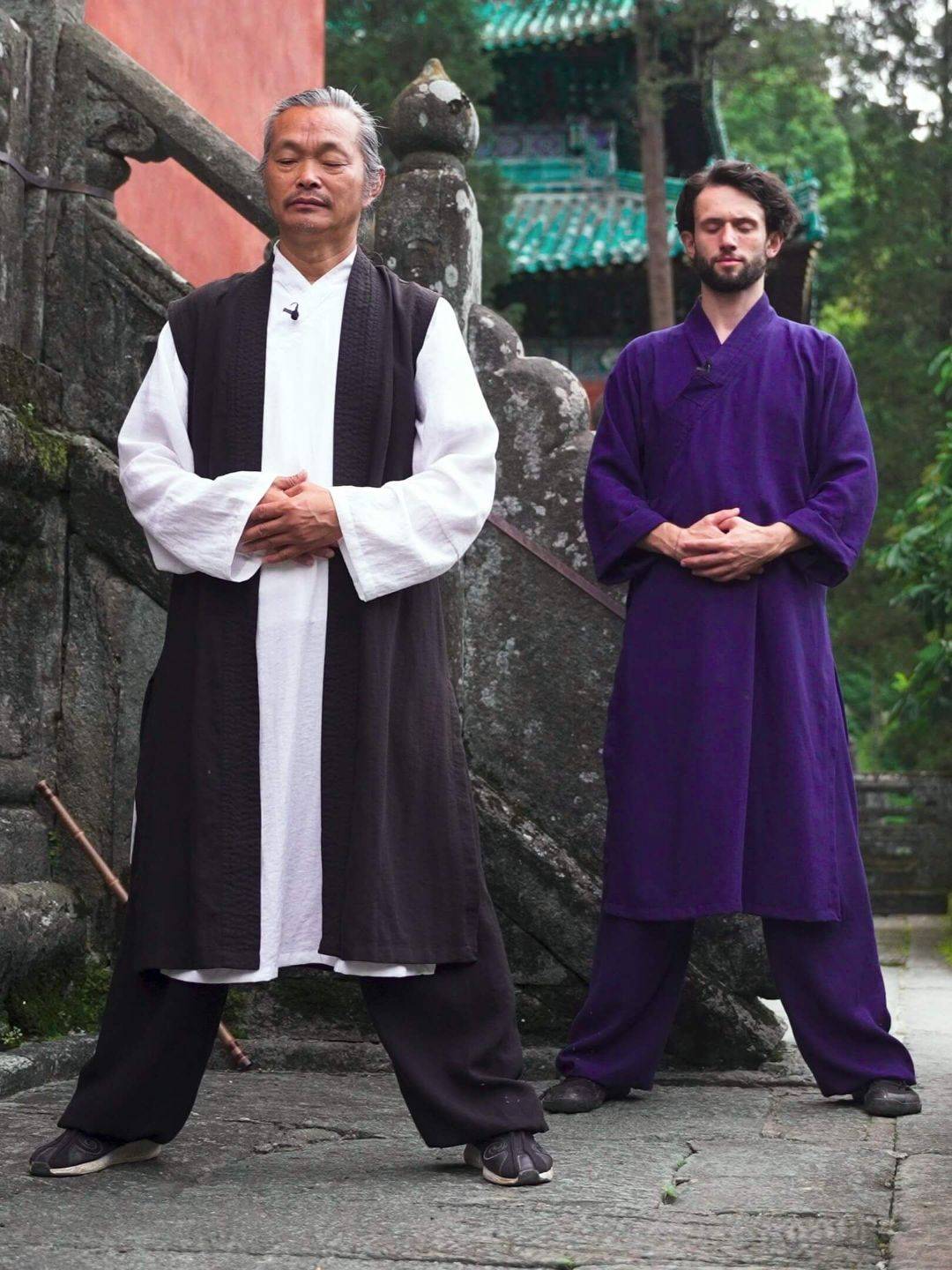
Building tai chi abs through authentic Wudang practice offers a path to core strength that honours both your body and your whole being. The gentle, integrated approach develops stability, power, and awareness that serve you far beyond your practice sessions. Start with our free 4-week Taoist Wellness course and experience this approach to core strength for yourself - no equipment needed, just you and Master Gu. When you're ready to go deeper, Taoist Wellness Online provides comprehensive guidance from Master Gu, a 15th-generation Wudang master, along with a supportive community and extensive resources to support your journey toward balanced strength and vibrant health.