Simple Tai Chi: A Beginner's Path to Balance and Calm
Oct 05, 2026
You don't need years of training or perfect flexibility to begin experiencing the benefits of tai chi. Simple tai chi offers an accessible entry point into an ancient practice that has helped millions find balance, calm, and vitality. Whether you're looking to reduce stress, improve your physical health, or simply find a few moments of peace in your day, starting with straightforward movements and basic principles can create meaningful changes in how you feel and move through life.
What Makes Tai Chi Simple and Accessible
Simple tai chi strips away complexity while preserving the essential elements that make this practice transformative. At its core, tai chi involves slow, flowing movements coordinated with breath and awareness. You don't need special equipment, a large space, or athletic ability to begin.
The beauty of approaching tai chi simply lies in its adaptability. Unlike high-impact exercises that demand specific fitness levels, simple tai chi meets you where you are. People of all ages and fitness levels can practise safely and see benefits.
The Core Elements That Make Practice Simple
When you understand the foundational pieces, tai chi becomes less mysterious and more approachable:
- Grounded stance: Stand with feet shoulder-width apart, knees slightly bent, weight distributed evenly
- Natural breath: Breathe deeply and naturally without forcing or controlling
- Relaxed body: Release tension in shoulders, jaw, and hands while maintaining gentle structure
- Present awareness: Focus attention on the sensations of movement and breath
- Continuous flow: Move smoothly from one position to the next without stopping
These elements work together to create the meditative quality that distinguishes tai chi from ordinary exercise. You're not just moving your body; you're training your mind to stay present and your energy to flow freely.
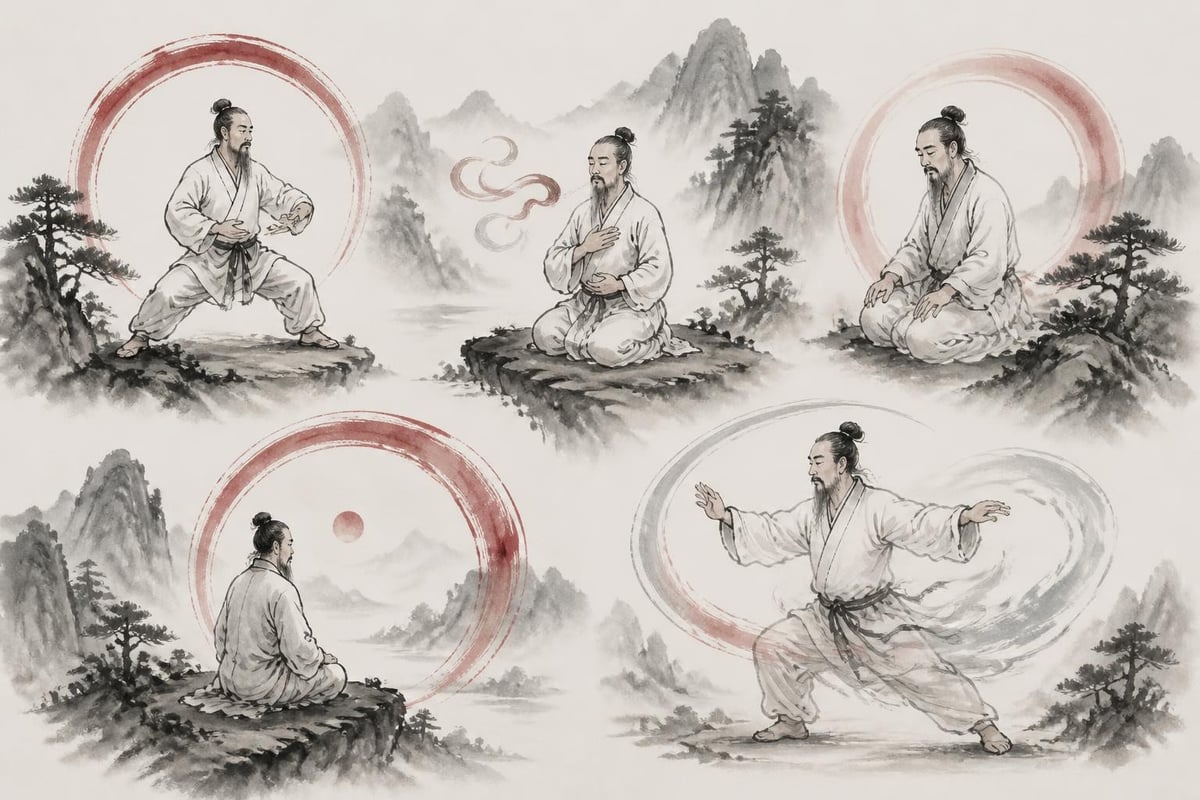
Master Gu offers a lovely, simple way to connect with your energy before you even begin moving, in the video below.
Health Benefits You Can Experience Quickly
One reason simple tai chi has gained recognition in wellness communities worldwide is the tangible benefits people experience, often within weeks of starting practice. Regular tai chi practice has been associated with improved balance, reduced fall risk, and decreased stress levels.
Physical Improvements From Gentle Movement
| Benefit Category | Specific Improvements | Timeline to Notice |
|---|---|---|
| Balance & Coordination | Better stability, reduced fall risk, improved spatial awareness | 2-4 weeks |
| Flexibility | Increased range of motion, reduced stiffness | 3-6 weeks |
| Strength | Enhanced leg and core strength, better posture | 4-8 weeks |
| Cardiovascular | Improved circulation, supportive effects on blood pressure | 6-12 weeks |
The gentle nature of simple tai chi means your body can strengthen and build resilience without the strain that often comes with more aggressive exercise programmes. This makes it particularly valuable for people recovering from injury, managing chronic conditions, or simply looking for sustainable movement practices. Our Tai Chi for Weight Loss article looks specifically at how this gentle approach can still support broader health goals.
Mental and Emotional Shifts
Beyond physical changes, simple tai chi creates noticeable shifts in mental clarity and emotional balance. The meditative quality of practice activates your parasympathetic nervous system, which governs rest and restoration. Regular practitioners often report:
- Reduced anxiety: The focused breathing and movement quiet racing thoughts
- Better sleep quality: Evening practice helps transition from daily stress to restful states
- Improved concentration: Training attention during practice carries into daily tasks
- Greater emotional resilience: Regular practice builds capacity to stay centred during challenges
These aren't just subjective feelings; research reviews point to measurable improvements in psychological wellbeing among tai chi practitioners.
Starting Your Simple Tai Chi Practice Today
You can begin experiencing simple tai chi right now, wherever you are. The practice doesn't require waiting until conditions are perfect or you've read every book on the subject. Starting simply and consistently matters more than starting perfectly.
Your First Five-Minute Practice
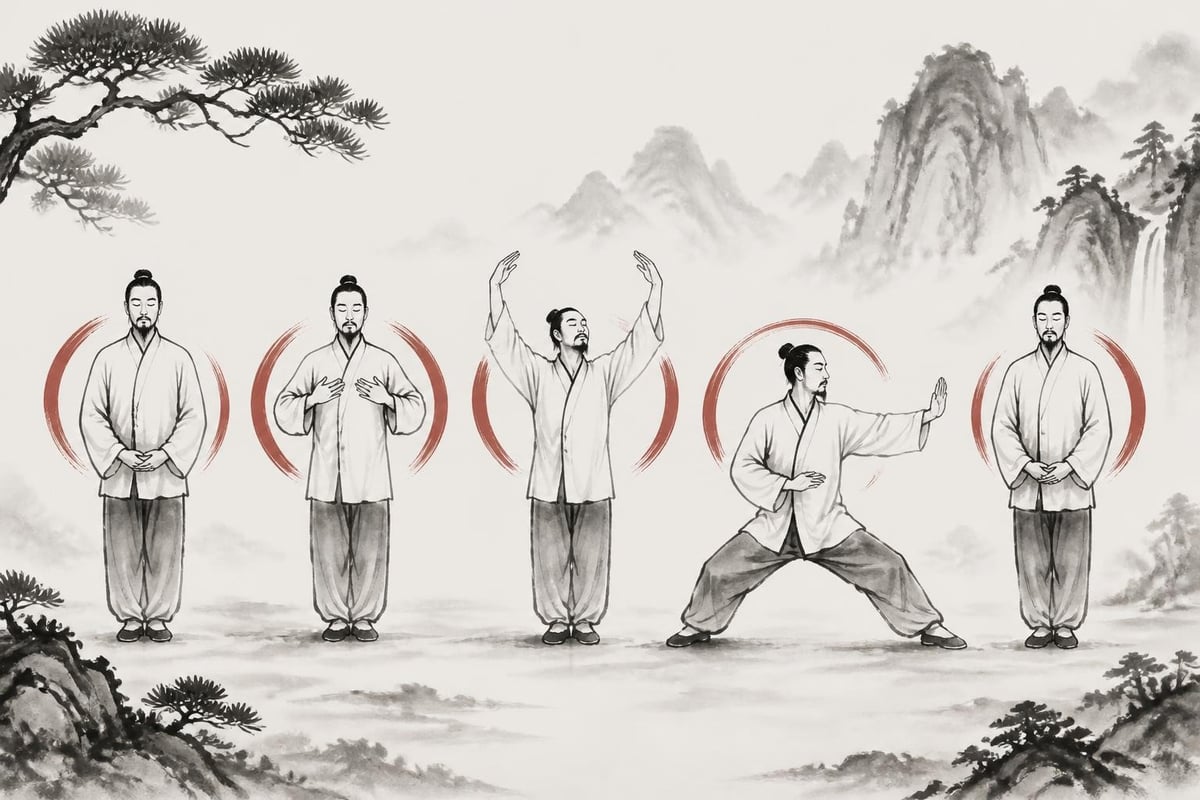
Here's a straightforward sequence you can do daily:
- Stand in a balanced position: Feet shoulder-width apart, arms relaxed at sides, eyes softly focused forward
- Breathe deeply for one minute: Inhale through your nose, letting your belly expand; exhale fully through your mouth
- Raise your arms slowly: Lift arms forward to shoulder height as you inhale, then lower them as you exhale (repeat 5 times)
- Shift your weight side to side: Move slowly from left foot to right foot, keeping movements smooth and continuous (one minute)
- Return to stillness: Stand quietly for one minute, noticing how your body feels
This simple sequence introduces the fundamental qualities of tai chi: breath awareness, slow movement, weight shifting, and present-moment attention. Even five minutes daily creates momentum and familiarity with the practice. Our Tai Chi at Home for Beginners guide has several more safe, simple exercises you can build into this kind of routine.
Common Beginner Questions Answered
How often should I practise? Start with 5-10 minutes daily rather than longer sessions a few times weekly. Consistency builds familiarity and allows your body to integrate the movements naturally.
What time of day is best? Morning practice energises your day, while evening practice promotes relaxation before sleep. Choose whatever time you'll actually do it.
Do I need special clothing? Comfortable, loose-fitting clothes work perfectly. It's not necessary for beginners, though many students find appropriate clothing helps as their practice deepens.
How do I know if I'm doing it right? If you're breathing, moving slowly, and paying attention, you're doing it right. Simple tai chi isn't about perfect form initially; it's about showing up and practising with gentle awareness.
Building on the Basics
Once you've established a simple daily practice, you'll naturally want to explore deeper. This is where structured learning becomes valuable. While simple tai chi provides immediate benefits, understanding the principles behind the movements amplifies their effects.
The Role of Traditional Teaching
Learning from experienced teachers preserves the essence of tai chi while making it accessible. Master Gu's approach at our Tai Chi course demonstrates how ancient wisdom can be transmitted in modern, practical ways. Traditional teaching isn't about rigid rules; it's about understanding principles that make practice effective.
What authentic guidance provides:
- Correct alignment that protects joints and supports energy flow
- Understanding of internal energy (qi) movement during forms
- Connection between physical movements and Taoist philosophy
- Progression that builds skills systematically
- Community support through shared learning
The journey from simple tai chi to deeper mastery happens naturally when you have clear guidance and regular practice. You don't need to rush this process; the practice reveals itself over time.
Expanding Your Practice Horizons
| Practice Element | Beginner Focus | Intermediate Development | Advanced Exploration |
|---|---|---|---|
| Forms | Single movements | Short sequences | Complete traditional forms |
| Breath | Natural breathing | Coordinated breath-movement | Internal energy cultivation |
| Awareness | External focus | Internal sensations | Energy pathways (meridians) |
| Philosophy | Basic principles | Taoist concepts | Deep philosophical integration |
This progression isn't linear. Some days you'll focus on refining basic movements; other days you'll explore new territory. The simple tai chi foundation you're building now supports everything that comes later.
Integrating Practice Into Daily Life
The real power of simple tai chi emerges when it extends beyond formal practice sessions into how you move, breathe, and respond throughout your day. This integration happens naturally as your body remembers the quality of relaxed alertness that practice cultivates.
Moments for Mini-Practice
You don't always need dedicated practice time to benefit from tai chi principles:
- Waiting in line: Stand in a balanced tai chi stance, breathe deeply, release shoulder tension
- During breaks: Take one minute to do slow arm raises coordinated with breath
- Before stressful moments: Three deep belly breaths using tai chi breathing technique
- Walking: Shift weight consciously from foot to foot, feeling connection with ground
- Sitting: Maintain upright posture with relaxed shoulders, as in standing meditation
These micro-practices reinforce your formal sessions and help tai chi become a living part of your day rather than just another item on your to-do list.
Creating Sustainable Rhythm
Building a lasting practice requires honouring your energy and schedule rather than forcing rigid discipline. Some approaches that help students maintain consistency:
Morning anchoring: Practise at the same time each morning, connecting it to an existing habit like making coffee or tea. Our free introductory course offers excellent guidance for establishing this rhythm.
Space designation: Choose a specific spot in your home for practice. This creates environmental cues that support your commitment.
Flexible duration: Allow practice length to vary based on energy and time availability. Five focused minutes matter more than twenty distracted ones.
Progress tracking: Keep simple notes about how you feel before and after practice. Noticing changes reinforces motivation.
The Qi Gong Connection
Simple tai chi naturally connects with qi gong, another gentle practice focused on cultivating and balancing life energy. Many practitioners find that combining both approaches deepens their experience and provides variety in daily practice.
How Qi Gong Complements Tai Chi
While tai chi emphasises flowing movement sequences, qi gong often focuses on specific postures held with breath awareness. Both practices work with the same energy principles and share the goal of cultivating vitality and balance.
Key similarities:
- Slow, mindful movement
- Coordination of breath and motion
- Focus on internal energy cultivation
- Gentle enough for all ages and abilities
- Rooted in Taoist philosophy and traditional Chinese medicine
Our Qi Gong course complements tai chi beautifully, giving you diverse tools for maintaining energy and wellness. Some students alternate between practices; others integrate specific qi gong exercises into their tai chi warm-up.
Choosing Your Path Forward
You don't need to master everything at once. Simple tai chi provides a solid foundation that naturally opens doors to related practices when the time feels right. Both tai chi and qi gong offer meaningful health benefits, and many people find value in exploring both traditions.
Finding Your Community
While simple tai chi can be practised alone, connecting with others who share your interest enriches the journey significantly. Learning alongside fellow practitioners provides encouragement, answers questions, and deepens understanding through shared experience.
Benefits of Learning Together
Practical advantages:
- See how others interpret and practise movements
- Get feedback on your form and technique
- Stay motivated through challenging phases
- Share discoveries and insights
- Build friendships based on common values
Our community brings together students from around the world, creating opportunities to learn from diverse perspectives while being guided by authentic tradition. This blend of global connection and traditional teaching makes online learning uniquely valuable.
Live Sessions and Ongoing Support
Regular live sessions create accountability and provide real-time guidance that accelerates learning. When you can ask questions, receive immediate corrections, and practise alongside others, the principles of simple tai chi become clearer and more accessible.
Between live sessions, having access to recorded content lets you practise at your own pace and review specific movements until they feel natural. This combination of structured teaching and flexible learning accommodates busy schedules while ensuring consistent progress.
Deepening Through Philosophy
Understanding the Taoist philosophy underlying simple tai chi adds dimension to physical practice. You don't need to become a scholar, but grasping basic concepts enriches your experience and helps practice feel more meaningful.
Essential Taoist Concepts for Practitioners
| Concept | Meaning | Application in Practice |
|---|---|---|
| Wu Wei | Effortless action | Move without forcing; let movements flow naturally |
| Yin-Yang | Complementary opposites | Balance rest and activity, emptiness and fullness |
| Qi | Life energy | Notice and cultivate the vital force within and around you |
| Ziran | Natural spontaneity | Trust your body's wisdom; avoid rigid perfectionism |
These principles inform how you approach movement, breath, and awareness during practice. When you understand that tai chi expresses Taoist philosophy through embodied movement, each gesture becomes more than exercise; it becomes a meditation on living in harmony with natural rhythms.
Our Taoist philosophy course explores these concepts in depth, showing how ancient wisdom applies to modern life challenges. Philosophy and practice support each other, creating a complete path toward balance and vitality.
Addressing Common Challenges
Every practitioner encounters obstacles when starting simple tai chi. Recognising common challenges and having strategies to work with them helps you maintain momentum when motivation wavers or progress seems slow.
Physical Challenges
Balance difficulties: If standing on one leg feels unstable, keep both feet on the ground initially. Use a wall or chair for support until strength and confidence build.
Joint discomfort: Reduce the depth of stances, move more slowly, and never push into pain. Simple tai chi should feel gentle, never forcing your body beyond its current capacity.
Fatigue during practice: Shorten your session length. Five minutes of focused practice builds more capacity than twenty minutes done while exhausted.
Remembering sequences: Practise individual movements until they're comfortable before linking them together. Recording yourself or reviewing instructional videos helps reinforce learning.
Mental and Emotional Barriers
The mind presents its own challenges to establishing practice:
- Impatience with progress: Remember that simple tai chi works cumulatively. Benefits build over weeks and months, not days.
- Self-criticism about form: Perfect execution isn't the goal, especially initially. Focus on the quality of attention you bring rather than comparing yourself to advanced practitioners.
- Difficulty staying present: Your mind will wander during practice. This is normal. Gently return attention to breath and movement without judgement.
- Inconsistent motivation: Connect with why you started. Review the benefits you've noticed, even small ones. Join community sessions for renewed inspiration.
Making Practice Sustainable Long-Term
The students who experience the most profound benefits from simple tai chi are those who continue practising for months and years, not just weeks. Building sustainability into your approach from the beginning creates a foundation for lifelong practice.
Evolving Your Practice Over Time
Your relationship with simple tai chi will naturally change as you progress:
Months 1-3: Focus on basic movements, establishing routine, noticing immediate benefits like reduced stress and improved sleep.
Months 4-6: Movements become more familiar, allowing deeper attention to internal sensations and energy flow. You might explore expanding your repertoire.
Months 7-12: Practice feels integrated into your life. You notice how tai chi principles influence your posture, breathing, and responses to daily challenges.
Beyond one year: Simple tai chi has become a trusted tool for maintaining balance and vitality. You continue discovering new depths in familiar movements.
This progression happens naturally when you maintain consistent practice without forcing dramatic changes. Trust the accumulative nature of the work.
When to Seek Deeper Training
As your practice matures, you'll likely feel drawn to deepen your understanding. Signs you're ready for more comprehensive training include:
- Consistent daily practice for several months
- Curiosity about the principles underlying movements
- Interest in learning complete traditional forms
- Desire to understand energy cultivation more fully
- Attraction to the philosophical and spiritual dimensions
Master Gu's comprehensive courses provide systematic progression from foundational practices through advanced techniques, all while maintaining the accessible, practical approach that makes simple tai chi so valuable.
Resources for Your Journey
Having access to quality resources supports your practice and helps you navigate questions as they arise. While simple tai chi doesn't require extensive study, a few well-chosen resources enhance understanding and keep you inspired.
Recommended Learning Approaches
Structured online courses: Provide systematic progression with expert guidance and community support. Our Tai Chi course offers this comprehensive approach.
Written materials: Books and articles deepen conceptual understanding. Our reading list offers carefully curated selections appropriate for various levels.
Video demonstrations: Watching skilled practitioners helps you see correct alignment and flow. Combine video learning with live feedback for best results.
Community discussion: Connecting with other students answers practical questions and provides encouragement through shared experience.
Balancing Resources and Direct Experience
While learning resources are valuable, remember that simple tai chi is fundamentally an embodied practice. Understanding comes primarily through doing, not just reading or watching. Use resources to inform your practice, but trust your direct experience most of all.
Tai chi's various styles all share core principles, so exploring different approaches can enrich rather than confuse your practice. Stay grounded in one primary teaching while remaining open to insights from other sources.
Simple tai chi offers a gentle yet powerful path to greater balance, calm, and vitality in your daily life. By starting with basic movements and consistent practice, you can experience meaningful benefits regardless of age, fitness level, or previous experience. When you're ready to deepen your journey with authentic guidance and a supportive community, Taoist Wellness Online provides comprehensive courses taught by Master Gu, helping you progress from simple foundations to profound mastery at your own pace.