Qi Gong for Burnout: Ancient Wisdom for Modern Recovery
Aug 26, 2026
Burnout doesn't announce itself with a sudden crash. It accumulates quietly, one late night after another, one skipped meal, one breath held in frustration. You might notice it first as exhaustion that sleep doesn't fix, or as that hollow feeling when tasks that once energised you now feel insurmountable. When your reserves run dry and rest alone isn't enough, qi gong for burnout offers a different path forward. This ancient practice works not by pushing harder, but by teaching your body to receive, restore, and rebuild the energy you've depleted.
Understanding Burnout Through a Taoist Lens
Modern medicine recognises burnout as a state of physical, emotional, and mental exhaustion caused by prolonged stress. The symptoms are familiar: chronic fatigue, cynicism, reduced performance, difficulty concentrating, and a pervasive sense of depletion.
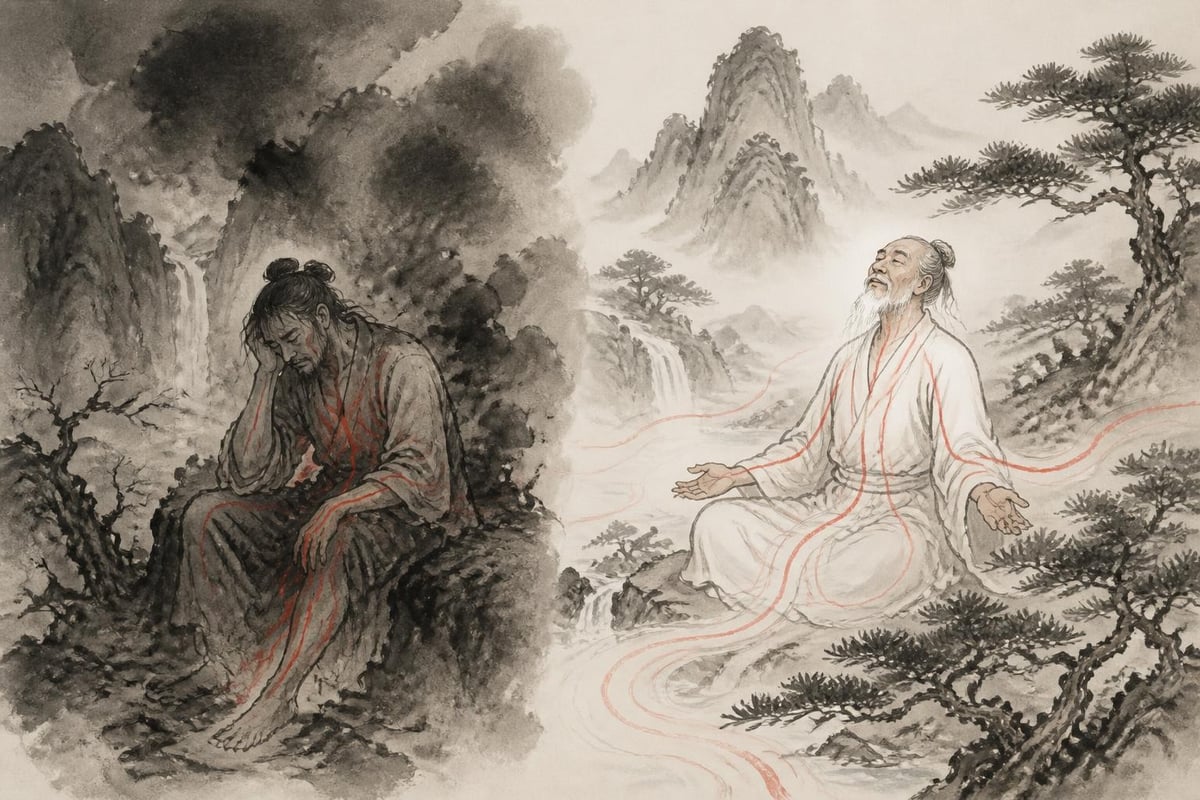
From a Taoist perspective, burnout represents a fundamental imbalance in your qi (vital energy). When you consistently expend more energy than you cultivate, when your nervous system stays locked in sympathetic overdrive, when you disconnect from natural rhythms of activity and rest, your internal reserves drain. You're not just tired. You're running on fumes.
Traditional Chinese wellness practices view this differently than Western approaches. Rather than simply managing symptoms, qi gong for burnout addresses the root cause: depleted vital energy and blocked energetic pathways. The practice works by:
- Opening meridians to improve energy flow throughout your body
- Calming your nervous system through gentle, meditative movement
- Rebuilding qi reserves through specific breathing techniques
- Reconnecting you with natural rhythms that support restoration
This isn't about powering through or forcing recovery. It's about creating conditions where healing happens naturally. Our article on Discover the Healing Power of Qigong explores this broader energetic view in more depth.
How Qi Gong Rebuilds Your Energy System
The beauty of using qi gong for burnout lies in its gentle approach. Unlike intense exercise that demands energy you don't have, qi gong works with whatever capacity you bring to the mat. Even five minutes of practice creates measurable shifts.
The Three Pillars of Restorative Practice
Wudang qi gong, the authentic lineage taught at Taoist Wellness Online, builds recovery through three interconnected elements:
Movement in qi gong differs entirely from conventional exercise. These slow, flowing sequences don't deplete your reserves. Instead, they guide qi through your meridians, releasing blockages and stagnation. When you're burned out, your energy often gets stuck in your head, chest, or shoulders. Gentle movement brings it back into circulation.
Breathwork serves as the bridge between your conscious mind and autonomic nervous system. Deep, diaphragmatic breathing signals safety to your body, shifting you from fight-or-flight into rest-and-digest mode. This physiological shift is essential for recovery from burnout.
Mindful attention completes the practice. By focusing on sensation, breath, and movement, you interrupt the mental loops that feed exhaustion. Your mind gets a break from problem-solving, planning, and worrying.
| Recovery Element | How Qi Gong Addresses It | Timeline for Benefits |
|---|---|---|
| Physical exhaustion | Improves circulation, releases muscular tension | 1-2 weeks of daily practice |
| Mental fatigue | Calms racing thoughts, improves focus | 2-4 weeks of consistent practice |
| Emotional depletion | Regulates nervous system, reduces anxiety | 3-6 weeks with regular practice |
| Sleep disruption | Balances cortisol, promotes deeper rest | 1-3 weeks of evening practice |
Specific Practices for Burnout Recovery
When you're burned out, you need practices that work immediately, not complicated sequences you'll abandon. Here are foundational approaches specifically suited for qi gong for burnout.
Standing Meditation (Zhan Zhuang)
This deceptively simple practice involves standing in a specific posture, often with arms held as if hugging a tree. While it looks passive, standing meditation actively cultivates qi and strengthens your foundational energy.
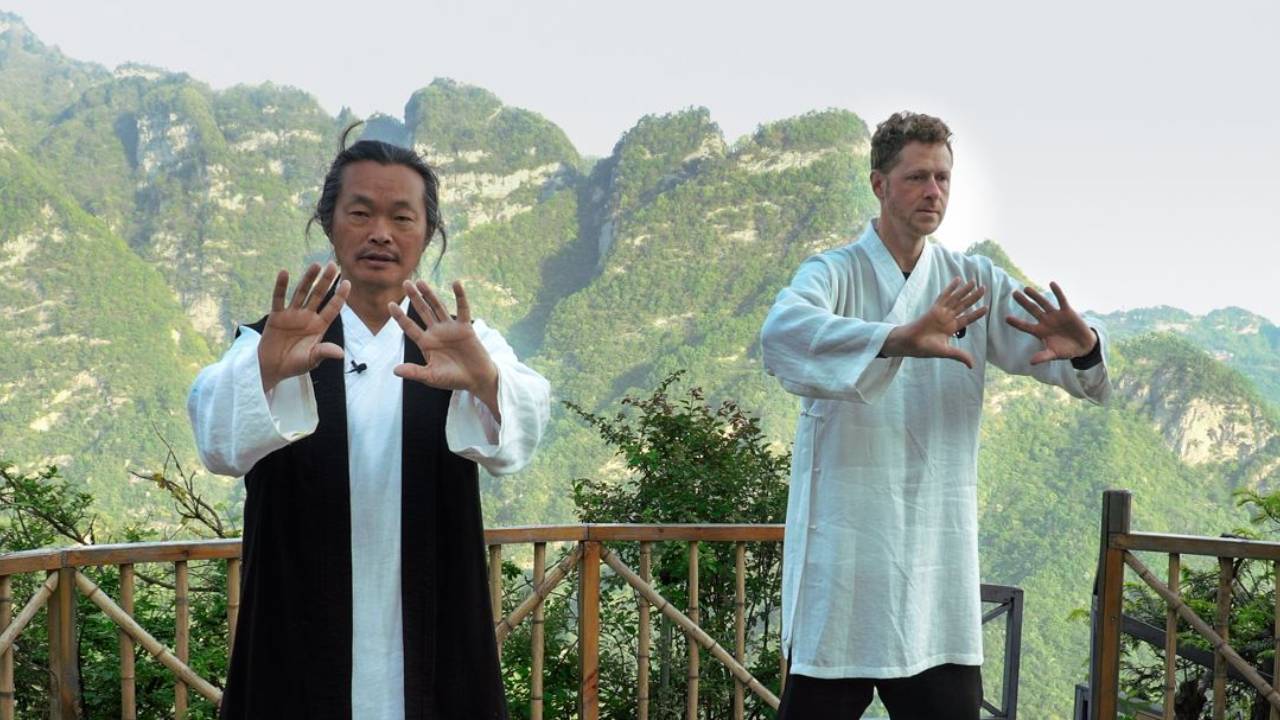
Master Gu covers the fundamental principles of this practice in just two minutes in the video below, a perfect starting point.
For burnout, standing meditation works because:
- It requires minimal decision-making (just stand and breathe)
- It builds energy without depleting you
- It grounds anxious, scattered energy
- It can be practised for just 3-5 minutes initially
Start with short sessions. Even two minutes daily creates benefit. As your energy rebuilds, you can gradually extend the duration.
Shaking and Bouncing Practices
These dynamic movements release trapped stress and stagnation. Gentle bouncing from your knees, with arms relaxed and dangling, allows your whole body to vibrate and shake loose tension you've been holding.
The practice looks playful, almost childlike. That's intentional. Burnout often involves excessive seriousness and control. Shaking practices interrupt that pattern, inviting spontaneity and release.
Breath Regulation Sequences
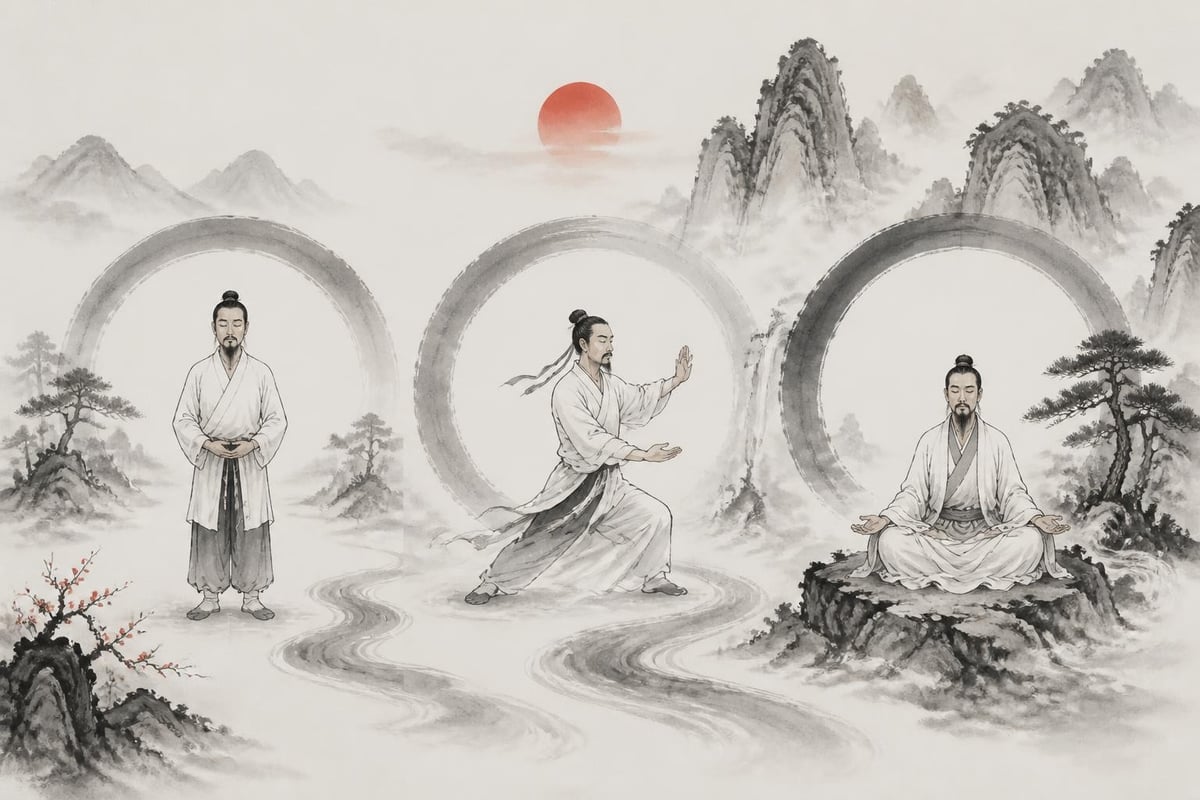
Specific breathing patterns influence your nervous system directly. For burnout recovery, focus on techniques that lengthen your exhale, which activates your parasympathetic (rest-and-restore) nervous system.
- Begin with natural breathing - Simply observe your breath without changing it for 1-2 minutes
- Gradually extend the exhale - Make your out-breath slightly longer than your in-breath
- Add abdominal breathing - Let your belly expand on inhale, contract on exhale
- Coordinate with gentle movement - Raise arms on inhale, lower on exhale
- Return to natural breathing - Release all effort and rest
This progression takes 5-10 minutes and can be practised multiple times daily.
Building a Sustainable Recovery Practice
Consistency matters more than duration when using qi gong for burnout. Your depleted nervous system needs regular, predictable signals of safety and restoration, not occasional intense sessions.
Creating Your Daily Routine
Morning practice (5-10 minutes) sets the tone for your day. Even simple movements like the Eight Brocades or basic standing meditation tell your body that today will be different. You're prioritising restoration.
Midday reset (3-5 minutes) interrupts the accumulation of tension. Step away from your desk, shake out your body, take ten conscious breaths. This prevents the spiral that leads to evening exhaustion.
Evening wind-down (10-15 minutes) prepares your system for restorative sleep. Gentle, slow movements combined with deep breathing help you transition from doing mode into being mode.
Our free Taoist course offers structured guidance for building these routines, with simple Tai Chi, Qi Gong, Meditation, and Taoist Wisdom practices specifically designed to release tension and reclaim your energy.
Adapting Practice to Your Energy Levels
Some days you'll have more capacity than others. Qi gong for burnout works precisely because it adapts to where you are.
- Very low energy: Practice lying down, focusing primarily on breath
- Moderate energy: Gentle standing movements, 5-10 minutes
- Higher energy: Full practice sequence, 15-20 minutes
- Maintenance phase: Integrated practice with meditation, 20-30 minutes
Never force yourself beyond your current capacity. That's the pattern that created burnout in the first place.
The Science Supporting Qi Gong for Stress Recovery
While qi gong originates in ancient wisdom, modern research validates its effectiveness for burnout and stress-related conditions. Studies examining the impact of qi gong on heart rate variability reveal measurable changes in autonomic nervous system function, indicating improved stress regulation.
Key research findings include:
- Significant reduction in cortisol levels after regular practice
- Improved heart rate variability, indicating better stress resilience
- Enhanced sleep quality and duration
- Decreased anxiety and low mood symptoms
- Improved immune system function
Clinical research has specifically evaluated qi gong for burnout rehabilitation, demonstrating meaningful improvements in psychological variables and overall quality of life, with participants showing sustained benefits even months after structured 12-week programmes concluded.
Other studies assessing specific qi gong protocols for occupational burnout, including groups such as physiotherapists experiencing high work-related stress, found measurable reductions in burnout symptoms.
These aren't placebo effects. They represent real, measurable changes in your physiology and nervous system function.
Common Obstacles and How to Navigate Them
Starting any new practice when you're burned out presents challenges. Your energy is low, motivation is scarce, and scepticism runs high. These obstacles are normal and navigable.
"I Don't Have Time"
This thought appears almost universally. You barely have time for what's already on your plate, how can you add something else?
Reframe the question: Can you afford not to? Five minutes of qi gong for burnout prevention costs less time than hours of diminished productivity, poor decision-making, or illness. You're not adding to your burden. You're investing in the capacity to handle everything else.
Start absurdly small if needed. Two minutes daily beats zero minutes. Build from there.
"I'm Too Tired to Move"
Fatigue makes any physical activity feel impossible. Here's what's crucial to understand: qi gong for burnout doesn't work like conventional exercise. You're not depleting energy reserves you don't have.
Begin with practices you can do lying down. Focus entirely on breathing. Let movement emerge naturally as your energy rebuilds. Some days, breath alone is enough.
"I Don't Feel Anything"
When you're burned out, you've often disconnected from bodily sensation as a coping mechanism. Numbness feels safer than feeling exhausted, anxious, or overwhelmed.
Sensation returns gradually. Don't judge what you notice or don't notice. Simply maintain the practice. After weeks of consistent work, subtle shifts become apparent: you sleep slightly better, your shoulders drop half an inch, you take one full breath instead of shallow sips.
| Common Concern | Practical Solution | Realistic Expectation |
|---|---|---|
| Too exhausted to practise | Start with 2-3 minutes lying down | Energy builds gradually over 2-4 weeks |
| Can't quiet racing thoughts | Focus on physical sensation, not mental silence | Thoughts slow naturally with practice |
| Inconsistent schedule | Practise same time daily, even if brief | Consistency matters more than duration |
| Not seeing quick results | Track subtle changes (sleep, tension, mood) | Noticeable shifts appear within 3-6 weeks |
Integrating Qi Gong with Other Recovery Strategies
Qi gong for burnout works best as part of a comprehensive approach. While the practice itself is powerful, combining it with other supportive strategies accelerates healing.
Sleep hygiene becomes non-negotiable. Your evening qi gong practice prepares you for rest, but you need to honour that by actually sleeping. Protect your sleep schedule as you would an important meeting.
Boundary-setting addresses the behavioural patterns that created burnout. Qi gong helps you feel calm and centred, which makes it easier to say no, delegate, or step back from unsustainable commitments. The practice and the boundaries reinforce each other.
Community support provides crucial reinforcement when motivation wavers. Learning alongside others in our community creates accountability and shared experience. You're not recovering alone.
Professional guidance ensures you're practising correctly and safely. Working with an experienced teacher, particularly one trained in authentic Wudang lineages like Master Gu, prevents common mistakes and deepens your understanding. Our piece on What is Qigong Massage Therapy? explores a complementary hands-on approach some students explore alongside their own practice.
Long-Term Prevention and Sustained Wellbeing
Once you've recovered from burnout, qi gong for burnout transforms into qi gong for prevention. The same practices that helped you heal now protect you from sliding back into depletion.
Building Resilience Through Daily Practice
Resilience isn't about being tough or impervious to stress. It's about having the capacity to bend without breaking, to respond rather than react, to recover quickly when life knocks you sideways.
Daily qi gong practice builds this capacity by:
- Maintaining open, flowing energy channels
- Keeping your nervous system balanced and responsive
- Providing regular check-ins with your body and energy state
- Creating a sustainable foundation of vitality
Think of practice as preventive maintenance rather than crisis intervention. You're not waiting until you're depleted again. You're maintaining the energy and balance that keep burnout at bay.
Recognising Early Warning Signs
With regular practice, you develop sensitivity to subtle shifts in your energy. You notice when your breathing becomes shallow, when tension creeps into your shoulders, when your patience wears thin. These early signals give you time to adjust before hitting crisis point.
This awareness becomes one of the most valuable gifts of sustained practice. You catch yourself sliding toward burnout and make different choices: rest earlier, delegate sooner, simplify faster.
Deepening Your Practice Over Time
As your foundation stabilises, you might explore additional aspects of Taoist wellness. Our Tai Chi course builds on qi gong principles with more complex movement sequences. Our Taoist meditation course deepens your inner cultivation. Our Taoist philosophy course provides wisdom for living in greater alignment with natural rhythms.
These aren't requirements. They're invitations to explore if and when you feel called. Recovery comes first. Everything else is optional enrichment.
Practical Tips for Starting Today
You don't need special equipment, clothing, or space to begin using qi gong for burnout. You need only a few square feet, comfortable clothes you already own, and a willingness to start small.
Choose one practice from what you've read here. Standing meditation, gentle shaking, or basic breathing work all serve as excellent entry points. Pick what feels most accessible right now.
Set a ridiculously achievable goal. Two minutes daily for one week. That's it. Not twenty minutes. Not perfect form. Just two minutes of showing up.
Practise at the same time each day. Consistency builds faster when attached to existing routines. Right after you wake up, during your lunch break, or before bed all work well.
Track completion, not quality. Did you do it? Yes or no. Don't judge how well you did it, how focused you were, or how much you felt. Just mark that you practised.
Increase gradually. After a week of two minutes, try three. After another week, try five. Let your practice grow organically as your capacity rebuilds.
Our Qi Gong course provides structured progression if you want guided support, but you can begin immediately with simple practices on your own.
Recovering from burnout requires patience, gentleness, and practices that rebuild rather than deplete your reserves. Qi gong for burnout offers exactly that: gentle movements, restorative breathing, and mindful awareness that help your nervous system remember how to rest, restore, and renew. If you're ready to learn authentic Wudang qi gong from an experienced lineage master, Taoist Wellness Online provides comprehensive courses, live sessions, and a supportive community to guide your journey from exhaustion back to vitality, taught by Master Gu, a 15th-generation San Feng Pai Wudang Taoist Master with over 25 years of teaching experience.