Qi Breathing Techniques: Ancient Practices for Modern Life
Jul 23, 2026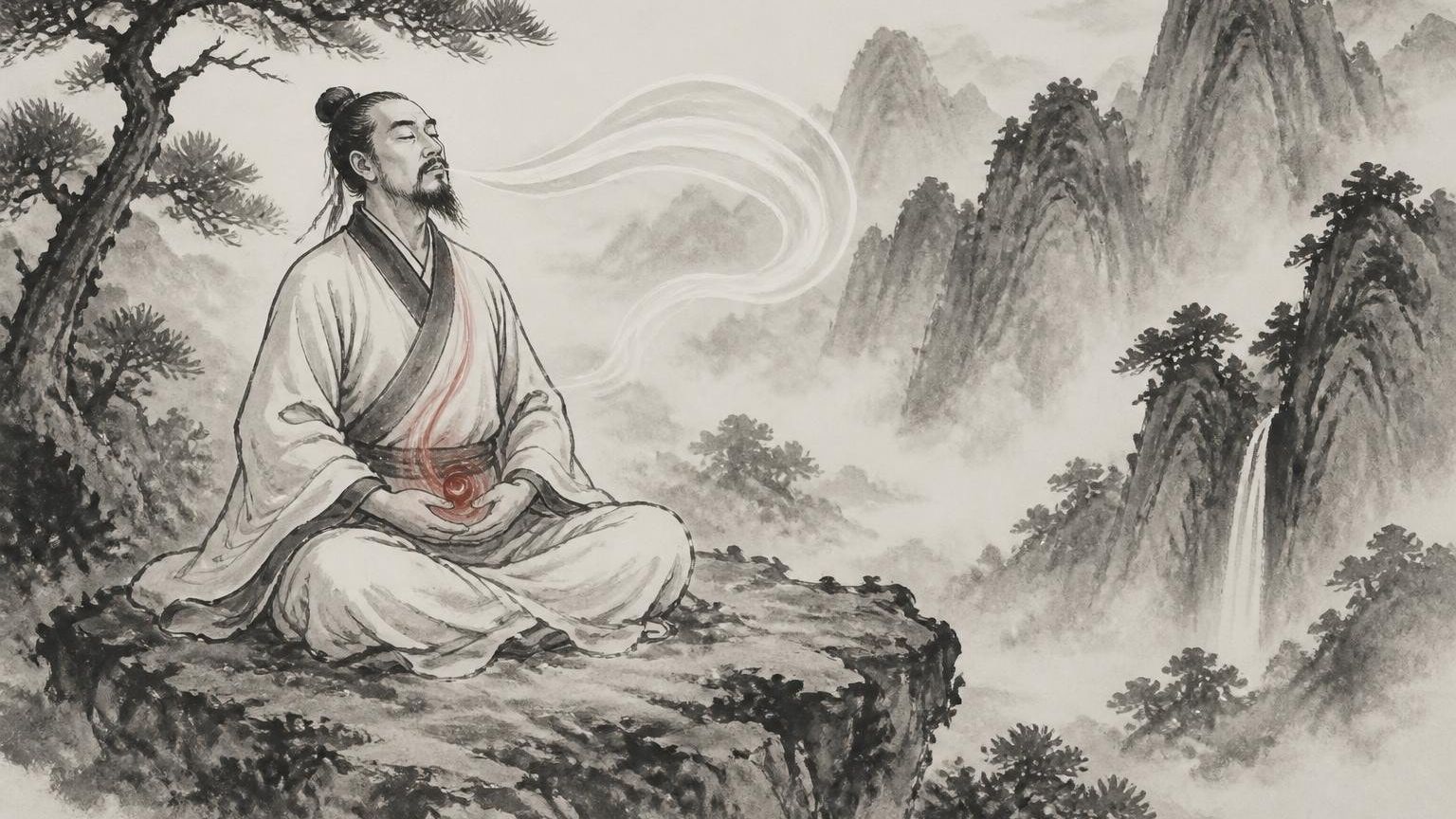
Breath connects us to life itself. In Taoist practice, breathing becomes more than a biological function - it transforms into a gateway for cultivating qi, the vital energy that sustains health, vitality, and inner balance. Qi breathing techniques have been refined over centuries within the Wudang tradition, offering practical methods to harmonise body, breath, and mind. These ancient practices remain remarkably relevant in 2026, providing tools to navigate stress, restore energy, and reconnect with the natural rhythms that support well-being.
Understanding Qi and the Role of Breath
Qi represents the fundamental life force flowing through all living things. In Taoist philosophy, this energy moves through specific pathways in the body, nourishing organs, tissues, and consciousness itself.
Breath serves as the primary vehicle for qi cultivation. When you breathe consciously and correctly, you draw in not just air but the vital essence that Chinese medicine calls "tianqi" or heavenly qi. This merges with the energy already present in your body, creating a dynamic circulation that supports healing and transformation.
The relationship between breath and qi goes deeper than simple respiration:
- Breath quality directly affects qi quality
- Shallow breathing restricts qi flow and creates stagnation
- Deep, regulated breathing opens channels and promotes circulation
- Coordinated breathing activates the lower dantian, the primary energy centre
The Lower Dantian: Your Energy Centre
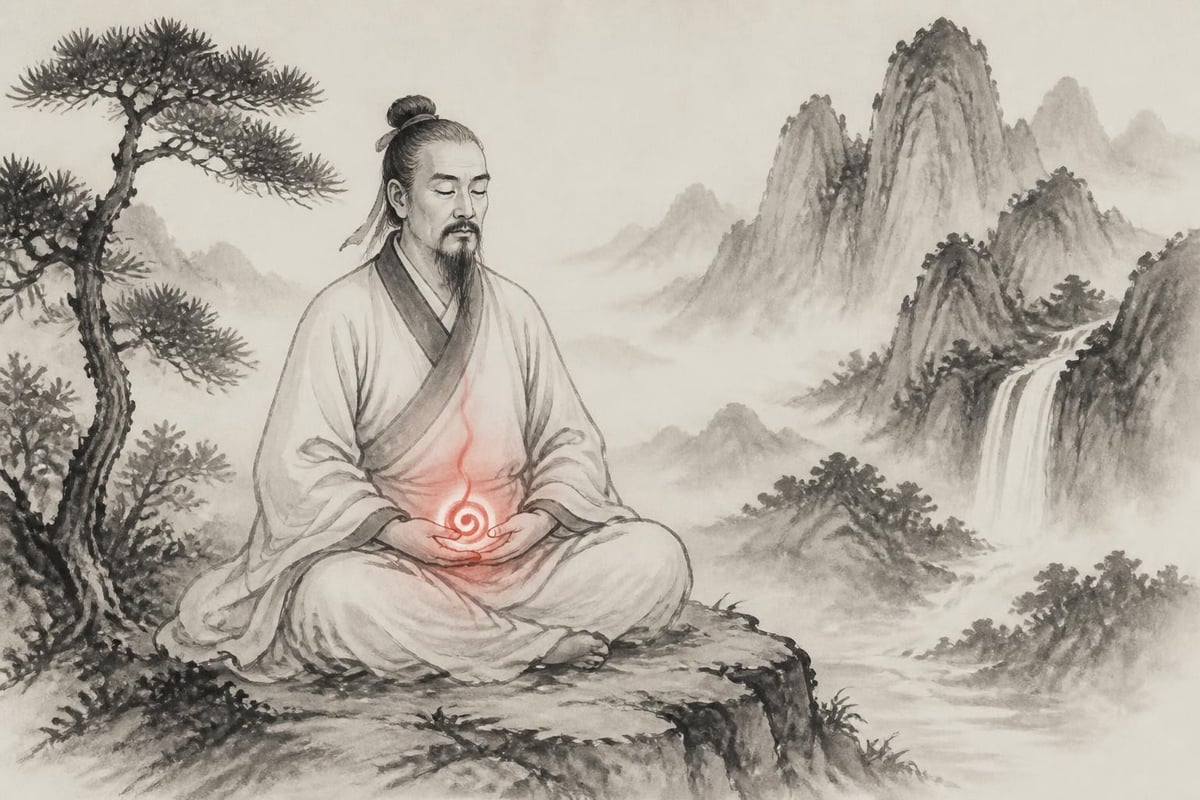
Located approximately three finger-widths below the navel and deep within the body, the lower dantian serves as the foundational energy reservoir in Taoist practice. Dantian breathing focuses attention and breath into this crucial area, building a strong foundation for all qi cultivation work.
When you breathe into the lower dantian, you're not literally filling it with air. Instead, you're directing awareness and intention to this area, allowing the natural expansion and contraction of the lower abdomen to massage internal organs while concentrating qi.
Foundational Qi Breathing Techniques
Natural Abdominal Breathing
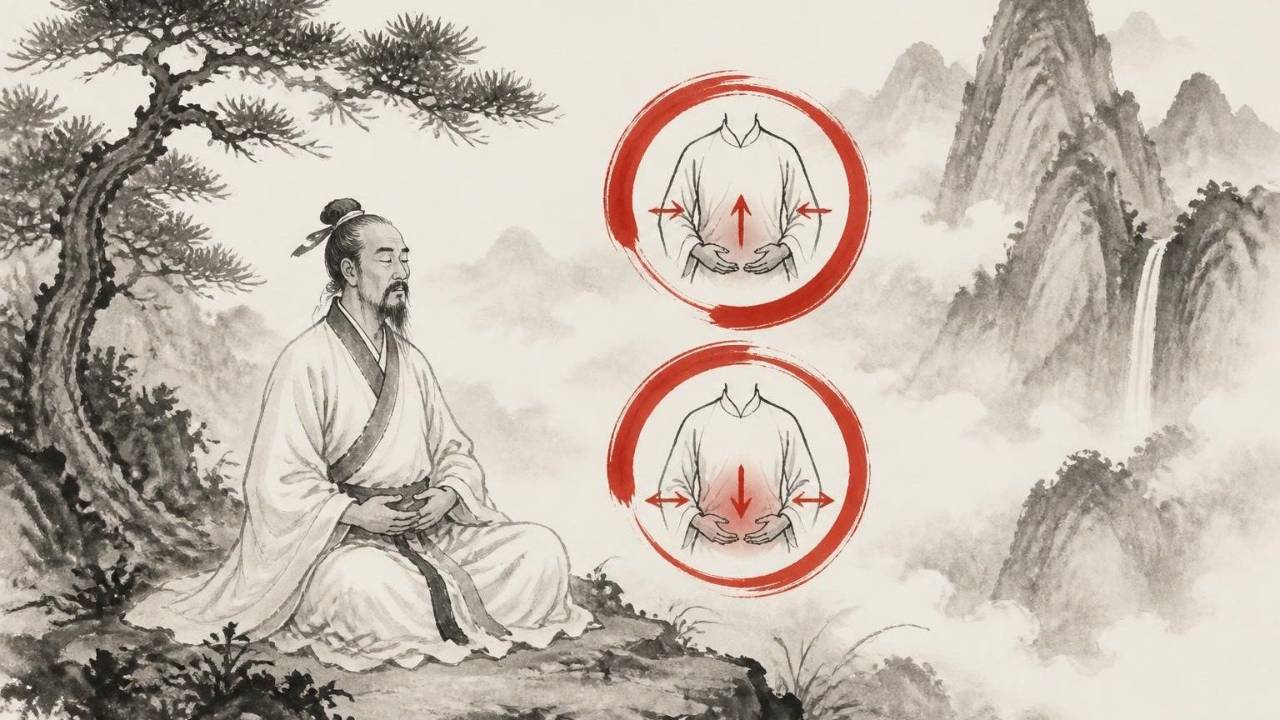
Natural abdominal breathing forms the foundation of all qi breathing techniques. This method reconnects you with the breathing pattern you had as an infant before stress and tension created restrictive patterns.
How to practise:
- Stand, sit, or lie in a comfortable position with your spine naturally aligned
- Place one hand on your chest and one on your lower abdomen
- Breathe in slowly through your nose, allowing your lower belly to expand
- Keep your chest relatively still while your abdomen rises
- Exhale slowly through your nose, letting your belly naturally contract
- Maintain a smooth, even rhythm without forcing
The expansion happens naturally as your diaphragm descends during inhalation, creating space for the lungs to fill from bottom to top. This mechanical process also gently massages the internal organs and activates the parasympathetic nervous system.
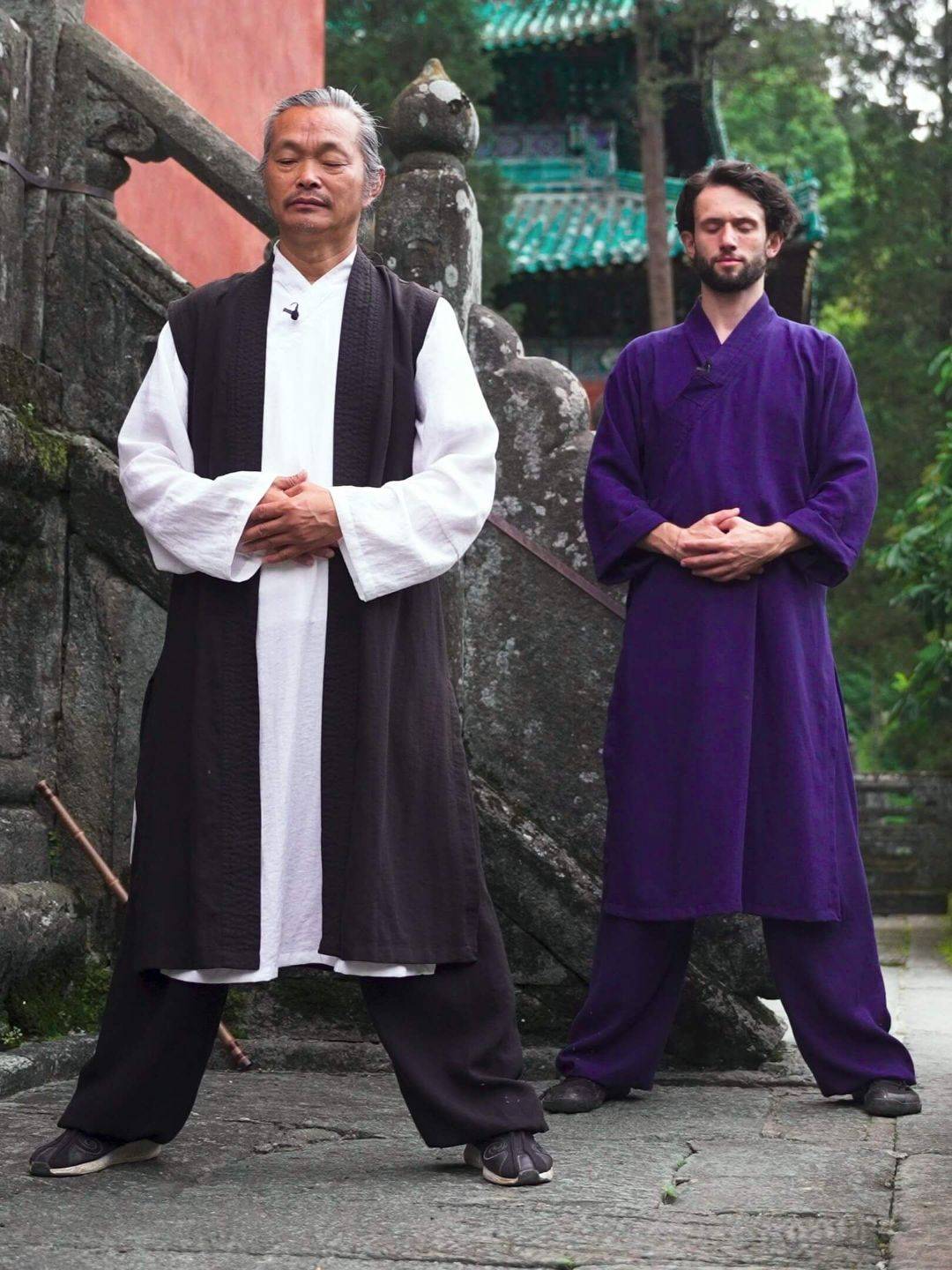
George's video below explores one of the most powerful Taoist breathing techniques in depth - well worth watching alongside this guide if you want to understand how breath and qi work together in practice:
Reverse Abdominal Breathing
Once natural breathing becomes comfortable, reverse breathing introduces a more advanced qi breathing technique used extensively in Wudang Tai Chi and Qi Gong forms.
In reverse breathing, the abdomen draws inward during inhalation and expands during exhalation - opposite to the natural pattern. This creates a pumping action that moves qi more powerfully through the body's energy channels.
| Breathing Type | Inhale | Exhale | Primary Use |
|---|---|---|---|
| Natural Abdominal | Belly expands | Belly contracts | Daily cultivation, relaxation, beginners |
| Reverse Abdominal | Belly contracts | Belly expands | Martial applications, advanced practice |
Benefits of reverse breathing include:
- Stronger qi circulation through the microcosmic orbit
- Enhanced power generation in martial arts movements
- Deeper activation of the lower dantian
- Improved coordination between breath and physical movement
Four-Part Breathing for Balance
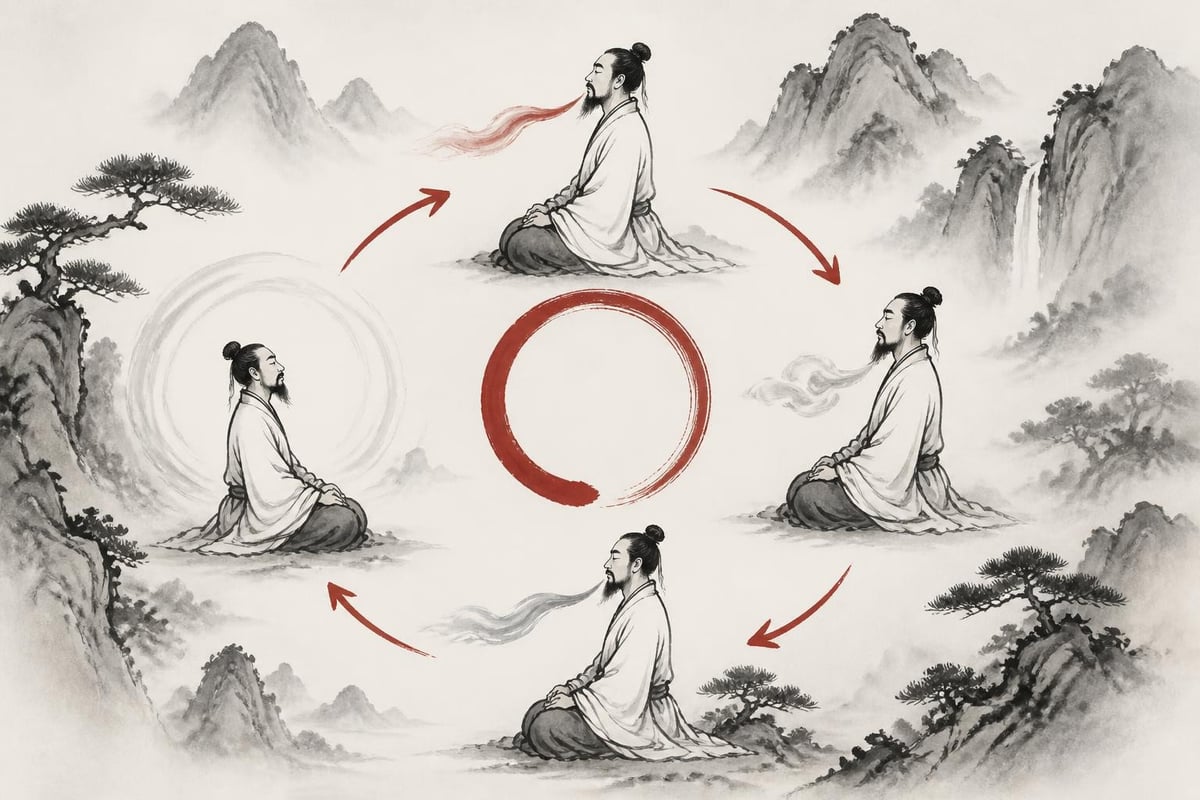
This structured technique helps regulate the nervous system while building breath control and qi awareness. It creates equal phases of breathing that balance energy and calm the mind.
The practice:
- Inhale slowly for a count of four
- Hold the breath gently for a count of four
- Exhale slowly for a count of four
- Hold empty for a count of four
- Repeat for 5-10 cycles
You can adjust the count based on your capacity. The key is maintaining equal duration for each phase and avoiding strain. This rhythm naturally settles scattered energy and creates a meditative state conducive to deeper practice.
Integrating Breath with Movement
Qi breathing techniques reach their full potential when coordinated with gentle movement. The Wudang tradition emphasises this integration through its distinctive approach to both Tai Chi and Qi Gong.
Breath Coordination in Qi Gong
Our Qi Gong course synchronises breath with specific postures and movements designed to open energy channels and cultivate vitality. Each movement has a natural breathing pattern that enhances its energetic effect.
General principles:
- Rising movements typically coordinate with inhalation
- Descending movements typically coordinate with exhalation
- Opening movements pair with inhalation
- Closing movements pair with exhalation
- Breath leads intention, intention leads qi, qi leads movement
This coordination isn't arbitrary. It follows natural energetic principles where expansion draws energy inward and upward, while contraction releases and grounds energy downward.
Breath in Tai Chi Practice
Wudang Tai Chi incorporates qi breathing techniques throughout its flowing forms. As movements transition from one posture to another, breath creates internal power while maintaining relaxation.
Beginning students often start with natural breathing, allowing the body to breathe spontaneously during form practice. As skill develops, practitioners learn to coordinate reverse breathing with specific movements, especially those expressing martial applications.
The breath remains soft and quiet, never forced or strained. This gentle approach allows qi to accumulate naturally rather than creating tension that blocks flow. For more on how breathwork fits within the broader Tai Chi tradition, our post on Tai Chi breathing techniques explores this in helpful detail.
Common Challenges and Solutions
Breathing Too High in the Chest
Many people breathe shallowly into the upper chest, a pattern reinforced by stress and modern sedentary lifestyles. This restricts oxygen intake and prevents qi from settling into the lower dantian.
Solution: Practise lying down with a small weight (like a book) on your lower abdomen. Focus on making the weight rise and fall with your breath. This provides tangible feedback that helps retrain the breathing pattern.
Forcing the Breath
Enthusiasm for qi breathing techniques sometimes leads to forcing, which creates tension rather than flow. Breath should feel natural and comfortable, even when practising specific patterns.
Solution: Reduce the depth and duration of your breathing. Work within your comfortable range and let capacity expand gradually over weeks and months. Quality matters far more than quantity.
Losing Coordination with Movement
When learning to coordinate breath with Qi Gong or Tai Chi movements, it's common to focus so hard on breathing that movement becomes stiff, or vice versa.
Solution: Practise the movement without breath coordination first, until it feels natural. Then add breath awareness, starting with just noticing when you naturally inhale and exhale. Gradually refine the coordination without forcing it.
| Challenge | Common Cause | Practice Solution |
|---|---|---|
| Dizziness during practice | Breathing too deeply or quickly | Reduce depth, slow pace, take breaks |
| Tension in shoulders | Trying too hard | Focus on relaxation before breath control |
| Mind wandering | Lack of focus point | Count breaths or use simple mantras |
Building a Daily Practice
Consistency matters more than duration when developing qi breathing techniques. Even five minutes daily creates more benefit than occasional longer sessions.
Morning Practice Routine
Morning offers an ideal time for qi cultivation when the mind is fresh and the world is quiet. This simple routine builds energy for the day ahead:
- Wake and stretch (2 minutes): Gentle movements to transition from sleep
- Natural abdominal breathing (3 minutes): Sitting or standing, focus on deep belly breathing
- Four-part breathing (3 minutes): Balance and centre your energy
- Simple Qi Gong movements (5-10 minutes): Coordinate breath with opening and closing movements
- Quiet standing (2-3 minutes): Allow qi to settle naturally
This fifteen-minute sequence establishes a foundation that supports well-being throughout your day.
For those ready to deepen their practice with authentic guidance from the Wudang tradition, the Taoist Wellness Online Academy membership provides comprehensive instruction in qi breathing techniques integrated with Tai Chi and Qi Gong forms under Master Gu's expert teaching.
Evening Wind-Down Practice
Evening practice helps release the day's accumulated tension and prepares the body for restorative sleep. Keep the energy gentle and grounding:
- Seated natural breathing (5 minutes): Release tension from the day
- Gentle stretching with breath (5 minutes): Open areas of tightness
- Lying natural breathing (5-10 minutes): Allow complete relaxation
The emphasis shifts from building energy to releasing and harmonising what remains.
Seasonal Adjustments in Practice
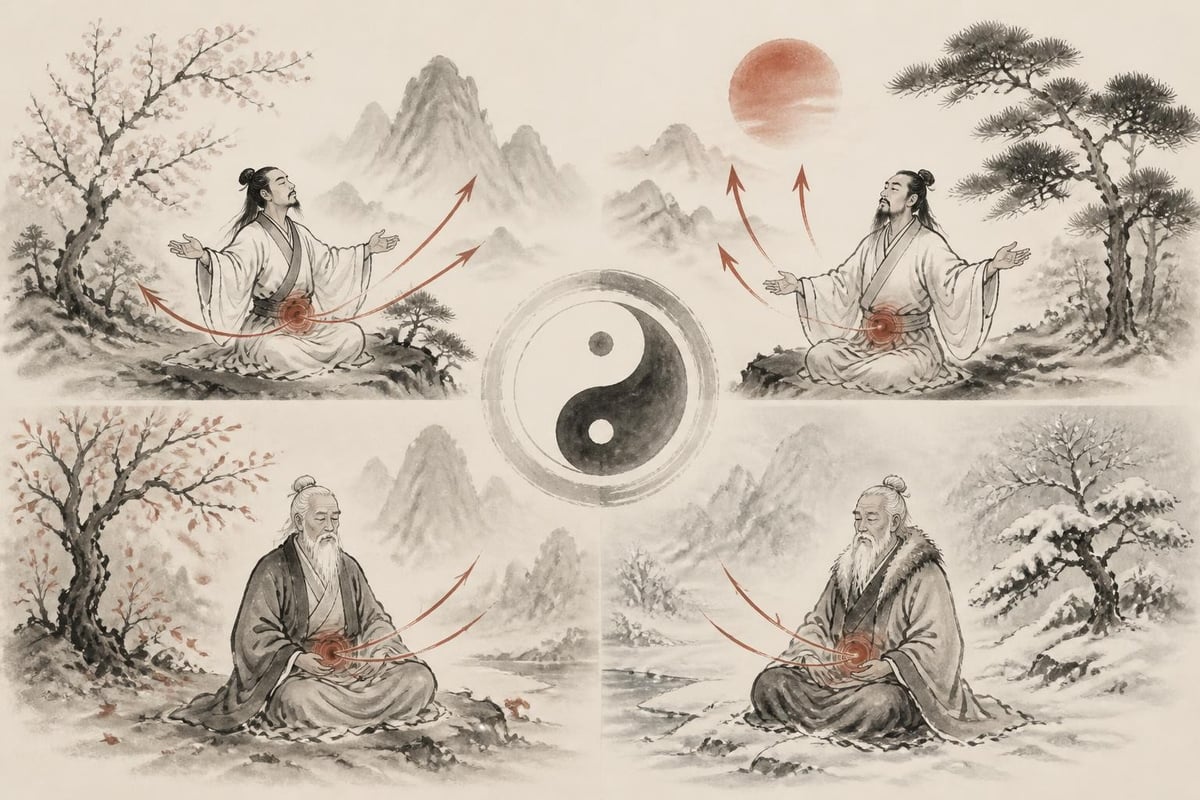
Taoist philosophy recognises that humans exist within natural cycles. Your qi breathing techniques can align with seasonal changes to maintain harmony with the environment.
Spring and Summer: Yang Seasons
During warmer months when yang energy naturally rises, practice can emphasise:
- Slightly more vigorous breathing patterns
- Longer practice sessions in the morning
- More active Qi Gong forms with breath coordination
- Focus on expansion and outward energy flow
Autumn and Winter: Yin Seasons
As temperatures cool and nature withdraws, qi breathing techniques shift toward:
- Gentler, more conserving breath patterns
- Shorter, more frequent practice sessions
- Emphasis on storing energy in the lower dantian
- Quieter, more internal focus
These adjustments don't require dramatic changes. Small shifts in emphasis help your practice flow with rather than against seasonal energy patterns.
Deepening Your Understanding
Qi breathing techniques represent just one aspect of comprehensive Taoist wellness practice. The breathing methods work synergistically with meditation, movement arts, and philosophical study to create holistic transformation.
Key points for continued development:
- Patience matters more than ambition in qi cultivation
- Regular practice creates gradual, sustainable change
- Quality of attention during practice exceeds duration
- Integration with daily life multiplies practice benefits
- Authentic instruction accelerates progress and prevents errors
The Role of Authentic Teaching
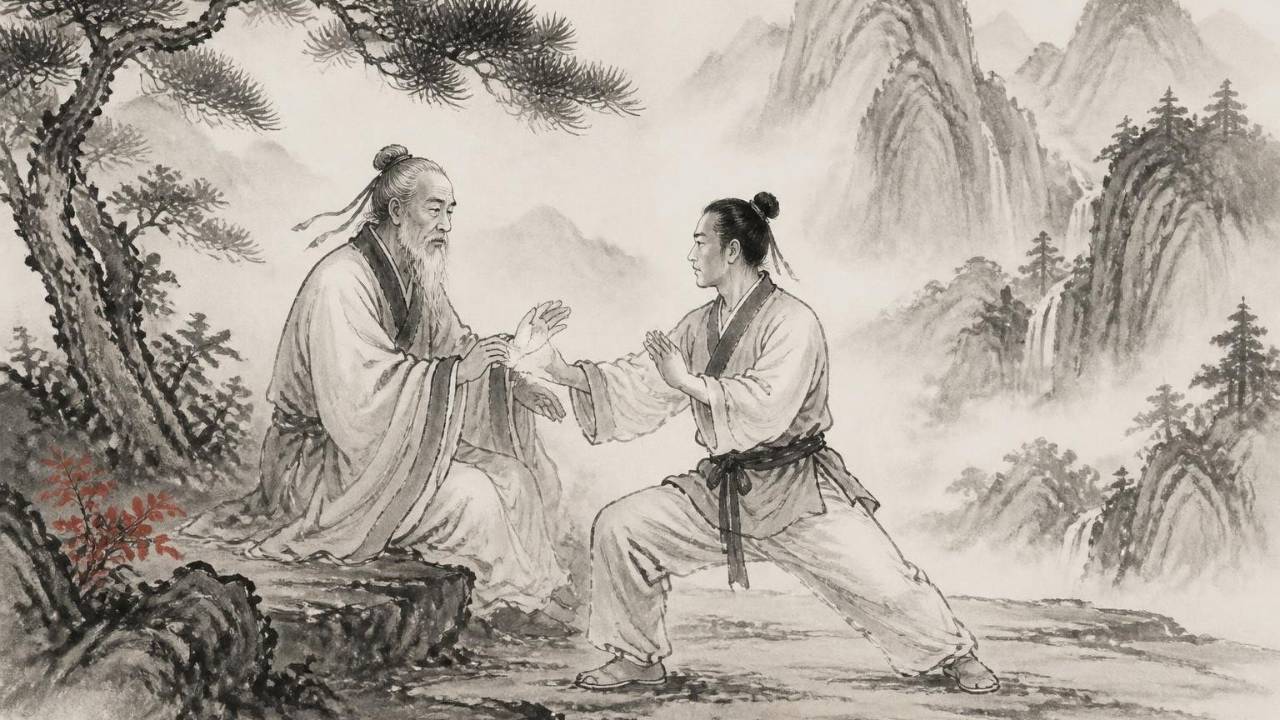
While basic qi breathing techniques can be learned from written instruction, deeper development benefits enormously from authentic guidance. The Wudang tradition maintains specific methods refined over centuries, with subtleties that become clear only through direct transmission.
Working with an experienced teacher helps you:
- Understand correct breath mechanics for your body
- Avoid common mistakes that limit progress
- Learn appropriate practice sequences for your level
- Receive personalised adjustments and refinements
- Access the complete context of integrated practice
Connecting with Community
Sharing the journey with others provides motivation, support, and perspective. Join fellow practitioners from around the world through the Taoist Wellness Online community — a warm, active space where students exploring these same practices share encouragement and experience.
Practical Applications for Modern Life
Qi breathing techniques translate directly into benefits for contemporary challenges:
Stress management: Three minutes of natural abdominal breathing activates the parasympathetic nervous system, countering stress hormones and creating physiological calm.
Energy restoration: Midday practice of four-part breathing recharges depleted energy without caffeine or stimulants, providing sustainable vitality.
Sleep improvement: Evening practice of gentle, natural breathing helps transition from activity to rest, improving sleep quality and depth.
Focus enhancement: Brief breathing practice before important tasks clears mental fog and sharpens concentration.
Emotional regulation: Conscious breathing creates space between stimulus and response, allowing wise action rather than reactive patterns.
These applications don't require special equipment, significant time investment, or dramatic lifestyle changes. They work within the life you already have, gradually transforming it from the inside out. If you're curious about how qi breathing sits within the broader tradition of medical and therapeutic Qi Gong, our post on medical Qi Gong offers useful context.
Integration with Meditation Practice
Breath serves as the natural bridge between body and mind. If you'd like to take these techniques further, why not explore our Taoist Meditation course - it uses qi breathing techniques as both foundation and focus for cultivating stillness and insight.
In meditation, breath becomes both the object of attention and the vehicle for deeper awareness. Rather than controlling or forcing, you observe breath's natural rhythm while maintaining gentle presence. This simple practice develops profound capacity for peace and clarity.
The same breathing patterns used during movement practice support seated meditation. Natural abdominal breathing creates a stable foundation, while awareness of the lower dantian provides a focus point that anchors wandering attention.
Qi breathing techniques offer practical, accessible methods for cultivating vital energy and supporting well-being in every dimension of life. These ancient practices from the Wudang tradition remain profoundly relevant, providing tools that address modern challenges while connecting you with timeless wisdom. Start exploring today with our free 4-week Taoist Wellness course - breathwork, Qi Gong, and meditation with Master Gu, at no cost. And when you're ready to go deeper, Taoist Wellness Online provides expert guidance and a supportive global community to support your journey toward balance, vitality, and inner peace.