Zhuang Zhou: Ancient Wisdom for Modern Balance
Aug 30, 2026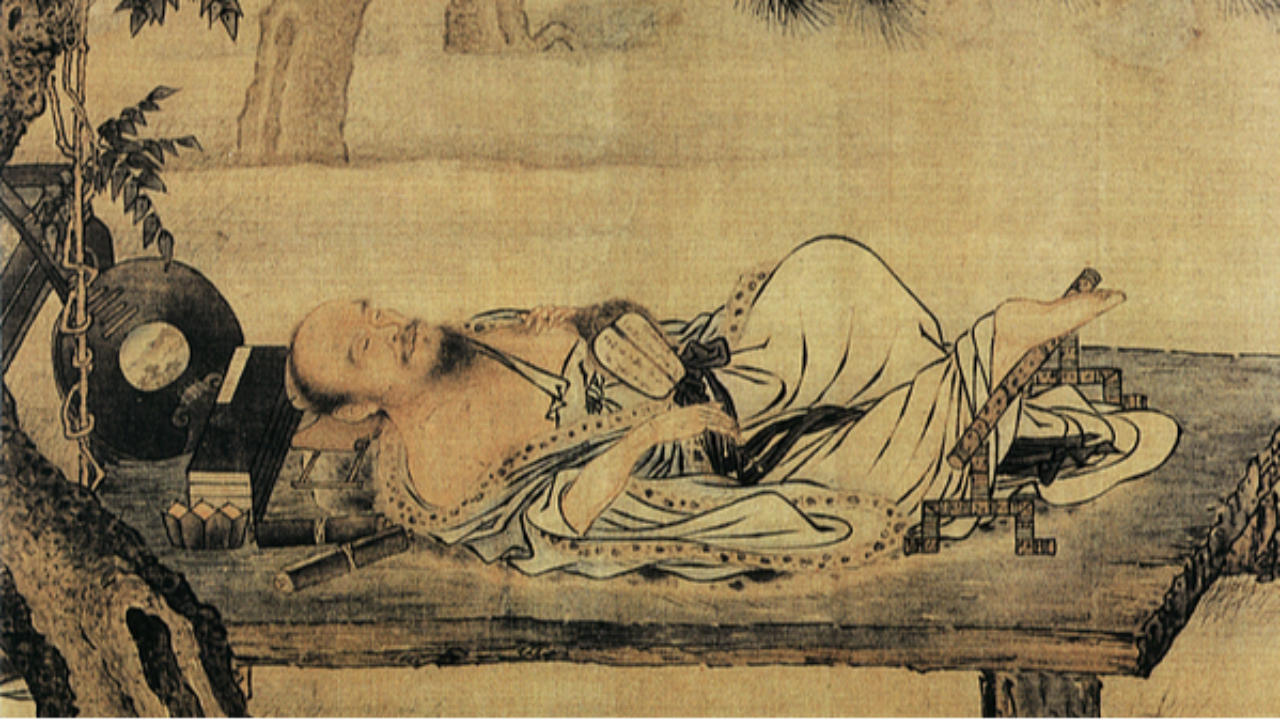
When you feel overwhelmed by the constant push to do more, achieve more, and become more, ancient wisdom offers a different path. Zhuang zhou, one of the most influential Taoist philosophers who lived during China's Warring States period (approximately 369-286 BCE), taught that true freedom comes not from striving but from aligning with the natural flow of life. His teachings, preserved in the text known as the Zhuangzi, continue to guide practitioners of Tai Chi, Qi Gong, and meditation toward greater ease, presence, and spontaneous action. Understanding his philosophy isn't just an academic exercise, it's a practical framework for moving through modern life with grace and authenticity.
Who Was Zhuang Zhou?
Zhuang zhou lived during a time of tremendous social upheaval and philosophical flourishing in ancient China. While historical details about his life remain sparse, scholars generally agree that he worked as a minor official in the town of Meng before dedicating himself to philosophical contemplation and writing.
Unlike Confucius, who sought to reform society through proper roles and rituals, zhuang zhou championed individual freedom and naturalness. He used humour, paradox, and fantastical stories to challenge conventional thinking and invite readers into a more spacious way of experiencing reality.
The Zhuangzi Text
The Zhuangzi consists of 33 chapters divided into three sections:
- Inner Chapters (Chapters 1-7): Generally attributed to zhuang zhou himself
- Outer Chapters (Chapters 8-22): Likely written by his immediate followers
- Miscellaneous Chapters (Chapters 23-33): A collection from various Daoist traditions
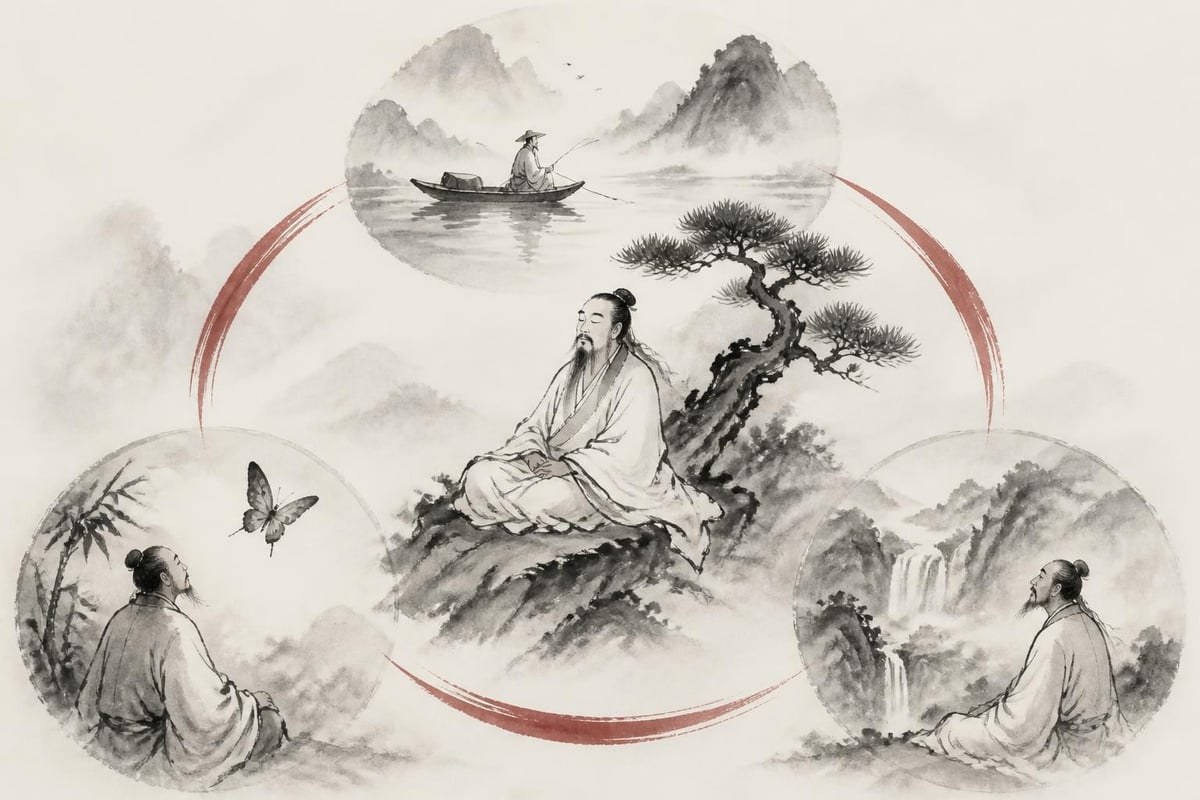
The Inner Chapters contain some of the most beloved and influential passages in Taoist literature, including the famous butterfly dream and stories of skilled craftsmen who achieve mastery through alignment with the Dao.
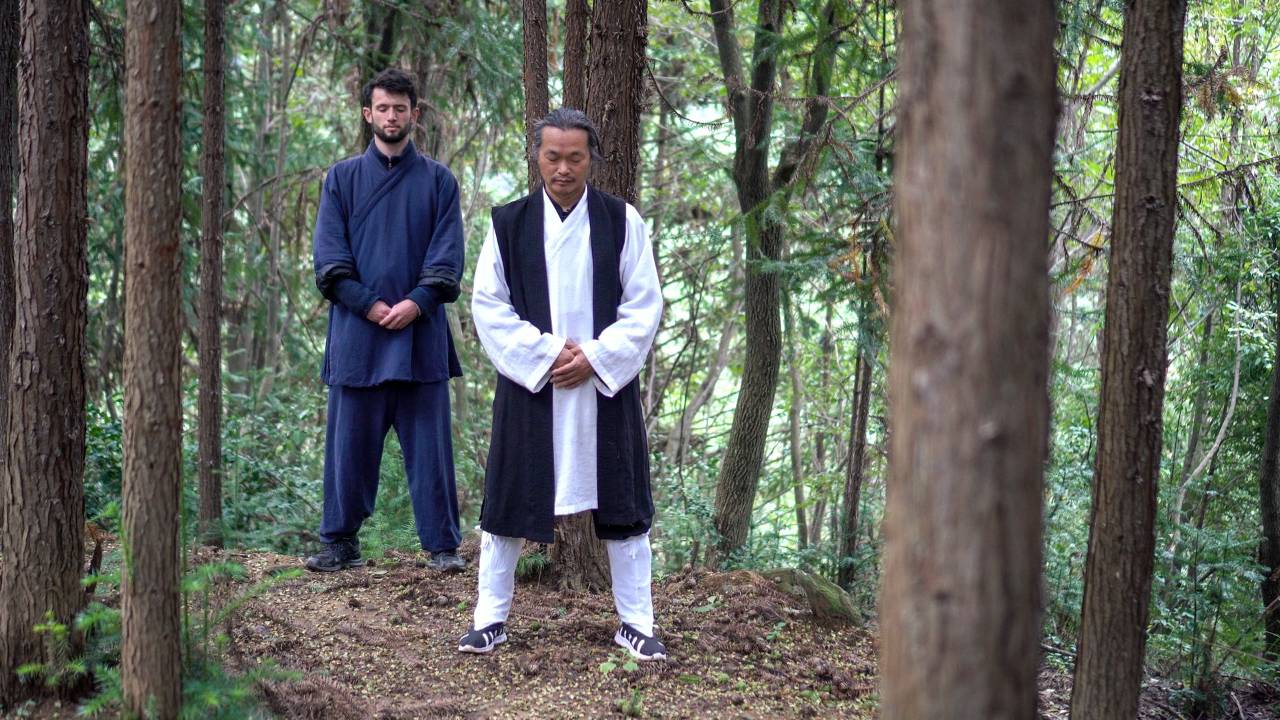
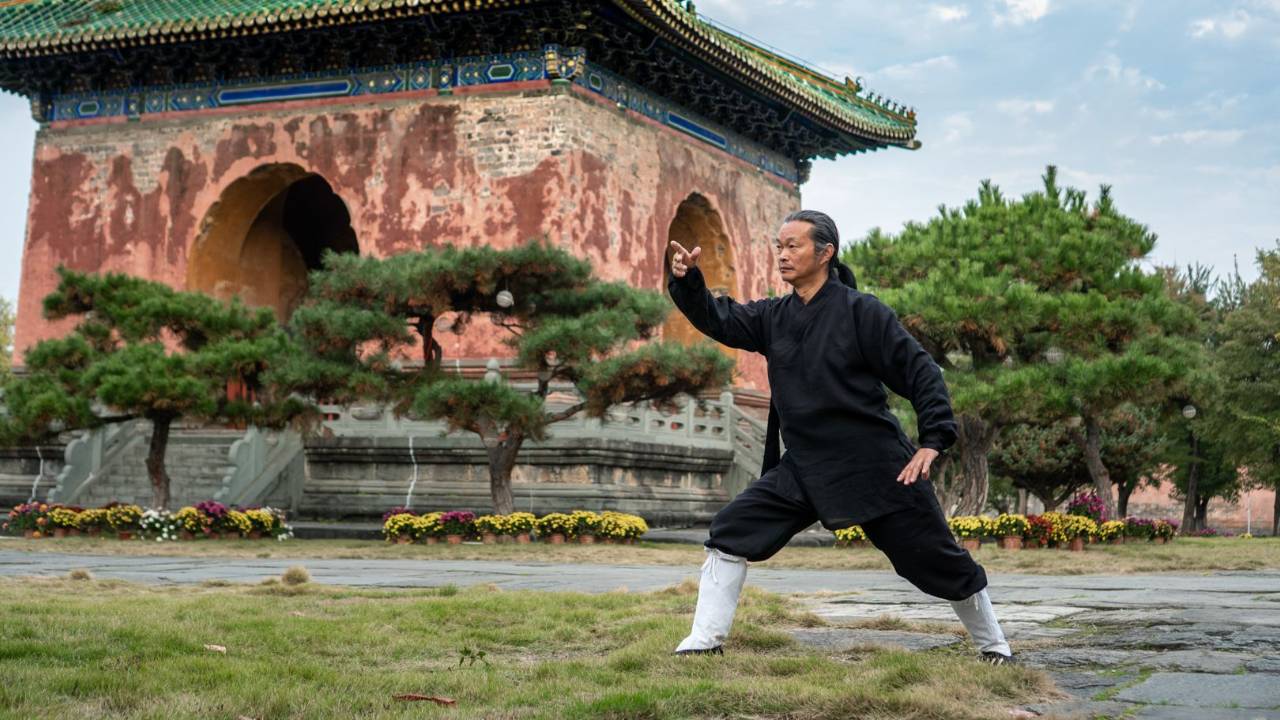
Master Gu shares his own reflections on Zhuangzi and care-free living in the video below, well worth watching alongside this piece.
Core Philosophical Teachings
Zhuang zhou's philosophy centres on liberation from fixed perspectives and the cultivation of what he called "free and easy wandering." His approach differs markedly from rigid systems or moral codes. Our article on Taoism: 6 Key Concepts From The Ancient Philosophy of Daoism offers a helpful overview of how these ideas fit into the wider Taoist tradition.
Wu Wei: Effortless Action
Wu wei literally translates as "non-doing" or "non-action," but zhuang zhou didn't mean passivity or laziness. Instead, he pointed toward action that flows from our deepest nature rather than forced striving.
When you practise Tai Chi with genuine wu wei, your movements arise spontaneously. There's no separation between intention and execution, no mental commentary interrupting the flow. You respond to the present moment with your whole being.
Consider these characteristics of wu wei:
- Action without self-conscious effort
- Response that matches the situation perfectly
- Movement that feels both spontaneous and appropriate
- Absence of internal conflict or resistance
The concept becomes clearer through zhuang zhou's stories of master craftsmen, the butcher whose knife never dulls because he cuts along natural spaces, the wheelwright who knows the exact pressure needed through embodied wisdom rather than mechanical rules.
Ziran: Natural Spontaneity
Ziran means "self-so" or "naturalness." For zhuang zhou, this represented the highest virtue, being exactly what you are without pretence or forcing.
A tree doesn't try to be a tree. Water doesn't deliberate before flowing downhill. Similarly, when you align with ziran, your actions emerge from your authentic nature rather than social conditioning or anxious striving.
| Forced Action | Natural Action (Ziran) |
|---|---|
| Driven by "should" | Emerges from genuine interest |
| Creates tension and resistance | Feels easeful and appropriate |
| Depletes energy | Generates sustainable energy |
| Serves external expectations | Honours inner truth |
This principle directly informs our Taoist Meditation course and Qi Gong practice, where forcing the breath or manufacturing specific states actually blocks the natural flow zhuang zhou described.
Transformation of Perspectives
Perhaps zhuang zhou's most distinctive contribution was his emphasis on the relativity of perspectives. His famous butterfly dream asks: Did Zhuang Zhou dream he was a butterfly, or is a butterfly now dreaming it's Zhuang Zhou?
This wasn't mere intellectual playfulness. Zhuang zhou invited practitioners to question their certainty about what's real, valuable, or important. When you loosen your grip on fixed viewpoints, you discover freedom.
In daily practice, this means:
- Recognising that your current problem might be tomorrow's blessing
- Understanding that "failure" and "success" are constructs, not absolute truths
- Seeing that the annoying neighbour and beloved friend are both expressions of the same Dao
- Experiencing how changing your perspective literally changes your reality
Relevance to Tai Chi and Qi Gong Practice
Zhuang zhou never wrote about Tai Chi, the art wouldn't develop for over a thousand years after his death. Yet his philosophy profoundly shapes how we understand and practise these movement arts today.
Embodied Philosophy
When you study our Tai Chi course through the Wudang tradition, you're not learning mere physical exercises. You're embodying the very principles zhuang zhou articulated through philosophy.
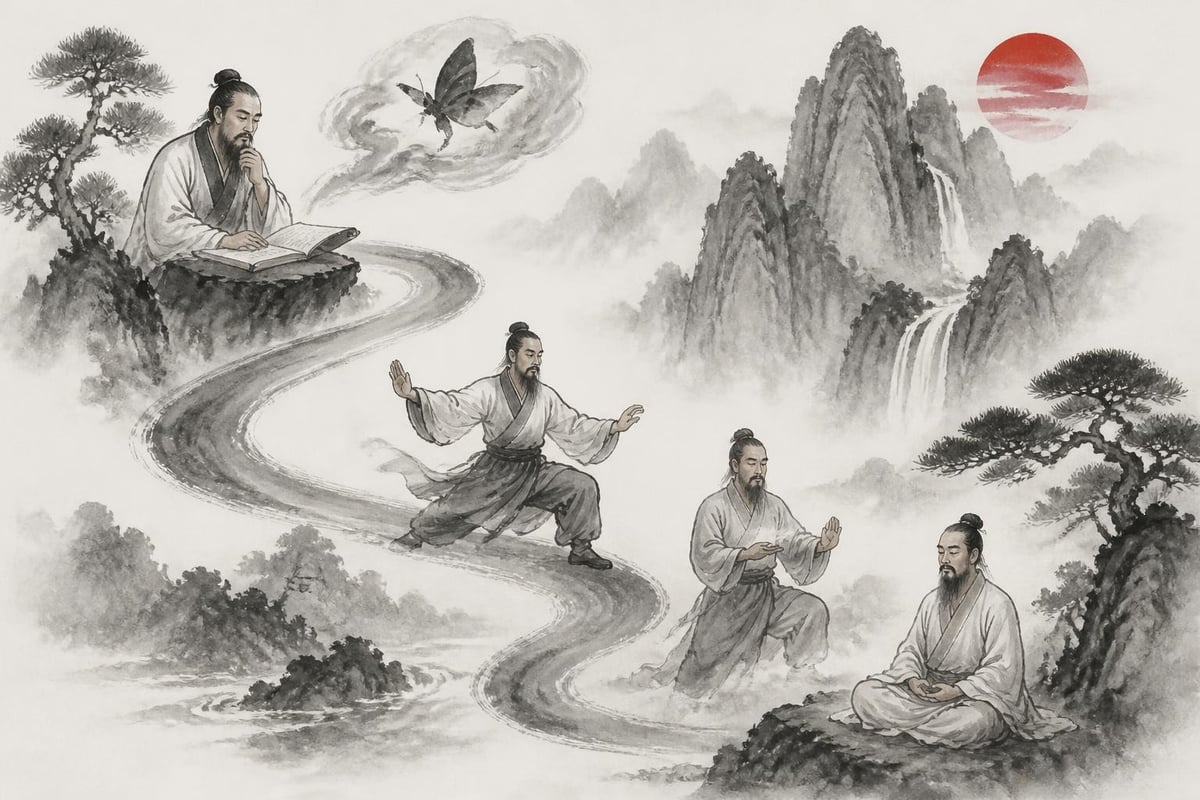
Each Tai Chi movement expresses zhuang zhou's teachings:
- The continuous flow demonstrates wu wei
- The rootedness and ease reflect ziran
- The circular patterns honour the Dao's constant transformation
- The integration of yin and yang manifests the unity beneath apparent opposites
The Skill Stories Applied
Zhuang zhou loved stories about masters, the butcher, the swimmer, the cicada catcher, who achieved extraordinary skill not through analytical thinking but through deep alignment with the Dao. These stories perfectly describe advanced Tai Chi practice.
Consider Cook Ding, zhuang zhou's famous butcher who had used the same knife for nineteen years without dulling it. He explains that he doesn't cut through bone and gristle but finds the natural spaces where his blade passes effortlessly.
This mirrors exactly how experienced practitioners move. You don't force joints open or muscle through resistance. You discover the natural pathways, the spaces where qi flows freely, the alignments that feel simultaneously relaxed and powerful.
Letting Go of Perfectionism
Modern students often approach practice with achievement orientation, wanting to master the form, accumulate knowledge, or reach some imagined endpoint. Zhuang zhou's perspective offers liberation from this exhausting striving.
From his view, there's nowhere to get to. The practice itself is the destination. When you truly embody this understanding, your Qi Gong session transforms from a means to an end into complete fulfilment in each moment.
For practitioners exploring authentic Wudang teachings, zhuang zhou's emphasis on spontaneous action provides essential context for understanding why we practise slowly, mindfully, and without force. If you'd like a gentle first taste of this way of practising, our free Taoist course introduces Tai Chi, Qi Gong, Meditation, and Taoist Wisdom without any pressure to "get it right."
Living Zhuang Zhou's Teachings Today
Ancient philosophy becomes truly valuable when it transforms how you live right now, in 2026, with all the complexities of modern existence.
Practical Applications
In Daily Decision-Making:
Start noticing when you're forcing versus allowing. When faced with a choice, pause and sense which option carries natural energy versus which one you think you "should" choose. Zhuang zhou would encourage trusting the former.
In Relationship Conflicts:
Practise perspective-taking. Your partner isn't objectively wrong, they're viewing the situation from a different angle. Neither perspective is absolute truth. This recognition alone can dissolve half your arguments.
In Career Challenges:
Rather than exhausting yourself swimming against the current, look for where natural opportunity flows. Zhuang zhou suggests that the Dao provides paths of least resistance when we're attentive enough to notice them.
Working with Modern Stress
Zhuang zhou lived during warfare and political chaos, not unlike our own era's complexity. His teachings weren't developed in peaceful monasteries but in response to real suffering and uncertainty.
When anxiety arises, his wisdom suggests:
- Question the story creating the anxiety (is it absolutely true?)
- Notice how the situation looks from multiple perspectives
- Return to your body and breath (ziran operates through embodiment)
- Release the outcome and attend to what's actually present now
These aren't bypasses or spiritual bypassing, they're invitations to see more clearly and respond more skilfully.
Integration with Movement Practice
The deepest integration happens when philosophy and practice merge. During your next Tai Chi session, experiment with these applications:
| Traditional Approach | Zhuang Zhou Approach |
|---|---|
| "I need to get this move right" | "What wants to happen naturally?" |
| "I should practise 30 minutes daily" | "How much feels genuinely nourishing today?" |
| "Master Gu demonstrated it this way" | "How does this principle live through my unique body?" |
| "I'm not as good as that advanced student" | "We're different expressions of the same practice" |
This shift isn't about lowering standards, it's about discovering standards that emerge from authenticity rather than comparison.
Zhuang Zhou and Personal Transformation
Perhaps the most profound aspect of zhuang zhou's teaching is his understanding of transformation. He didn't view personal growth as accumulating knowledge or achieving milestones, but as continuous transformation like the seasons changing.
The Useless Tree Parable
In one of zhuang zhou's most beloved stories, a carpenter passes a massive oak tree without cutting it down. His apprentice asks why he ignored such valuable timber. The carpenter explains that the tree's wood is useless, too gnarly and twisted for building.
That night, the tree appears to the carpenter in a dream, saying: "If I had been useful, would I have grown so large and magnificent? My uselessness is precisely what preserved me."
This story illuminates several truths:
- What society deems useless may be what saves you
- Your quirks and imperfections might be your greatest assets
- Trying to meet external standards of value can destroy your authentic nature
- True flourishing comes from being fully yourself, not conforming to others' criteria
For those exploring our Taoist Philosophy course more deeply, this parable offers endless contemplation about value, purpose, and identity.
Death and Transformation
Unlike many philosophical traditions that fear or deny death, zhuang zhou viewed it as simply another transformation. In one story, his wife dies, and when a friend finds him singing and drumming, he explains that he initially grieved but then realised she had simply returned to the natural flow of change.
This isn't callousness but profound acceptance. For zhuang zhou, clinging to any particular form or state creates suffering. When you understand that everything constantly transforms, you can embrace each phase fully without desperate grasping.
In your practice, this manifests as willingness to let go, of yesterday's energy level, of last year's flexibility, of who you thought you were. Each moment offers fresh possibility when you're not locked into fixed identity.
Common Misunderstandings
Zhuang zhou's playful style and paradoxical teachings have led to several persistent misinterpretations, particularly when his work gets filtered through contemporary spiritual communities.
It's Not About Passive Resignation
Some readers mistake wu wei for passivity or resignation. They think zhuang zhou advocated doing nothing while life happens to you. This completely misses the point.
Wu wei is supremely active, just not in the forced, anxious way we typically associate with effort. The master butcher acts with incredible precision. The skilled swimmer navigates dangerous rapids. But their action flows from deep attunement rather than effortful striving.
It's Not Relativism Without Meaning
The transformation of perspectives doesn't mean nothing matters or that all viewpoints are equally valid. Zhuang zhou wasn't a nihilist.
Rather, he pointed toward a more subtle discernment, one that operates from embodied wisdom rather than rigid concepts. You can make clear choices without believing your perspective is the only possible truth. Our piece on Taoist Ethics and Morality: How Taoism Provides a Framework for Living a Virtuous Life explores how Taoist thought addresses this question of ethical grounding without rigid rules.
It's Not Rejecting All Social Engagement
While zhuang zhou was sceptical of conventional society and political ambition, he didn't advocate complete withdrawal. The Zhuangzi contains stories of sages who engage skilfully with social situations precisely because they're not attached to social conventions.
For modern practitioners balancing Taoist practice with daily responsibilities within our community, this distinction matters tremendously. You can participate in society while maintaining inner freedom.
Zhuang Zhou's Lasting Influence
The influence of zhuang zhou extends far beyond philosophy into art, literature, politics, and spiritual practice across East Asia and increasingly throughout the world.
Cultural Impact:
- Inspired countless poems, paintings, and literary works
- Shaped Chan/Zen Buddhism's development and teaching methods
- Informed traditional Chinese medicine's understanding of health and balance
- Provided philosophical foundation for Tai Chi, Qi Gong, and internal martial arts
Modern Resonance:
Contemporary readers find zhuang zhou remarkably relevant. His critique of busy-ness, his questioning of success narratives, his invitation to find freedom within constraints, these themes speak directly to 2026's challenges.
Cognitive scientists note parallels between his perspective-shifting approach and modern insights about constructed reality. Ecological thinkers appreciate his non-hierarchical view of nature. Psychologists recognise his sophisticated understanding of how fixed beliefs create suffering.
Studying the Original Texts
While summaries and interpretations help, nothing replaces engaging directly with zhuang zhou's actual writing. The Zhuangzi remains surprisingly accessible, much more readable than many ancient philosophical texts.
Recommended Approaches:
- Start with the Inner Chapters, particularly chapters 1-3
- Read slowly, allowing the stories to work on you
- Notice your initial resistance or confusion, that's often where the teaching lives
- Return to passages multiple times as your understanding deepens
- Discuss with others to encounter different interpretations
Several excellent translations exist, each bringing out different nuances. Our reading list can guide you toward translations that resonate with your learning style.
The text rewards both intellectual study and meditative reflection. Some passages click immediately. Others remain mysterious for years before suddenly illuminating some aspect of your practice or life.
Zhuang zhou's ancient wisdom offers more than historical interest, it provides a living framework for navigating modern life with greater ease, authenticity, and presence. His teachings naturally complement the physical practices of Tai Chi and Qi Gong, where philosophy becomes embodied understanding rather than abstract concept. Whether you're just beginning your exploration of Taoist practices or deepening long-established cultivation, Taoist Wellness Online offers authentic instruction in the Wudang tradition, guided by Master Gu, a 15th-generation San Feng Pai Wudang Taoist Master with over 25 years of expertise, helping you integrate these timeless principles into sustainable daily practice.