Tai Chi for Burnout: Restore Energy and Find Balance
Sep 05, 2026
Burnout doesn't announce itself with fanfare. It arrives quietly, settling into your bones as persistent fatigue, clouding your thoughts with indecision, and leaving you feeling disconnected from work and life that once mattered. If you're reading this feeling depleted, overwhelmed, or emotionally drained, you're not alone. Millions of people face burnout in 2026, and many are discovering that tai chi for burnout offers a uniquely effective path back to balance. This ancient Taoist practice doesn't just mask symptoms or push you to power through. Instead, it addresses the root causes of burnout by restoring your body's natural energy flow, calming an overstimulated nervous system, and reconnecting you with a deeper sense of ease.
Understanding Burnout and Why Movement Matters
Burnout manifests differently for everyone, but common signs include:
- Physical exhaustion that rest doesn't resolve
- Mental fog and difficulty concentrating
- Emotional numbness or heightened irritability
- Disrupted sleep patterns despite feeling tired
- Loss of motivation for activities you once enjoyed
These symptoms reflect a fundamental imbalance in your body's energy systems. Modern life demands constant output with minimal recovery time, creating a deficit that accumulates over months or years. Your nervous system gets stuck in sympathetic overdrive, perpetually ready for the next crisis.
Traditional approaches to burnout often recommend taking time off or practising self-care, which helps but doesn't always restore the underlying energetic balance. Tai chi for burnout works differently by actively retraining your body to shift between activity and rest, teaching your nervous system how to return to a calm baseline.
The practice combines slow, flowing movements with focused breathing and meditative awareness. This combination creates what Taoists call "moving meditation," where physical movement becomes a vehicle for mental clarity and energy restoration.
The Science Behind Gentle Movement
Research consistently shows that tai chi reduces stress and improves emotional wellbeing. Studies demonstrate measurable decreases in cortisol levels, improved heart rate variability, and enhanced parasympathetic nervous system activation. These aren't abstract benefits. They translate directly to feeling calmer, sleeping better, and having more sustained energy throughout your day.
What makes tai chi particularly effective for burnout is its gentleness. Unlike high-intensity exercise that can further deplete an already exhausted system, tai chi provides movement without strain. You're not adding another demanding task to your list. You're creating space for recovery through motion. Our piece on How Tai Chi Can Improve Your Mental Health In 4 Powerful Ways explores this connection between movement and mental clarity in more depth.
How Tai Chi Addresses Burnout's Root Causes
The Wudang tradition of tai chi, with its emphasis on natural movement and energy cultivation, offers specific benefits for those experiencing burnout.
Rebuilding Your Energy Reserves
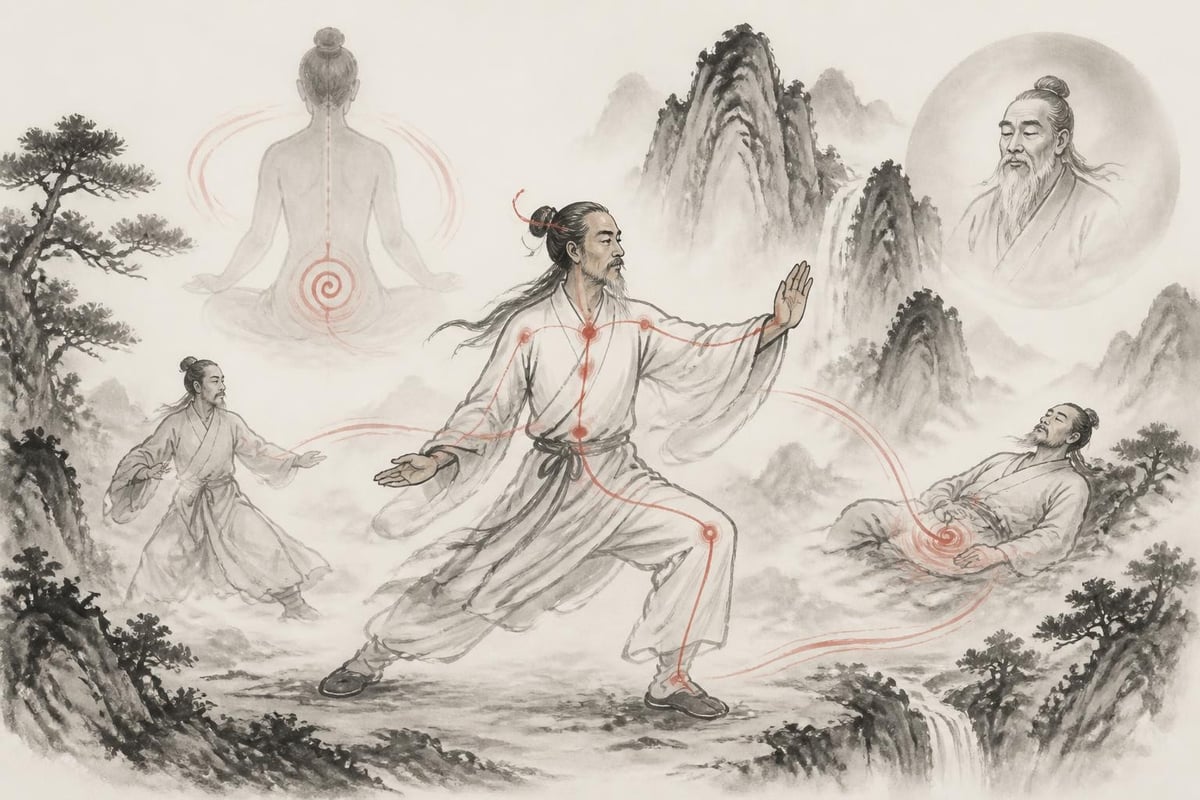
In Taoist philosophy, Qi (life energy) flows through pathways called meridians. Chronic stress and burnout create blockages in these pathways, leading to the sensation of running on empty no matter how much you sleep. Tai chi for burnout works by:
- Opening blocked meridians through specific postures and movements
- Cultivating fresh Qi through coordinated breathing
- Storing energy in the lower dantian (energy centre below the navel)
- Circulating Qi smoothly throughout your entire system
This isn't mystical thinking. You can feel the difference in your body as tension releases, breathing deepens, and a sense of vitality returns. Many students describe it as "filling their tank" rather than pushing an already empty vehicle.
Calming an Overactive Mind
Burnout often includes racing thoughts, worry loops, and difficulty focusing. The meditative aspect of tai chi brings your attention into the present moment repeatedly. As you focus on weight shifts, hand positions, and breathing rhythms, there's simply no mental space left for rumination.
This isn't about forcing thoughts away. The movements themselves become so engaging that your mind naturally settles. Over time, this trains your brain to access calm states more easily, even outside of practice.
George offers a gentle guided meditation below, a lovely complement to tai chi practice when your mind feels particularly overactive.
| Burnout Symptom | How Tai Chi Helps | Timeline for Change |
|---|---|---|
| Mental exhaustion | Meditative focus reduces cognitive load | 2-4 weeks |
| Physical fatigue | Energy cultivation restores vitality | 4-8 weeks |
| Sleep disruption | Nervous system regulation improves sleep quality | 3-6 weeks |
| Emotional numbness | Mind-body connection restores feeling | 6-12 weeks |
| Loss of motivation | Renewed energy brings back engagement | 8-12 weeks |
Restoring Natural Rhythms
Your body has innate wisdom about when to be active and when to rest, but burnout disrupts these natural rhythms. Tai chi practice teaches you to recognise and honour these cycles.
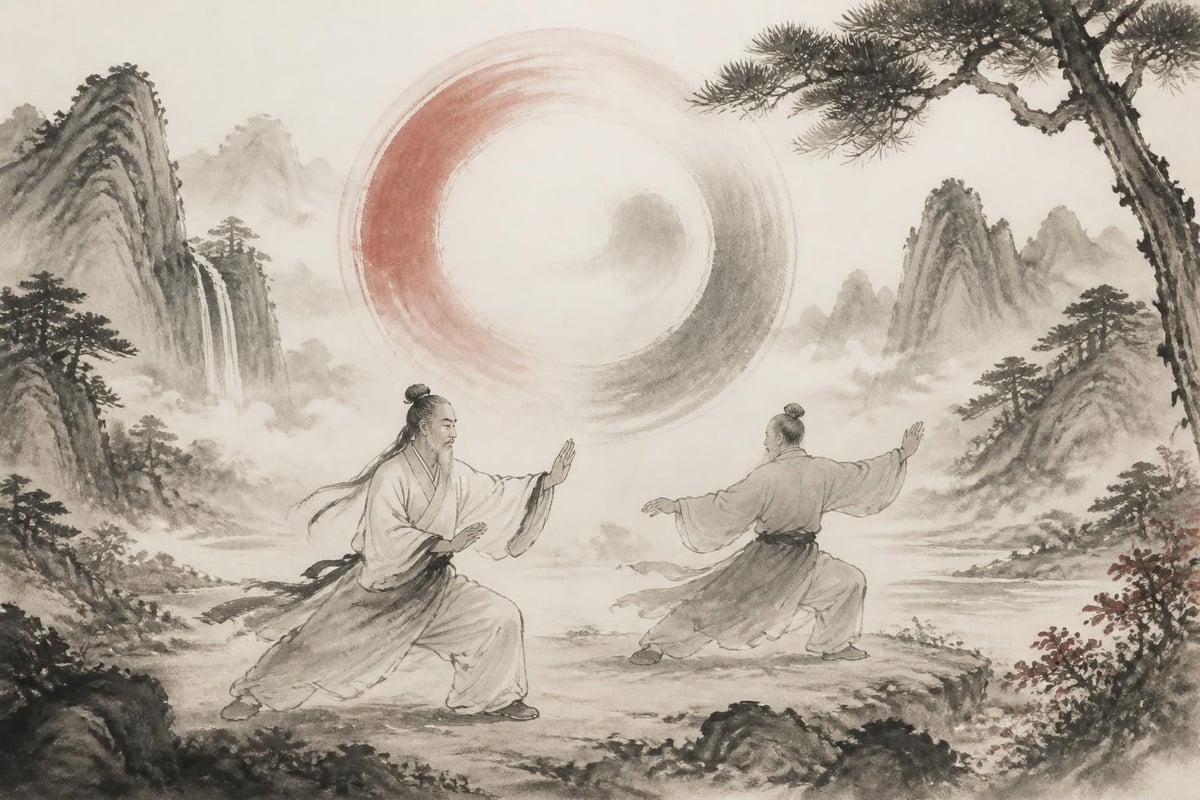
The flowing nature of the forms mirrors natural patterns: expansion and contraction, rising and settling, activity and stillness. As you practise, your body remembers how to move between these states fluidly rather than getting stuck in perpetual activation.
Practical Ways to Start Using Tai Chi for Burnout
You don't need special equipment, expensive classes, or hours of free time to begin. Starting small and building consistency matters more than perfect form or lengthy sessions.
Begin With Five Minutes Daily
Choose a specific time when you can practise without interruption. Early morning works well for many people, setting a calm tone for the day. Others prefer evening practice to release accumulated tension.
Start with simple movements:
- Standing meditation (Zhan Zhuang) for grounding and presence
- Arm circles coordinated with breathing
- Weight shifting between feet to develop balance and awareness
- Cloud hands to open the chest and shoulder area
The key is gentle, mindful movement. If you're exhausted, that's exactly when tai chi for burnout proves most valuable. You're not adding strain. You're creating the conditions for recovery.
Focus on Breathing First
Many beginners worry about getting movements exactly right. Start instead by establishing natural, deep breathing. Tai chi breathing typically follows this pattern:
- Breathe in as you rise or expand
- Breathe out as you sink or contract
- Let the breath originate from your lower belly
- Keep the pace relaxed and natural
As breathing deepens, movements naturally slow down and become more fluid. This synchronisation of breath and motion is what shifts your nervous system from stressed to settled.
Learn Authentic Forms
While you can start on your own, learning authentic Wudang tai chi forms from an experienced teacher accelerates your progress and ensures you're practising in ways that truly restore energy rather than creating new patterns of tension.
Taoist Wellness Online provides access to comprehensive tai chi instruction with Master Gu, a 15th-generation San Feng Pai Wudang Taoist Master with over 25 years of teaching experience. If you'd like to try a taste of this first, our free Taoist course covers Tai Chi, Qi Gong, Meditation, and Taoist Wisdom. The academy offers structured lessons that build progressively, live monthly sessions for direct guidance, and a supportive community of practitioners. This combination of authentic teaching, practical structure, and ongoing support makes it easier to establish and maintain a consistent practice even when you're dealing with burnout's exhaustion and low motivation.
Integrating Tai Chi Into Your Recovery Plan
Tai chi works best as part of a holistic approach to burnout recovery. It complements rather than replaces other essential elements like adequate sleep, proper nutrition, and setting boundaries.
Combine Movement With Rest
Tai chi for burnout shouldn't become another obligation on an overwhelming to-do list. Practise when you can, even if that's just three minutes some days. Quality matters more than quantity.
Consider these integration strategies:
- Practise in the morning to centre yourself before the day's demands
- Use short tai chi breaks during work to reset your nervous system
- End your day with gentle forms to release accumulated tension
- Practise outdoors when possible to connect with natural energy
Track Your Progress Differently
Traditional productivity metrics don't apply to burnout recovery. Instead of counting practice minutes or tracking performance, notice these markers:
- How you feel when you wake up
- Your capacity to handle unexpected challenges
- The quality of your sleep
- Moments of ease or pleasure during your day
- Your patience with yourself and others
These subtle shifts indicate genuine healing rather than superficial coping.
Build a Sustainable Practice
| Practice Element | Starting Phase (Weeks 1-4) | Building Phase (Weeks 5-12) | Sustaining Phase (Beyond 12 Weeks) |
|---|---|---|---|
| Duration | 5-10 minutes daily | 15-20 minutes daily | 20-30 minutes, 5-6 days weekly |
| Focus | Basic breathing and standing | Learning core forms | Deepening forms and energy work |
| Intensity | Very gentle, restorative | Gentle with gradual expansion | Moderate, responsive to energy levels |
| Goal | Establish habit and calm nervous system | Build energy reserves | Maintain balance and prevent relapse |
The Deeper Wisdom of Taoist Practice
Tai chi for burnout offers more than symptom relief. It invites you into a different relationship with energy, effort, and balance.
Wu Wei: Effortless Action
The Taoist principle of wu wei translates as "non-forcing" or "effortless action." It doesn't mean doing nothing. It means working with natural flows rather than against them. In tai chi practice, you learn to move without strain, finding the path of least resistance.
This principle extends into daily life. You begin noticing where you're forcing outcomes, over-efforting, or pushing against reality. These patterns contribute directly to burnout. As you practise letting movement arise naturally on the mat, you develop capacity to bring that same ease into work, relationships, and decision-making.
Yin and Yang Balance
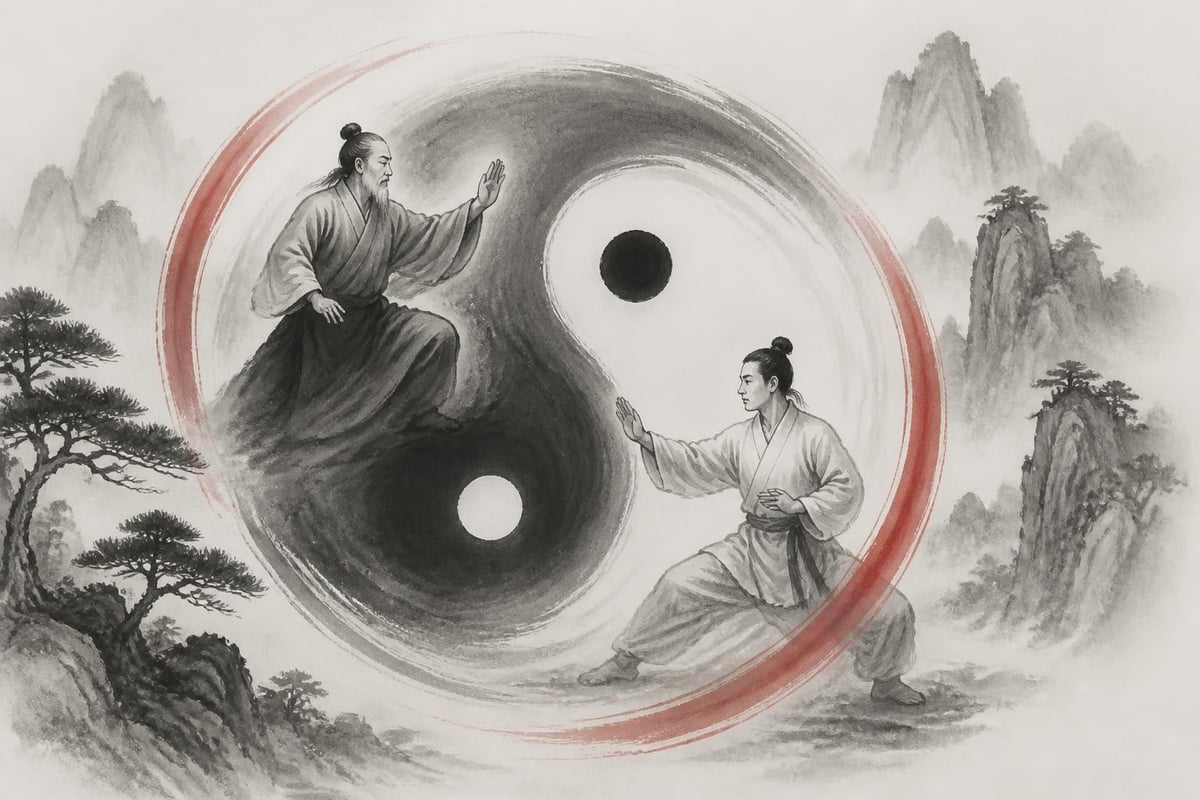
Burnout typically reflects excessive yang energy (action, doing, productivity) without sufficient yin energy (rest, receiving, being). Tai chi physically embodies the interplay between these complementary forces. Our article on Tai Chi for Balance: Master Gu on How to Balance Mind, Body & Spirit explores this dynamic in more detail.
Each movement contains both:
- Yang aspects: extending, rising, opening, expressing
- Yin aspects: contracting, sinking, closing, receiving
Practising this balance in your body teaches recognition of when you're tilted too far in either direction. You develop sensitivity to your own rhythms and needs.
Cultivating Inner Stillness
Perhaps the greatest gift of tai chi for burnout is discovering that stillness isn't something you achieve by stopping. It's something you access while moving. This paradox holds profound healing potential.
When you can find calm in motion, you realise peace isn't dependent on external circumstances being perfect. You carry it with you. This shifts everything about how you navigate challenging situations.
Common Questions About Starting Practice
"I'm too exhausted to exercise. Won't tai chi make me more tired?"
Tai chi differs fundamentally from conventional exercise. The gentle, flowing movements actually restore energy rather than depleting it. Many practitioners report feeling more energised after practice, even when starting from a place of deep fatigue. Start with very short sessions and trust the process.
"How long before I feel better?"
Most people notice some improvement in sleep quality and stress levels within the first few weeks. Deeper restoration of energy reserves typically takes two to three months of consistent practice. Remember that burnout developed over time; recovery also unfolds gradually.
"Do I need to understand Chinese philosophy to benefit?"
Not at all. The practices work on a physical and energetic level regardless of your intellectual understanding. That said, many students find that learning basic Taoist concepts from our reading list enhances their practice and provides a helpful framework for understanding their experience.
"Can I practise if I have physical limitations?"
Absolutely. Tai chi adapts to virtually any physical condition. The forms can be modified, practised while seated, or simplified as needed. The key principles of mindful movement, coordinated breathing, and energy awareness apply regardless of your physical capacity.
Moving Forward With Gentleness
Recovering from burnout requires patience with yourself. You're not broken and don't need fixing. You're depleted and need replenishing. Tai chi for burnout provides a proven path for restoration that honours where you are while gently guiding you toward renewed vitality.
The practice itself embodies the qualities you're seeking to cultivate: calm strength, flexible resilience, grounded presence. As you move through the forms, you're not just doing exercises. You're literally practising a different way of being in the world.
Start where you are. Five minutes counts. Imperfect practice counts. Simply showing up for yourself counts. The journey back to balance begins with a single breath, a single weight shift, a single moment of gentle attention to your own experience.
Our community aspect of learning tai chi also supports recovery. Connecting with others who understand the value of these practices and are committed to their own wellness creates a sense of belonging that burnout often erodes. You're not alone in this process.
Consider exploring how authentic Wudang forms can support your specific needs. The traditions preserved and taught by experienced masters like Master Gu carry centuries of wisdom about energy cultivation, balance, and sustainable wellness. This lineage offers time-tested approaches rather than modern quick fixes.
Your path through burnout and back to vitality is uniquely yours. Tai chi doesn't prescribe a one-size-fits-all solution. Instead, it provides principles and practices you can adapt to your circumstances, energy levels, and needs. This flexibility makes it sustainable for the long term, not just a temporary intervention.
As you develop your practice, you may find yourself drawn to deepen your understanding through complementary studies in our Qi Gong course or Taoist meditation. These practices work synergistically with tai chi to support comprehensive healing and sustained wellness.
Tai chi for burnout offers a gentle, proven path back to balance by restoring your body's natural energy, calming your nervous system, and reconnecting you with your innate capacity for ease. If you're ready to begin your recovery journey with authentic Wudang teachings, Taoist Wellness Online provides comprehensive guidance, supportive community, and expert instruction to help you rebuild vitality and rediscover what it feels like to move through life with renewed energy and purpose.