Baduanjin Exercises: Ancient Practice for Modern Wellness
Jul 03, 2026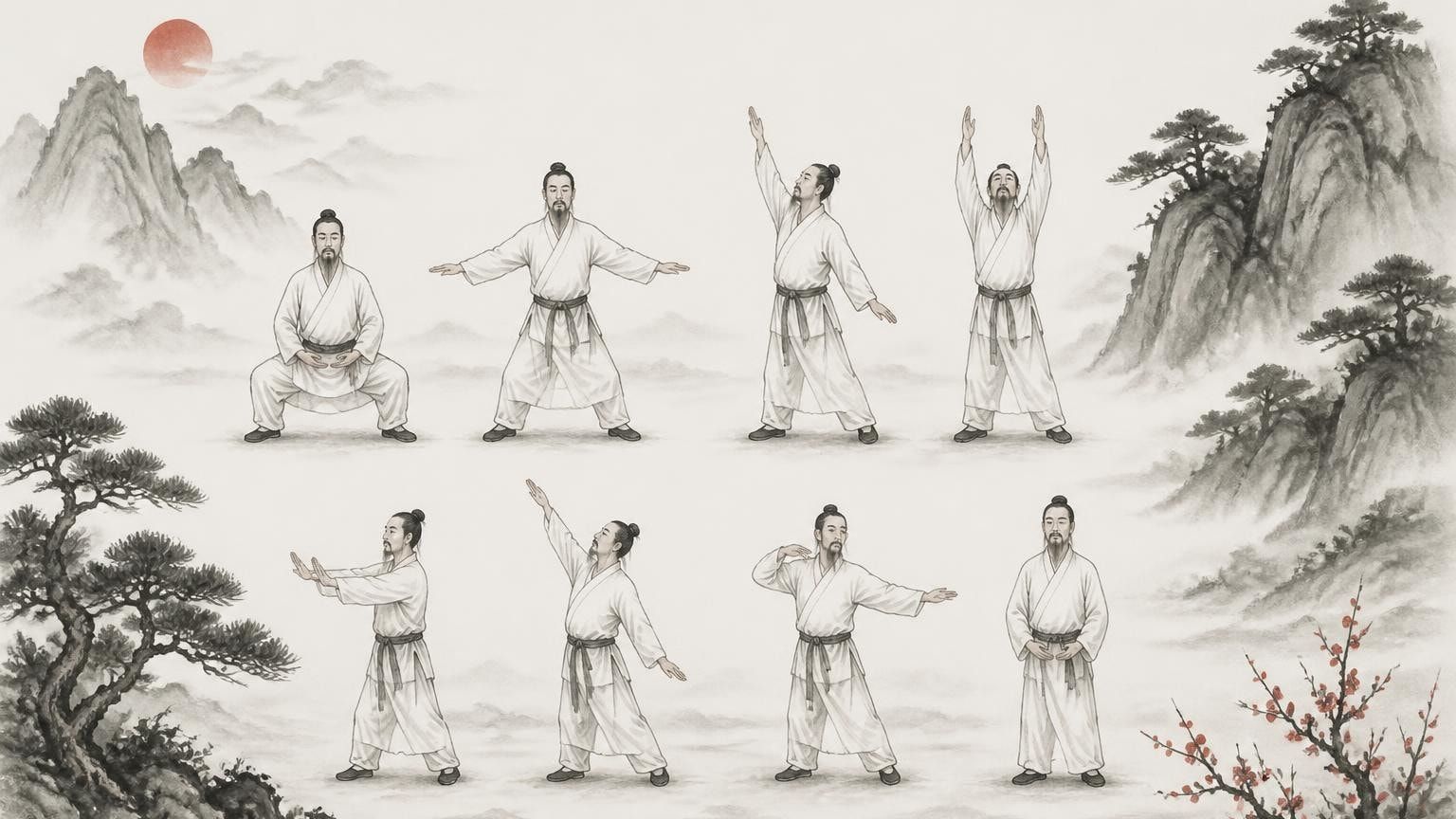
When you're searching for a practice that builds strength without strain, calms your mind without forcing stillness, and connects you to centuries of wisdom, baduanjin exercises offer something rare. This ancient Chinese qigong system has endured for nearly a thousand years because it works. Unlike modern fitness routines that exhaust your energy, these eight gentle movements help you gather it, circulate it, and store it for when you need it most.
Understanding the Eight Brocades
Baduanjin exercises translate directly to "Eight Pieces of Brocade," reflecting the smooth, flowing quality of silk fabric. Each movement is designed with purpose, targeting specific meridians and organ systems according to Traditional Chinese Medicine.
The practice emerged during the Song Dynasty as a therapeutic exercise requiring daily practice and focused concentration. What makes these exercises remarkable is their accessibility. You don't need equipment, special clothing, or years of training to begin.
The Philosophy Behind the Practice
Traditional Taoist approaches to wellness view the body as an integrated system where physical movement, breath, and intention work together. Baduanjin exercises embody this understanding completely.
Core principles include:
- Coordinating breath with deliberate movement
- Maintaining a calm, focused mind throughout
- Moving slowly to allow qi (vital energy) to flow
- Practising regularly rather than intensely
The movements look simple from the outside, but they contain layers of refinement. Your first time through the sequence, you're learning the shape. Six months later, you're working with breath. A year in, you're sensing energy pathways opening.
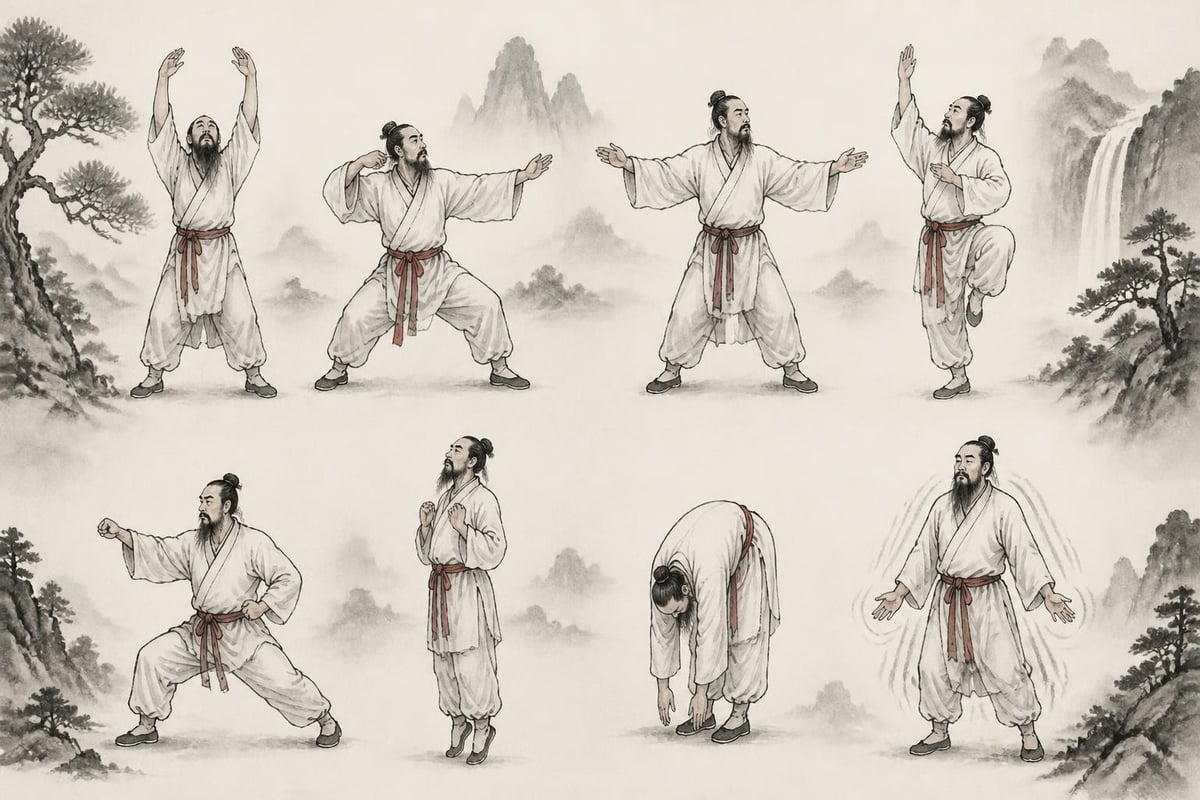
The Eight Movements Explained
Each of the baduanjin exercises serves a specific function. Learning them in sequence helps your body understand the natural progression from grounding to completion.
First Four Movements
1. Two Hands Hold Up the Heavens
You begin by interlacing your fingers and pressing your palms upward while rising gently on your toes. This opening movement stretches the triple warmer meridian and creates space in your torso. It regulates your internal organs and helps clear stagnant energy from sleep or sitting.
2. Drawing the Bow to Shoot an Arrow
Step wide, sink into a horse stance, and pull your arms as if drawing a great bow. This movement strengthens your legs and kidneys while opening your chest. The focus on the eyes and fingertips activates specific acupuncture points related to vision and vitality.
3. Separate Heaven and Earth
One palm presses up while the other pushes down, creating opposing forces that stretch your spine and massage your internal organs. This exercise particularly benefits your spleen and stomach, supporting healthy digestion and transformation of nutrients.
4. Wise Owl Gazes Backward
Turn your head slowly to look behind you while your body remains stable and facing forward. This gentle twist releases tension in your neck, stimulates blood flow to your brain, and addresses the common modern problem of forward head posture from screens.
Second Four Movements
5. Sway the Head and Shake the Tail
From a wide horse stance, you sway side to side, releasing excess heat from your heart through this rocking motion. The movement looks playful, almost childlike, which is part of its healing power. You're releasing the grip of stress and overthinking.
6. Two Hands Hold the Feet
Reach down toward your feet, bending from your waist while keeping your legs relatively straight. This forward fold tonifies your kidneys, stretches your back body, and brings blood flow to your brain. Come up slowly to avoid dizziness.
7. Clench the Fists and Glare Fiercely
Punch forward with intention while making a fierce expression. This movement might seem aggressive, but it serves a purpose. You're cultivating your fighting spirit, building determination, and strengthening your liver energy, which relates to planning and decision-making.
8. Bouncing on the Toes
Rise up on your toes and drop your heels seven times, creating gentle vibration throughout your skeleton. This final movement settles your qi, stimulates all the meridians through your feet, and completes the sequence with grounding energy.
Health Benefits and Research
Modern science is catching up with what practitioners have known for centuries. Regular baduanjin practice shows promising effects for improving bone density, balance, and overall vitality through gentle, weight-bearing movements.
| Benefit Category | Specific Effects | Time to Notice |
|---|---|---|
| Physical Health | Improved balance, flexibility, bone density | 4-8 weeks |
| Mental Clarity | Reduced anxiety, better focus, emotional regulation | 2-4 weeks |
| Energy Levels | Sustained vitality, better sleep, reduced fatigue | 1-3 weeks |
| Chronic Conditions | Lower blood pressure, better glucose control, pain reduction | 8-12 weeks |
The beauty of baduanjin exercises lies in their cumulative effect. Unlike intense workouts that can deplete you, this practice builds your reserves. You're not borrowing energy from tomorrow. You're cultivating it for the long term.
Practising baduanjin three to five times weekly for 30 to 40 minutes tends to yield the best results for older adults in particular, and the gentle nature makes it sustainable for decades.
Starting Your Practice
Beginning with baduanjin exercises requires less than you might think. You need comfortable clothing, a quiet space where you won't be interrupted, and about 20 minutes.
Essential Preparation Steps
- Choose your time - Morning practice helps set your tone for the day, while evening sessions release accumulated tension
- Clear your space - You need enough room to extend your arms fully in all directions
- Dress appropriately - Loose, comfortable clothing that doesn't restrict your movement or breathing
- Set an intention - Decide what you're cultivating: calm, strength, balance, or simply presence
- Start with breath - Take several deep breaths before moving to settle your mind
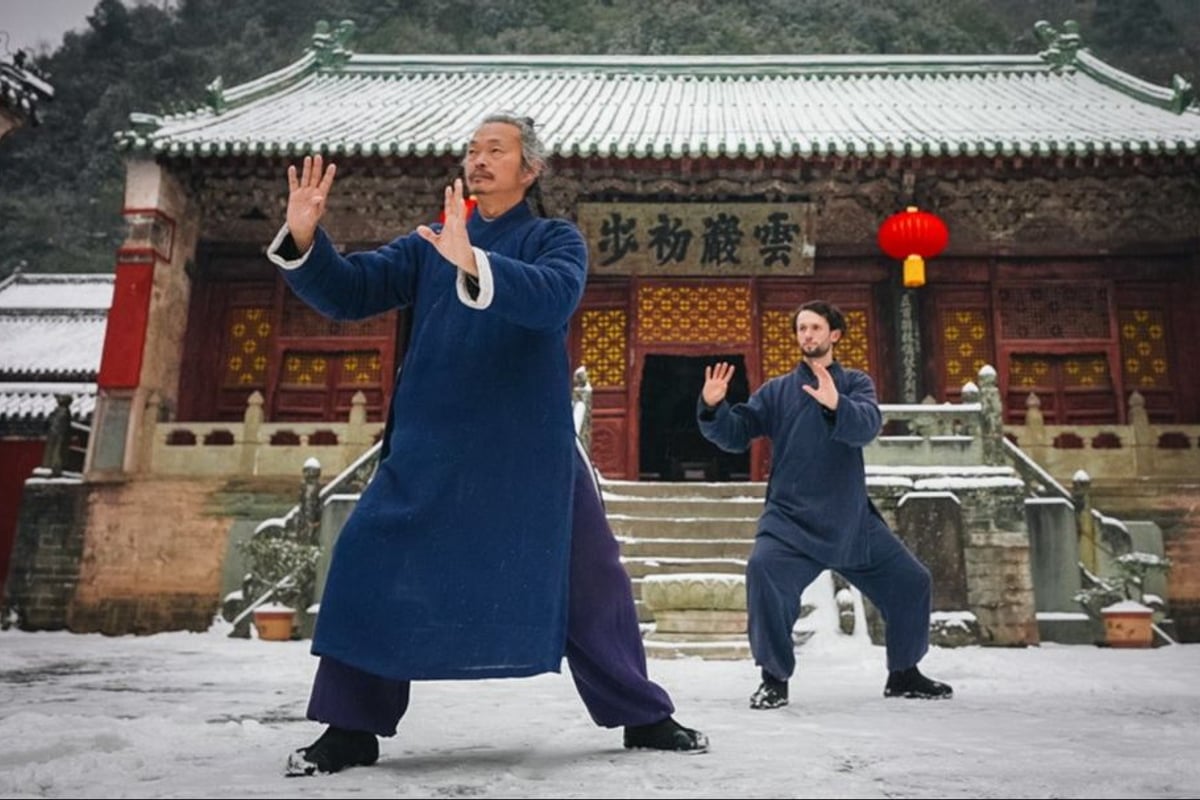
Many students find that joining a structured programme accelerates their learning. If you're looking for authentic guidance rooted in traditional Taoist wisdom, the Qi Gong course at Taoist Wellness Online offers comprehensive instruction in baduanjin alongside related practices, all taught by Master Gu, a 15th-generation Wudang master.
Common Mistakes and Corrections
Even simple-looking movements can become ineffective when performed incorrectly. Awareness of common errors helps you progress faster.
Technical Issues to Watch
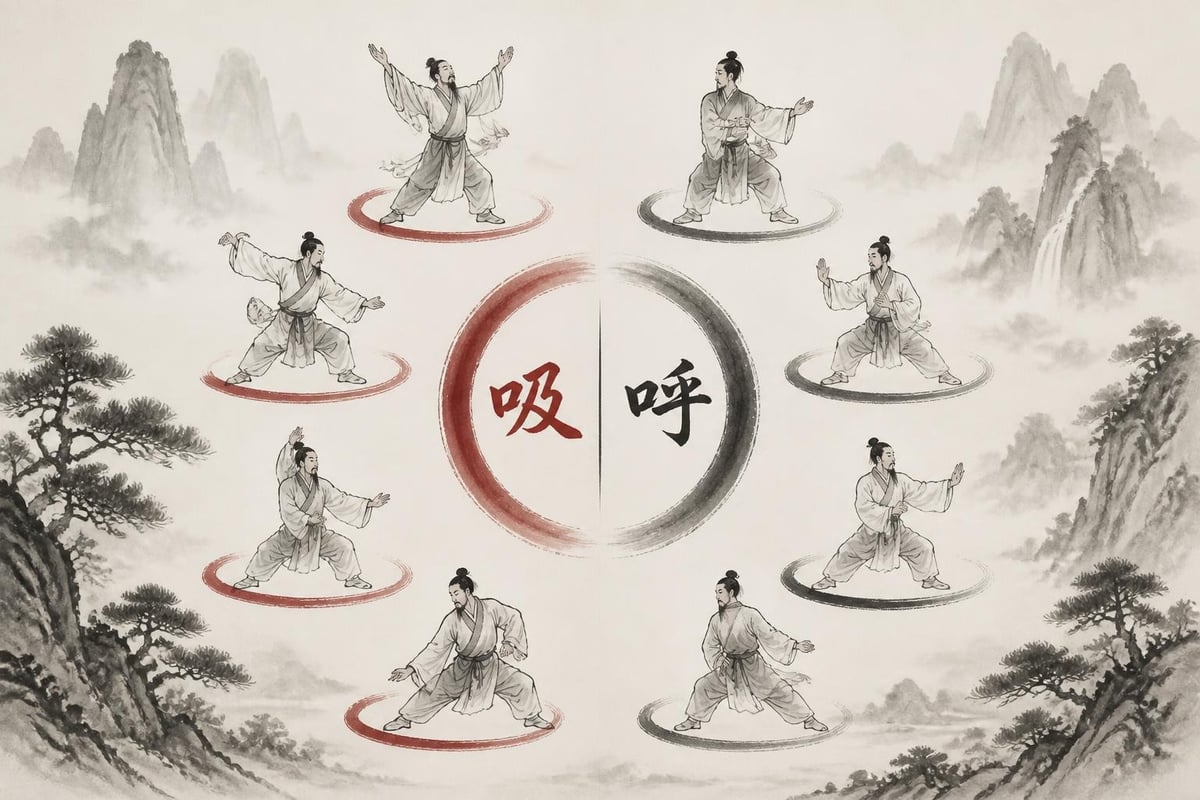
Holding your breath - The most frequent mistake beginners make is forgetting to breathe. Each movement has a natural breathing pattern. Generally, you inhale during opening or rising movements and exhale when closing or lowering.
Moving too quickly - Speed defeats the purpose. Baduanjin exercises work through slow, mindful movement that allows your nervous system to recalibrate. If you're rushing through the sequence, you're exercising your muscles but missing the deeper benefits.
Forcing the stretch - Pain is not the goal. These movements should feel like a gentle wake-up call to your body, not a demanding workout. Stay within your comfortable range and let flexibility develop naturally over weeks and months.
Neglecting alignment - Your posture matters tremendously. Keep your spine naturally straight, shoulders relaxed, and weight distributed evenly. Poor alignment blocks the very energy pathways you're trying to open.
Inconsistent practice - Doing baduanjin exercises once and expecting transformation is like planting seeds and immediately looking for fruit. The practice works through repetition and consistency, not intensity.
Research on safety indicates that baduanjin exercises are remarkably safe when performed correctly, with systematic reviews reporting minimal adverse events. This makes them suitable for people of various ages and fitness levels.
Integrating Baduanjin Into Daily Life
The real power emerges when baduanjin exercises become part of your routine rather than an occasional experiment. Here's how to make that happen without overwhelming yourself.
Building Sustainable Habits
Start with one complete round through all eight movements. This takes about 10 minutes when you're learning. As the movements become familiar, you can extend your practice by repeating each exercise multiple times.
Weekly practice structure:
- Beginners: 3-4 times per week, one round each session
- Intermediate: 5-6 times per week, two to three rounds
- Advanced: Daily practice, three to five rounds
You don't need to practise the same time every day, though consistency helps. What matters more is actually doing it. Ten minutes of genuine practice beats 30 minutes you keep postponing.
Complementary Practices
Baduanjin exercises work beautifully alongside other Taoist wellness practices. Many students combine them with sitting meditation, tai chi forms, or Taoist breathing exercises. If you're new to these complementary practices, our free 4-week Taoist Wellness course is a gentle starting point for exploring how they connect.
The sequence also pairs well with seasonal living principles. In spring, emphasise the liver-supporting movements. During winter, focus on kidney-nourishing exercises. This adaptation keeps your practice fresh and responsive to your changing needs.
Adapting for Different Needs
One reason baduanjin exercises have survived centuries is their adaptability. The core movements remain consistent, but you can modify them for different circumstances and abilities.
Modifications for Various Conditions
| Condition | Recommended Adjustments | Focus Areas |
|---|---|---|
| Limited mobility | Perform seated versions, reduce range of motion | Maintain breath coordination, mental focus |
| Balance issues | Practice near a wall for support, widen stance | Build confidence gradually, emphasize grounding |
| Chronic pain | Move within pain-free range, skip aggravating movements temporarily | Listen to body signals, practice patience |
| High energy levels | Add repetitions, extend hold times slightly | Channel energy constructively, cultivate calm |
| Low energy | Practice shorter sessions more frequently | Build reserves gently, avoid depletion |
The modifications aren't compromises. They're intelligent adaptations that honour where you are right now. A seated practice can be just as powerful as standing when performed with proper attention and intention.
Deepening Your Understanding
After several months of regular practice, you'll notice subtle shifts. The movements that felt awkward become smooth. The breathing that required conscious effort flows naturally. This is when baduanjin exercises reveal deeper layers.
Advanced Refinements
Internal focus shifts from external form to internal sensation. You begin feeling qi movement through specific meridians. The third movement might create warmth in your abdomen. The seventh might generate tingling in your arms.
Breath subtlety develops beyond basic coordination. You discover how slight variations in breath timing change the exercise's effect. A longer exhale calms more deeply. A held breath at the top creates different energy.
Mental qualities emerge through consistent practice. The patience you develop on the mat translates to daily life. The centred feeling during movement stays with you afterward.
Many practitioners find that connecting with others on the same path enriches their experience. Communities such as ours at Taoist Wellness Online offer support, shared insights, and the encouragement that comes from practising alongside people who understand the journey.
Teaching Considerations
If you're considering sharing baduanjin exercises with others, whether family members or formal students, certain principles ensure effective transmission of the practice.
Demonstrate clearly before asking anyone to mirror the movement. People learn through observation, so your form becomes their template. Make sure you've refined your own practice substantially before teaching.
Explain the purpose behind each movement rather than just showing the mechanics. When someone understands that "Drawing the Bow" strengthens kidney energy and willpower, they practise with different engagement than if they're just copying arm positions.
Emphasise progression over perfection. New practitioners often feel discouraged when their movements don't match what they see demonstrated. Remind them that refinement comes through repetition, not comparison.
Create safety by teaching proper warm-up and cool-down. Though baduanjin exercises are gentle, beginning without preparation or ending abruptly can reduce their effectiveness.
Variability in how the form is taught underscores the importance of learning from qualified instructors who understand authentic transmission of these exercises, rather than modified versions that have lost essential elements.
Moving Forward With Confidence
The path of baduanjin exercises isn't about achieving perfect form or mastering complex techniques. It's about showing up regularly, moving with awareness, and allowing the practice to work on you over time.
Start where you are. Use what you have. Do what you can. These eight simple movements have supported human health and vitality for nearly a millennium. They'll support yours too.
Your body already knows how to heal, balance, and thrive. These exercises simply remove obstacles and create conditions for your natural wisdom to emerge. Trust the process, honour the tradition, and give yourself permission to practise imperfectly.
The most important repetition is always the next one.
Baduanjin exercises offer a time-tested path to greater balance, vitality, and inner calm through eight simple yet profound movements. Whether you're seeking relief from modern stress, support for chronic health challenges, or simply a sustainable practice for lifelong wellness, these ancient techniques meet you exactly where you are. At Taoist Wellness Online, Master Gu and a global community of practitioners provide authentic instruction in baduanjin, qigong, tai chi, and Taoist wisdom, helping you build a practice that truly transforms your daily life. Begin your journey today and discover what these Eight Brocades can weave into your well-being.