Qi Gong for Anxiety: Ancient Practice for Modern Calm
Aug 31, 2026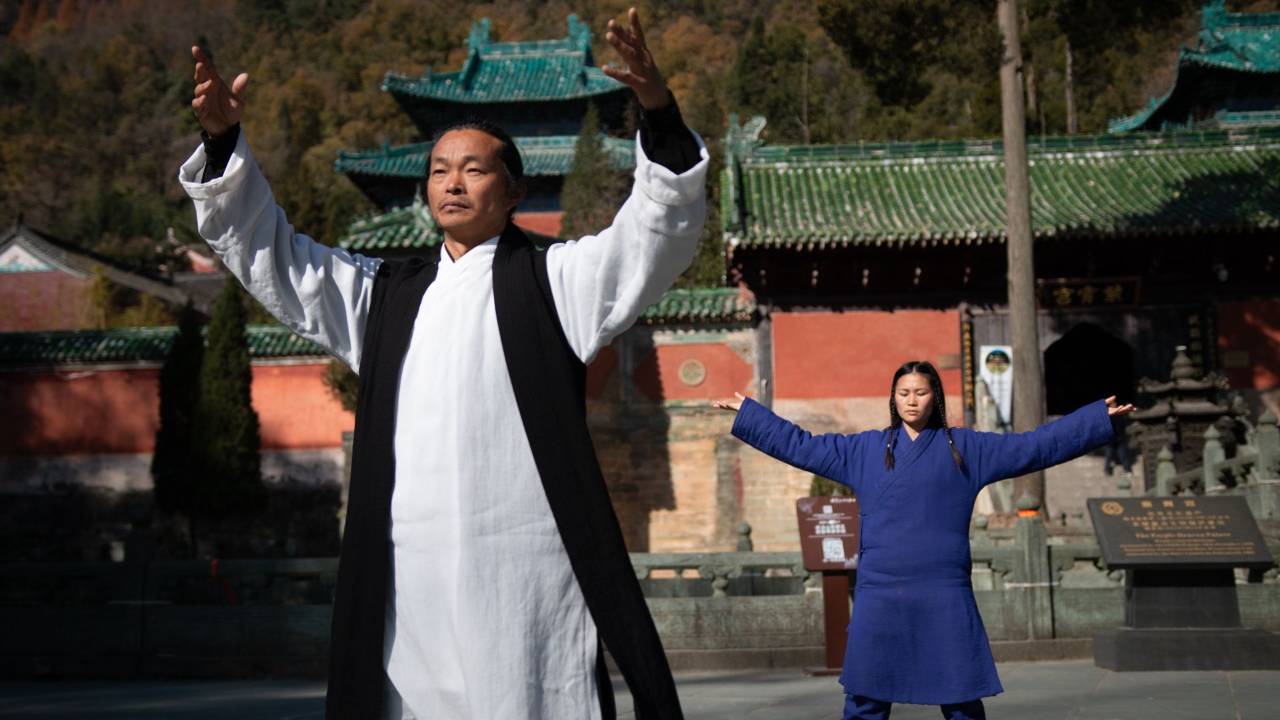
When anxiety tightens its grip on your chest, shortens your breath, and fills your mind with racing thoughts, you need more than distraction. You need a practice that addresses the root imbalance within your energy system. Qi gong for anxiety offers exactly that: a time-tested approach that calms your nervous system, regulates your breath, and restores the natural flow of energy throughout your body. Drawing from ancient Taoist wisdom, this gentle yet powerful practice has helped countless people find relief from the weight of modern stress and worry.
Understanding How Qi Gong Addresses Anxiety
Anxiety isn't just in your head. It lives in your body as shallow breathing, tense shoulders, a racing heart, and disrupted energy flow. Traditional Chinese medicine views anxiety as a disturbance in the flow of qi, your vital life force. When qi becomes blocked or scattered, your body's natural balance falters.
Qi gong works with anxiety on multiple levels:
- Physical: Releases muscular tension and activates the parasympathetic nervous system
- Energetic: Clears blockages and restores smooth qi circulation
- Mental: Brings awareness away from anxious thoughts into present-moment body sensation
- Emotional: Processes stored emotions gently through movement and breath
The beauty of qi gong for anxiety is that it doesn't require you to fight your feelings or force yourself into stillness. Instead, you move slowly, breathe consciously, and allow your body's wisdom to guide you back toward balance.
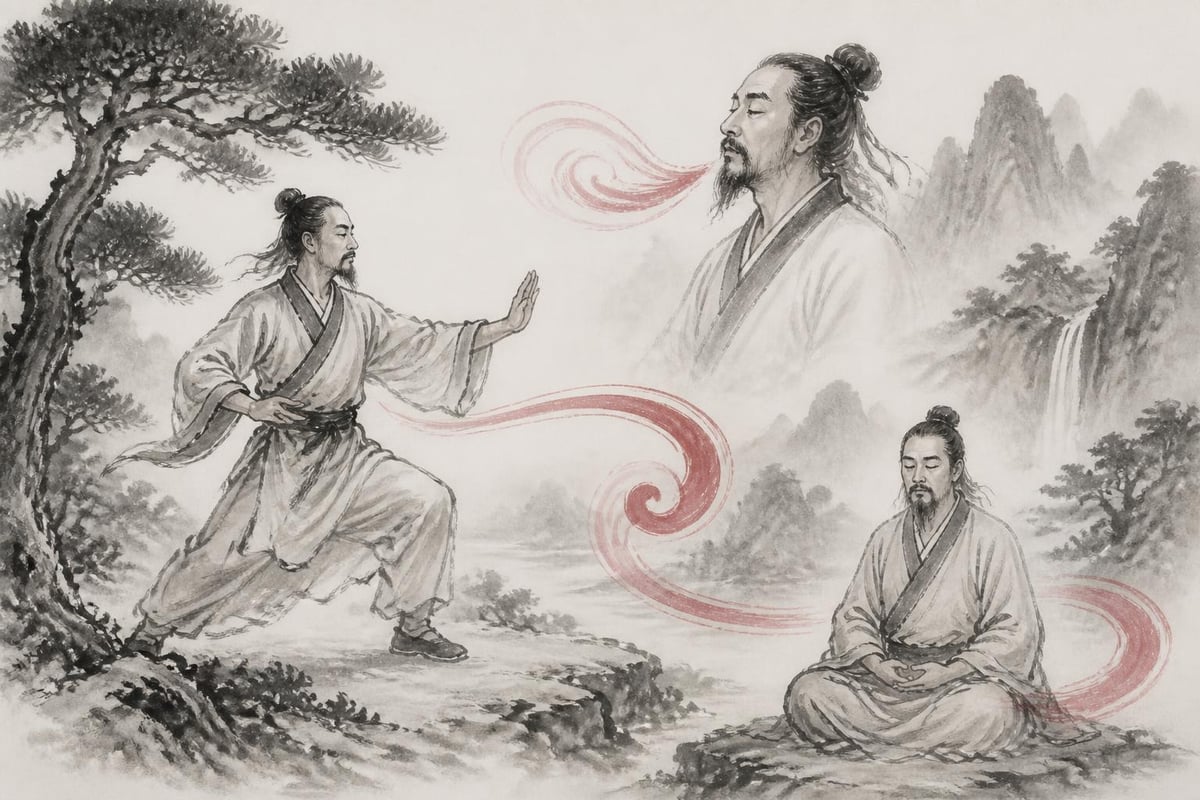
The Science Behind Qi Gong and Anxiety Relief
Modern research supports what Taoist masters have known for centuries. Studies show that regular qi gong practice significantly reduces anxiety symptoms and improves overall psychological wellbeing. The combination of slow movement, deep breathing, and focused attention creates measurable changes in your brain chemistry and stress response.
When you practise qi gong for anxiety, you activate your vagus nerve, the primary channel of your parasympathetic nervous system. This shifts your body from "fight or flight" mode into "rest and digest," lowering cortisol levels and calming your entire system. Your breath becomes deeper, your heart rate steadies, and your mind finds the space it needs to settle.
Core Qi Gong Practices for Calming Anxiety
The Wudang tradition offers specific practices designed to address anxiety at its energetic roots. These aren't rushed exercises or complicated techniques. They're simple, accessible movements that anyone can learn and practise daily.
George offers a gentle follow-along Qigong routine in the video below, a lovely way to experience these principles firsthand.
Standing Meditation (Zhan Zhuang)
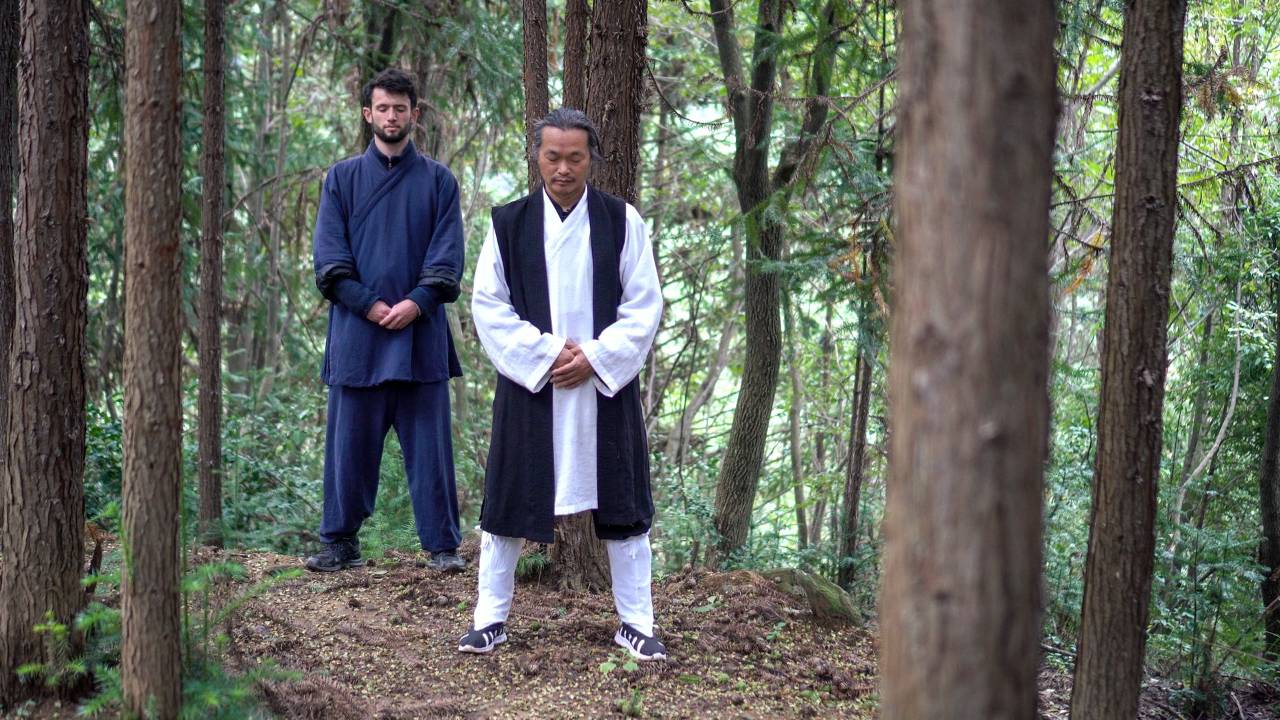
Standing meditation forms the foundation of qi gong for anxiety. You stand in a natural posture, knees slightly bent, arms gently rounded as if holding a large ball. This simple position cultivates deep calm while strengthening your body's energy system.
Key elements of standing practice:
- Feet shoulder-width apart, weight evenly distributed
- Spine naturally aligned, head suspended as if from above
- Breath flowing naturally to the lower abdomen
- Mind gently focused on the body's sensations
Start with just five minutes. As your practice deepens, extend to ten or fifteen minutes. The stillness you cultivate here becomes an anchor you can return to whenever anxiety rises.
Regulating the Breath
Breath is the bridge between body and mind. When anxiety strikes, your breath becomes shallow and rapid, trapped in your upper chest. Qi gong breathing techniques reverse this pattern, guiding your breath down to your lower dantian, the energy centre below your navel.
One fundamental technique involves breathing in through your nose for a count of four, allowing your lower belly to expand. Pause briefly, then exhale slowly through your nose or mouth for a count of six or eight. This extended exhale activates your relaxation response.
The practice isn't about controlling your breath forcefully. You're learning to allow your breath to deepen naturally, creating space for qi to flow smoothly through your body.
Movement Forms That Release Tension
While stillness has its place, gentle movement often provides the most direct path to anxiety relief. Wudang qi gong includes flowing forms that combine breathwork with specific movements designed to open energy channels and release stored tension.
Lifting the Sky
This foundational movement addresses anxiety that manifests as chest tightness and shallow breathing. You stand naturally, then raise your arms slowly overhead as you inhale, imagining you're lifting the sky. As you exhale, lower your arms gently back to your sides, allowing tension to drain away.
The simplicity masks profound effects. Each repetition opens your chest, stretches your spine, and encourages deeper breathing. The upward movement lifts stagnant energy, while the downward release lets it go.
| Movement Phase | Breath | Energy Action | Mental Focus |
|---|---|---|---|
| Arms rising | Inhale deeply | Gather and lift qi | Sense expansion |
| Pause at top | Brief hold | Energy peaks | Feel spaciousness |
| Arms descending | Long exhale | Release tension | Let go completely |
| Rest position | Natural breath | Integration | Notice calm |
Pushing Mountains
When anxiety creates feelings of being overwhelmed or powerless, this movement restores your sense of grounded strength. You stand in a comfortable stance and slowly extend your arms forward as if gently pushing against a mountain, then draw them back toward your body.
This qi gong for anxiety technique builds confidence while calming your nervous system. The outward press releases pent-up energy, while the inward drawing cultivates your reserves.
Building a Sustainable Daily Practice
Consistency matters more than duration. Practising qi gong for anxiety for ten minutes every day creates more benefit than occasional hour-long sessions. Your nervous system responds to regular, gentle input, gradually resetting to a calmer baseline.
Creating your morning routine:
- Wake and centre - Before checking your phone, take three deep breaths
- Standing meditation - Five to ten minutes to ground your energy
- Movement practice - Two or three forms repeated slowly
- Closing breath - Three cleansing breaths to seal your practice
Morning practice sets the tone for your entire day. You're not just managing anxiety when it appears. You're building resilience that prevents it from taking hold.
Evening Practice for Better Sleep
Anxiety and sleep problems often travel together. An evening qi gong routine helps transition your nervous system from the day's activity into restful sleep. The movements can be even gentler than your morning practice, focusing on releasing rather than building energy.
Spend five minutes doing slow arm circles, gentle twisting from the waist, and seated breathing. End by lying down and scanning your body, noticing where you can soften and release. Our article on 5 Benefits of Night Time Meditation explores this evening wind-down in more depth.
Working With Specific Anxiety Patterns
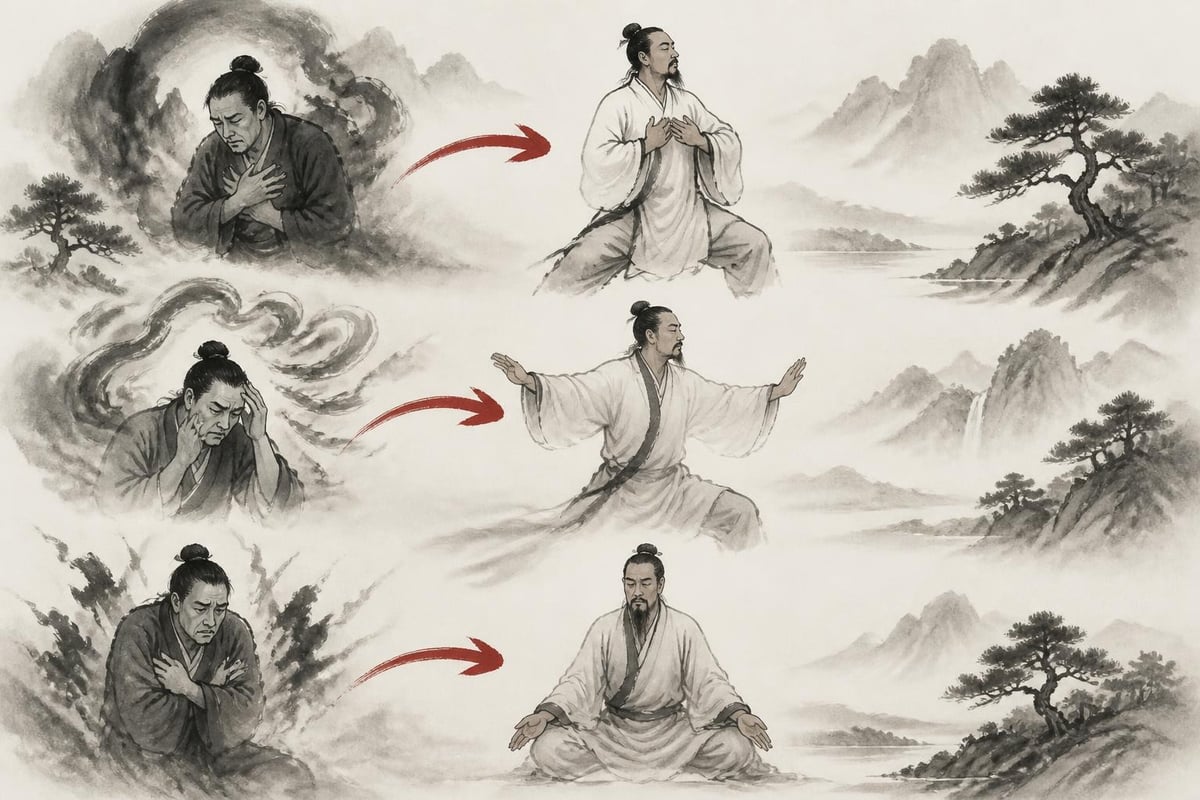
Different people experience anxiety differently. Some feel it as racing thoughts, others as physical tension or chest tightness. The Wudang tradition offers specific approaches for each pattern.
Racing Thoughts and Mental Agitation
When your mind won't stop spinning, grounding practices work best. Focus on movements that emphasise downward energy flow and connection with the earth beneath you. Stand in horse stance with knees bent, feeling your weight sink into your legs. Practise "Drawing Down the Heavens," pulling energy from above down through your body into the ground.
The key is giving your mind something physical to focus on. You're not trying to stop thoughts directly. You're redirecting attention to sensation, movement, and breath until the mental chatter naturally quiets.
Physical Tension and Chest Tightness
Anxiety often lodges in your chest, creating tightness that makes breathing difficult. Qi gong for anxiety addresses this through opening movements that stretch your chest and ribcage. "Spreading Wings" involves standing naturally and slowly raising your arms out to the sides and overhead, expanding your chest fully before releasing.
Combine these movements with sound. A long, gentle "hahhh" exhalation as you release the movement helps clear stuck energy from your chest and lungs. The vibration itself has a soothing effect on your nervous system.
Underlying Worry and Chronic Stress
When anxiety becomes your default state, you need practices that address your foundational energy reserves. In Traditional Chinese medicine, chronic anxiety often indicates weakness in the kidney energy system. Specific Wudang forms strengthen this foundation.
"Supporting the Sky and Pressing the Earth" alternates between reaching upward and pressing downward, balancing upper and lower body energy. Practise this slowly, coordinating each movement with your breath, feeling yourself become more stable and rooted with each repetition.
Learning From Authentic Teaching
While you can learn basic qi gong movements from articles and videos, working with an experienced teacher accelerates your progress and ensures you're practising correctly. The nuances of proper alignment, breathing coordination, and energy awareness make a significant difference in results.
Master Gu brings over 25 years of expertise from the Wudang tradition, offering guidance that connects you to authentic lineage teachings. Learning qi gong for anxiety isn't just about memorising movements. It's about understanding the underlying principles and adapting them to your unique needs.
Our free Taoist course offers an accessible entry point for those new to these practices, covering Tai Chi, Qi Gong, Meditation, and Taoist Wisdom. You'll learn foundational techniques for releasing tension, regulating breath, and beginning to work with your body's energy system, giving you practical tools you can use immediately while building a foundation for deeper practice.
Integration With Modern Life
Qi gong for anxiety doesn't require you to retreat from your daily responsibilities or spend hours in practice. The beauty of this tradition lies in how seamlessly it integrates into modern life. You can practise standing meditation while waiting for your coffee to brew. You can do three minutes of gentle arm movements before an important meeting.
Workplace Practices
Your office or workspace can become a practice environment. Every few hours, stand and do one simple form. "Holding the Ball" takes just two minutes and can be done without drawing attention. You stand naturally, arms rounded as if holding a large sphere at chest height, breathing deeply for eight to ten breaths.
This brief pause resets your nervous system and prevents anxiety from accumulating throughout your workday. You're not escaping your responsibilities. You're maintaining the energy and clarity you need to meet them effectively.
Practices for Acute Anxiety
When anxiety strikes suddenly, you need techniques that work quickly. Abdominal breathing provides immediate relief. Place one hand on your chest and one on your belly. Breathe so that only your belly hand moves, keeping your chest relatively still. This signals your nervous system to calm down.
Combine this with a simple standing posture or gentle swaying. The movement prevents you from freezing in panic mode, while the focused breathing interrupts the anxiety spiral.
The Journey Beyond Symptom Relief
As you continue practising qi gong for anxiety, something shifts. You're not just managing symptoms anymore. You're cultivating a different relationship with your energy, your emotions, and yourself. Anxiety doesn't disappear entirely, but it no longer controls you.
You begin to notice the early signs of imbalance before they become overwhelming. Your body's wisdom becomes more accessible. You know when to rest, when to move, when to engage, and when to step back. This awareness itself becomes a form of practice, extending the benefits of qi gong into every aspect of your life.
Long-term benefits of consistent practice:
- Improved stress resilience and emotional regulation
- Better sleep quality and energy throughout the day
- Enhanced body awareness and intuition
- Stronger immune function and overall vitality
- Greater sense of inner peace and life purpose
Our Taoist Philosophy course recognises that true health encompasses body, energy, and spirit. Qi gong for anxiety serves as an entry point into this holistic understanding.
Deepening Your Understanding
As your practice matures, you may want to explore the theoretical foundations that support these techniques. Understanding how qi flows through your meridian system, how the five elements interact, and how seasonal energies affect your wellbeing enriches your practice and makes it more effective.
The relationship between anxiety and specific organ systems in Traditional Chinese medicine offers valuable insights. Anxiety often relates to imbalances in the heart, spleen, and kidney systems. Different forms and techniques specifically support each organ system's function.
This knowledge isn't just theoretical. It helps you choose which practices to emphasise based on your particular patterns and needs. You become your own healer, working intelligently with your body's natural wisdom.
Connecting With Community
Practising alone has value, but connecting with others in our community multiplies your progress. Sharing experiences, asking questions, and learning from fellow practitioners provides encouragement and insight. The collective energy of a group practice creates a supportive field that enhances everyone's experience.
Many students find that the community aspect of their practice becomes as valuable as the techniques themselves. Knowing others understand your challenges and celebrate your progress creates a sense of belonging that itself reduces anxiety.
Adapting Practice to Your Needs
No two people experience anxiety identically, and no single approach works for everyone. The flexibility of qi gong allows you to modify practices based on your physical condition, available time, and specific symptoms. If standing is difficult, many forms can be adapted to sitting. If you have limited time, even five minutes of focused practice creates benefit.
Listen to your body. Some days you'll need more vigorous movement to release pent-up tension. Other days, gentle stillness serves you better. This responsive, intuitive approach prevents practice from becoming another source of stress or rigid expectation.
Combining With Other Approaches
Qi gong for anxiety works beautifully alongside other wellness practices. It complements therapy, medication, exercise, and meditation. Many students find that qi gong enhances their other practices, bringing greater body awareness to psychotherapy or deeper stillness to seated meditation.
The breathing techniques and energy awareness you develop through qi gong support whatever else you're doing for your mental health. You're building capacity and resilience from multiple angles. Our piece on Best Guided Meditation For Sleep offers another complementary tool if sleep is part of your anxiety picture.
| Practice Combination | How They Support Each Other | Timing Suggestions |
|---|---|---|
| Qi gong + Therapy | Body awareness enhances emotional processing | Qi gong before sessions to ground |
| Qi gong + Meditation | Movement prepares body for stillness | Qi gong first, then meditate |
| Qi gong + Exercise | Builds energy while releasing tension | Qi gong on rest days |
| Qi gong + Medication | Supports overall nervous system health | Daily practice regardless of meds |
Qi gong for anxiety offers a path back to your natural state of calm, balanced energy. Through gentle movement, conscious breathing, and patient practice, you can restore harmony to your nervous system and reclaim your sense of peace. Whether you're dealing with occasional worry or chronic anxiety, these ancient Wudang practices provide practical tools that create real change. If you're ready to begin this transformative journey with authentic guidance, Taoist Wellness Online offers comprehensive courses, live sessions with Master Gu, and a supportive community to help you develop a practice that brings lasting relief and deeper wellbeing.